
Putting things in perspective.
Arnold Palmer died yesterday. He was 87.
Palmer was one of golf’s greats. Although I don’t follow golf and certainly don’t know as much about his career as the folks that do, I do know that he was a real class act who could certainly teach today’s professional athletes a thing or two about behaving in public. You can find a tribute to him here and some more general information on Wikipedia.
One of the people I follow on Twitter posted the following tweet with a photo of a young Palmer:
Incredibly sad … Golf legend Arnold Palmer has died. The 62-time PGA Tour and 7-time major winner was 87. #RIP
It’s sad when any good person dies, but “incredibly sad” when an 87-year-old man dies of natural causes?
I’m not trying to sully the memory of Arnold Palmer. He led a full life, achieving many great goals and doing many good things. But he was 87 with a heart condition. His life came to a logical, inevitable conclusion.
Do you know who else died yesterday? José Fernández. He was 24, and just a few years into what would likely be an amazing career as a baseball pitcher. Indeed, he had already won the National League Year Rookie of the year and played in an All-Star Game. A Cuban immigrant who saved his mother’s life when she fell overboard during their fourth (successful) defection attempt, he died in a boating accident yesterday morning with virtually his whole life ahead of him.
Now that is incredibly sad.
Do you see the difference?
I’m not trying to say that Fernández’s life is more valuable than Palmer’s. I’m just saying that when a man dies of natural causes at an age generally considered to be beyond that of an average life span, it’s sad. But when a young man who hasn’t even reached the prime of his life dies in a tragic accident, it’s sadder.
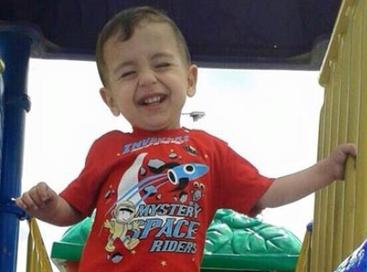 You know this boy.
Do you want to take that a step further? Think about Alan Kurdi. Don’t know who that is? Sure you do. He was the three-year-old boy who drowned in the Mediterranean Sea when his family fled Syria as refugees just a year ago. His lifeless body was photographed on the beach, lying face down, still wearing his little shorts and shoes. His family was trying to get to Canada so they could live in a safe, peaceful world. I’d share the photo here — you can find a copy on Wikipedia — but it’s too heartbreaking to see over and over in my blog. So I’ll share this one, provided to the media by his aunt, to give you an idea of the smiling, happy child whose life was snuffed out by tragic circumstances.
Alan Kurdi’s death is incredibly sad.
And what about the thousands of civilians killed in terrorist attacks, wars, and “ethnic cleansing” (AKA genocide)? Thousands of people losing their lives long before completing their natural lives? Sometimes before they even reach adulthood? Isn’t that sadder than the natural death of an 87-year-old man?
I guess my Twitter friend’s tweet just got under my skin. I’m so tired of people expressing extreme sadness when a celebrity dies yet barely acknowledging the death of a “lesser” or unknown person. Or people.
Let’s put things into perspective. People die every day. Some die more tragically than others. Shouldn’t the level of our sadness be tied into the circumstances of their lives and deaths?
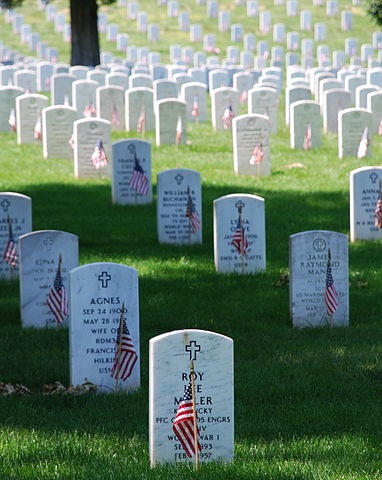 Memorial Day at
 In addition, the helicopter may descend at a rate that exceeds the normal downward induced-flow rate of the inner blade sections. As a result, the airflow of the inner blade sections is upward relative to the disc. This produces a secondary vortex ring in addition to the normal tip-vortices. The secondary vortex ring is generated about the point on the blade where the airflow changes from up to down. The result is an unsteady turbulent flow over a large area of the disc. Rotor efficiency is lost even though power is still being supplied from the engine.