Interesting Links, August 16, 2011

Here are links I found interesting on August 16, 2011:

2010: My Year in Flights

I was all over the place.

I thought I’d take a moment to blog about some of the flying I did this past year. LogTen Pro, the software I blogged about yesterday, makes keeping track of my flying activities a lot easier to summarize.

The Big Picture

I flew a total of 207.3 hours in 2010 with exactly 300 takeoffs and landings. Nine takeoffs were at night while 13 landings were at night — this inequality occurs, in part, because of long flights that begin just before dawn or just before dusk. But I only flew 5.1 hours at night.

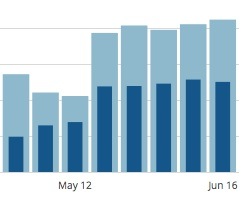
Flights by MonthMy flights are spread out over the entire year, with February, March, September, and October my busiest months. LogTen Pro created this graph for me so I could visualize it.
Some Details

I broke my flight time down into different types that I want to track:

  • 71.5 hours Solo. Solo flight time is the time I was on board all alone. Much of this time was spent repositioning the aircraft for a flight. I often offer this time at low rates on Flying M Air’s Web site, but seldom have people take advantage of it. Their loss. I don’t mind flying alone. I suspect I have an unusually high percentage of solo flight time for a helicopter pilot.
  • 89.4 hours Cross Country. For helicopters, cross-country flight time is considered anything over 25 miles. This number includes only flights that landed at least 25 miles from the starting point. It does not include flights where I flew at least 25 miles away and then came back to the same airport or another one nearby. I did make several very long cross-country flights last year, including flights between Phoenix and Seattle and flights from the Phoenix area to Lake Powell, Monument Valley, Las Vegas, and Blythe, CA.
  • 30.2 hours High DA/Mountain. I track high density altitude/mountain flying because it’s important to some employers. The definition I use is flights that begin or end at an airport at 5000 feet density altitude or higher and the part of that flight spent over that DA. So if I flew from Wickenburg (2400 feet elevation) to Prescott (5000 feet elevation) and was over 5,000 feet for about half of that 30-minute flight, I’d log .2 or .3 for High DA/Mountain flying. All of the flights I did when I flew at the Grand Canyon were High DA/Mountain flights because I started and ended at 6300 feet and never got any lower. If I started at a low elevation and landed at a low elevation, however, I probably wouldn’t log any high flying in between unless it was either very high flying or involved crossing mountains, etc. I know this is subjective and not perfect, but I’m really not required to log this at all, so I do it my own way just to get a ballpark idea.

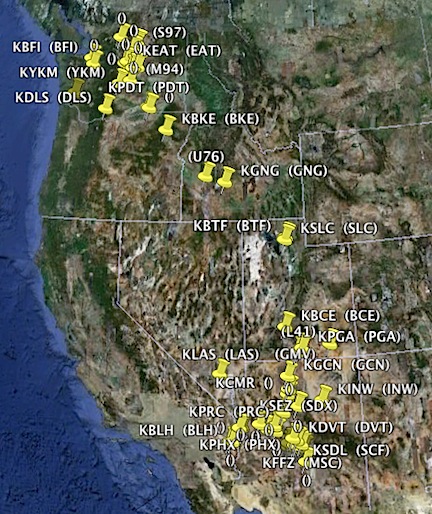
Landing ZonesI landed at 52 different places in Arizona, California, Nevada, Utah, Idaho, Oregon, and Washington. 16 of these landing zones were off-airport, although two of them were official helipads registered with the FAA. These numbers do not include about a dozen off-airport landing zones I used during one mine survey job in March; it just wasn’t worth logging them all. This Google Earth map shows where they were, using data from LogTen Pro. (Seriously: isn’t this cool?)


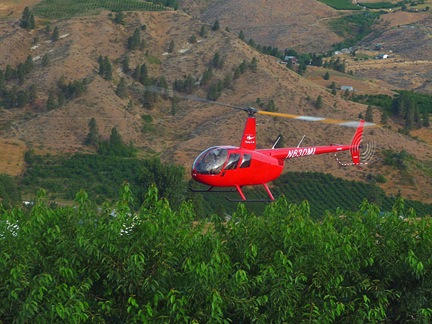
I only flew one aircraft: my R44 Raven II.

The Flights

A look at my logbook reveals a wide variety of flight types:

  • Day Trips to Grand Canyon, Sedona, and Meteor Crater/La Posada. This is something Flying M Air offers and I’m pretty sure we’re the only operator in the Phoenix area that does so at a reasonable price. Truth is, I’ll take you anywhere I’m allowed to — which is almost anywhere in the 48 contiguous states — for the day if you pay me to. These are the trips I offers, so these are the trips I sell. Sure do wish someone would ask for something different once in a while. If I spent any more time at the Grand Canyon, I could probably get a part time job as a tour guide there.
  • Phoenix Tours. This is Flying M Air’s “cheap flight.” Frankly, it isn’t worth going to the airport for less than an hour of flight time, so this is the lowest price tour I sell. It’s a great flight around the city and I customize it for clients, partially to make them happy and partially to make it more interesting for me. One of these custom flights required me to visit several specific GPS locations, four of which were inside class Bravo (PHX) or class delta (CHD) airspace. That was a challenging flight.
  • Moonlight Dinner Tours. I only did one of these last year, but it was a biggie: the guy popped the question and the gal said yes. What’s especially memorable about this flight is that I picked them up and dropped them off at the Sky Harbor helipad, which is between the runways and always a fun challenge.
  • Monument ValleySouthwest Circle Helicopter Adventure. I only did one of these last year, with a nice couple from Tucson. (In 2009, I did four of them and I have one scheduled (so far) for 2011.) This is a six-day excursion with overnight stops at Sedona, Grand Canyon, Lake Powell (at Page), Monument Valley, and, on this particular trip, Winslow (which I actually prefer over Flagstaff, the usual stop). This was the first trip where I actually had to alter my course and change tour reservations due to weather — the second day had low clouds and rain that cleared out later in the day. You can find photos from this trip here.
  • Las Vegas Weekend. I took two women up to Las Vegas for the weekend. It was a nice flight and a relatively nice weekend away, despite some mechanical problems.
  • Video flights at the Best in the Desert (BITD) Parker 425 race. Last year was my third year at the race. It’s my favorite annual gig and I’m only sorry that it’s just one day a year. I flew three videographers last year, chasing race trucks through the desert. (The aerial shots in the video here were made from my helicopter.) Of course, the last videographer let his seatbelt hang out the door, causing damage that cost $2K to repair. I won’t let that happen again.

  • Wine Shopping. I took some regular clients on a wine shopping trip from Wickenburg to Scottsdale. They bought four cases of wine and we managed to fit them all in back under and on the third passenger seat. We named our “passenger” Bacchus.
  • Mine Survey. I took five different people (on multiple flights) to test soil samples on various mine sites not far from Blythe, CA. Although the logged time didn’t add up very much — each flight segment was less than 10 minutes — the waiting time sure did. I was satisfactorily compensated, so that’s not an issue. Now I bring my iPad on all flights so I have something to keep me occupied while clients are out doing their thing.
  • Equipment Testing. I actually did two of these gigs, each over multiple days, out in the desert west of Wickenburg. It required the client to hook up some communications equipment on the helicopter and me to fly as specified so they could test range, etc. There was a lot of flying, a lot of landing, and a lot of waiting. On the first gig, we brought our truck and new fifth wheel trailer out into the desert and camped. The truck had my fuel transfer system on board, which made it unnecessary to go back to Wickenburg for fuel. It gave us a good opportunity to test out the trailer before I used it that summer.
  • Over Lake PowellPhoto and video flights. I did a bunch of photo flights in the Phoenix area, north of Phoenix, south of Phoenix, and all the way up at Lake Powell. In fact, I spent a total of 45.4 hours (according to LogTen Pro’s summary of my remarks field) doing photo and video flights last year. I even got to do one flight with my new Moitek Gyro-stabilized Video Camera Mount.
  • Cherry DryingCherry Drying. I spent more time drying cherries this year than I did in the previous two years combined — but it still only added up to 20 hours over 11 weeks. Anyone who thinks drying cherries is a good way to build time is very wrong. (If you’re a pilot interested in cherry drying, read this.)
  • Rides. I did rides at one public event and one private one last year. I also did a few odd rides here and there, mostly for folks I owed favors to. I figure I took about 40 helicopter “virgins” up for their first ride, along with at least 30 others who had already been in a helicopter.
  • Golf Ball Drops. I did two drops in 2010 and I’m starting to get good at it. On the last drop, I got one ball in the cup and another right on the cup rim.
  • Ash Scattering. I did only one of these in 2010, but that’s okay. Although I don’t mind doing them, I don’t particularly like them. Good part: family happy to have complied with wishes of deceased. Bad part: Climbing to altitude and worrying about packet of ashes breaking open and getting into my air intake (again). This flight went well and the folks were happy. For two of them, it was their first ever helicopter flight.
  • Fun. I did some flights just for fun, mostly in Washington state. I sure do love flying up and down the Columbia River. I also enjoy low-level flight over the empty desert.

Not a Bad Year

I’ve been averaging 200 hours a year — except for the year I flew at the Grand Canyon, which was considerably higher — since I began flying. I have the huge chore ahead of me of entering all that flight time into LogTen Pro. I figure I’ll do a few months a week. I’ll likely finish up over the summer when I’m back in Washington waiting for it to rain.

When I’m done, I’m sure I’ll show off my stats here.

Twitter Grader

A Twitter ranking tool that gives me a good grade.

I’ve been using Twitter for almost two years now and have tweeted more than 8,000 times. I follow about 90 people and have nearly 300 followers. Twitter has become a real part of my life.

So you’d think I’d rank a little higher in most Twitter user ranking algorithms. I don’t. I usually come out slightly above average — or sometimes even below average — leaving me to wonder whether I’m somehow tweeting wrong.

Twitter Grader LogoOne of the people I follow on Twitter, @Phillprice, tweeted his score on another ranking tool called Twitter Grader. I followed the link to get my own score. Imagine my surprise when I scored a 97 our of 100. Whoa.

So according to this one ranking tool, I’m actually doing something right. I decided to see how this is calculated. Clicking a link displayed the following information:

The Twitter Grade measures the reach and authority of a Twitter user.

It is calculated as a percentile score. A grade of 97.0 means that @mlanger scores higher than 97.0 percent of the 874375 users that have been graded.

  • The number of followers you have
  • The power of this network of followers
  • The pace of your updates
  • The completeness of your profile
  • …a few others

In the grand scheme of things, I don’t have many followers, but I guess the ones I have are good ones to have. I certainly can’t argue that I tweet at a brisk pace — a simple calculation puts my tweeting rate at an average of 12 tweets per day. And my profile is complete — although I can’t imagine it being less complete.

But a more careful read of the explanation gives me more food for thought. It says that I “scored higher than 97.0 percent of the 874375 users that have been graded.” (Emphasis added.) Maybe only the insecure, low-ranking users have tried this tool. And maybe I’m one of them.

So maybe I just rank high among the bottom feeders.

New Year’s Resolution: Stop checking out the Twitter ranking tools.

Tips for Becoming a Good Blogger

From MPDailyFix.com.

Tim Jackson at MPDailyFix.com wrote an article back in November titled “What Does It Mean to Be a ‘Good Blogger’?“that I just stumbled upon. In it, he provides five tips for better blogging. Here they are with my take on them; you should read Tim’s article for his take.

  • Know your topic. You really shouldn’t write authoritatively about a topic when you don’t know enough about the topic to do so. Opinion is one thing, but if it’s based on facts, get the facts straight. That means doing your homework. These days, that’s easy — you’re sitting in front of a computer connected to the Internet, aren’t you? Use Wikipedia, Google, or your favorite search engine to find articles that explain things you aren’t sure about. This really hits home with me today because just yesterday I was blasted for not knowing off the top of my head that Apple sells a “two-button” mouse. I was familiar with the Mighty Mouse product but did not know all of its features. I corrected myself in the very next post, but that wasn’t enough for some readers. Ouch!
  • Know your audience. This one is extremely difficult for me, primarily because this site covers so many topics: support for my books and articles, stories about flying, information about writing, opinions, articles about travel, and stories about the things that go on in my life. Exactly who does this blog appeal to? I have no idea. But I can use stats or metrics to learn more about what people are reading when they come here. For example, yesterday’s article “Apple’s ‘Two-Button’ Mouse” was a huge hit with visitors, getting hundreds of page views and nine comments in a matter of hours. (Huge numbers for this site.) Articles about blogging and statistics also seem to do very well. Is that what my audience wants? Perhaps I should deliver more. But I’ve also decided to install polling software that asks readers which topics interest the most. That might help, too.
  • Read other blogs and leave comments on them. This is something I’ve been working hard to squeeze into my schedule. I’ve found that RSS reader software (I use Endo) is very helpful because it delivers articles or summaries of articles right to one central location. I can spend a few minutes browsing through the inbox, then follow links to the original articles. That’s how I found the article I’m discussing here. This is time consuming but it has three major benefits: (1) I learn a lot about the topics I’m following, (2) I get fodder for articles on this blog (or at least links for my automated del.icio.us links posts (see This just in…), and (3) I’m able to become part of the blogging community. (More on that in a moment.)
  • Follow the links. This isn’t a huge deal for me, since I don’t have many incoming links. Yet. But it is important to see who is linking to your site. Sadly, many of the incoming links appear to be from sites trying to up their Google ranking by linking to other sites. But when I do follow a quality link, it’s good to see that someone else has appreciated what I’ve written. And that brings us to Tim’s last tip.
  • Say thanks. This is a great way to become part of the blogging community. When someone has linked to one of your posts, it’s always nice to say thanks. Not only does this make the person on the other end feel good about sharing your work with other readers, but it builds community. This morning provided a great example of this in my e-mail inbox: I had a thank you note from the author of one of the articles I’d blogged about yesterday. She’d spent a few moments on my site and had some positive things to say about the Contact Me page, which has always been a sore subject. It was nice of her to take the time to write and even nicer to get some positive feedback about my rather strict contact policies.

Again, this is my take on Tim’s five tips. To read Tim’s take and the comments left by readers on his site, read his article.

And I’d love to get some comments about this topic here. Use the Comments link.