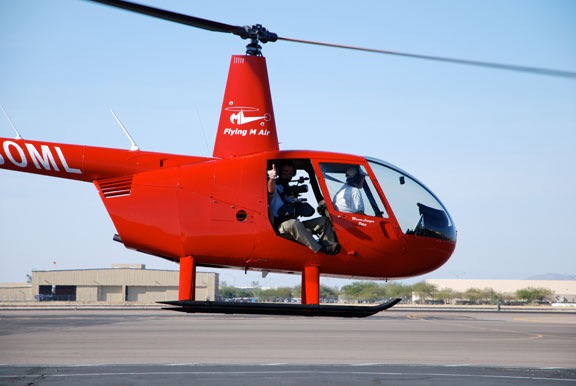
Dealing with In-Flight Passenger Requests

Remember the primary job of every pilot-in-command: fly the aircraft.

Phoenix MapYesterday, I had a rather unusual charter for Flying M Air. I needed to take two men on an aerial survey of commercial properties throughout the Phoenix area.

A Full Workload

For two hours, we flew low (about 300 feet AGL) and slow (about 50 knots) over building rooftops. While this may have been too low to need to worry much about traffic, I did have to keep an eye out for obstacles, such as towers. And because some of these properties were within Class D and Class B airspace, I had a lot of radio work to do.

As you might imagine, I had a pretty serious workload.

Yet ten minutes into the flight, it appeared that my under-prepared clients expected me to know the street addresses of individual buildings that we flew over.

For those readers who are not pilots, I may need to point out that finding the street address of a building you’re flying over is not easy. The address is not painted on the roof. The street out front isn’t labeled on the pavement.

Yesterday, we covered an area 26 x 33 miles in size. That’s over 800 square miles. It would not be possible to know the names of every single street — and recognize them from the air! — in an area that size.

Foreflight Street MapYet, believe it or not, I tried to accommodate them. I had my iPad with me and Foreflight software running. I had the Street Map displayed and was zoomed in far enough to read street names. When they asked, I attempted to read off the street name beneath us. I left it for them to try to get a number of the building. I did this for about 10 minutes.

And then I realized that what they wanted me to do was far beyond my duties as a pilot.

A Pilot’s Duty

Aviate, navigate, communicate. Those are my responsibilities, in the order of importance.

Aviate = Fly the aircraft. That means not only keep it in the air safely, but avoid hazards like other traffic and obstacles.

Phoenix Terminal ChartNavigate = Go where you need to go. That means knowing where you are, where you need to go, and how to get there. It means following the instructions of air traffic control. In my situation, it also meant keeping track of the airspaces I needed to fly in: Deer Valley Class D, Scottsdale Class D, Phoenix Class B, Chandler Class D, Phoenix Class B (again), and Deer Valley Class D (again). Certain rules apply in these airspaces and I needed to abide by these rules so I needed to know when I was nearing or in these spaces.

Communicate = Talk to air traffic control or other aircraft. Communication is required in controlled airspaces. Not only did I have to talk to towers to legally enter their airspace, but I needed to tell them what I wanted to do while I was in there. I had to acknowledge and respond to their instructions and traffic advisories.

If any one or two of these duties had been light — for example, if we were cruising point to point at 100 knots 500 feet AGL instead of flying low and slow in an area with potential obstructions or if we were flying in the middle of nowhere where navigation and communication weren’t a factor — I may have been able to provide them with more of the information they wanted. But with the heavy workload I had to deal with, adding another complex task — one that clearly required me to remove a hand from the controls and eyes from outside the cockpit — was far more than I could handle safely.

Indeed, if I had continued to try to provide this additional information for them, I would have put our flight in danger.

I was smart enough to realize this and I simply stopped providing address information. Instead, I mentioned street names that I knew as we flew over them. I let them deal with figuring out where we were.

Pressure on the Pilot

You might wonder why I even tried to meet this client request. After all, it seems like a no brainer. I was pretty busy doing what had to be done. Why add more to my workload?

The answer is easy: pressure to please the client.

All pilots feel this pressure. The client is paying for a service. We feel a need to please that client by providing every bit of service he requests.

But this is wrong. So often, client requests are unreasonable or unsafe. The pilot-in-command is responsible for the safe operation of the flight. The pilot in command has the authority to say no to any request he or she thinks would jeopardize the safety of the flight — or, for that matter, get him or her in hot water with the FAA.

As the owner/operator of a charter business, I may feel more pressure than a pilot who has no real stake in the profitability of the business or the ability to get repeat customers. In other words, I may feel more pressure to make clients happy. But should I? Of course not! I need to be a pilot when I’m in the air. I can be a business owner when I’m on the ground.

Client Shortcomings

In all honesty, I was a bit peeved with the clients. These guys were almost completely unprepared. The only legible map they had of the survey areas was an image on an iPhone with limited scalability. They didn’t have a GPS. They didn’t even have a camera. Either tool would have helped them get the location information they needed on their own. I’ve taken plenty of survey clients out on flights in the past and they’ve always been very prepared to track their location and take notes along the way.

How could I have made the situation better? I could have told them point-blank that I would not be able to provide exact street addresses during the flight. I could have recommended that they get a street map that they could mark up while we flew. I could even have refused to depart unless they had the tools they needed to get locations on their own. But I didn’t do any of these things. I was on the ground, wearing my business owner hat after prepping the aircraft for a 2-hour charter that had already been paid for in full. I wanted to complete the flight.

To the clients’ credit, after I stopped providing street names, they didn’t press me for them. I think they realized that my hands were already full. They took some notes and spent a lot of time just looking. At the conclusion of the 2-hour flight, they seemed happy enough with the results.

But I know they could have gotten a lot more valuable information — and made the cost of the flight more worthwhile — if they’d been better prepared.

Two Points

There is a moral to this story. Two of them, in fact.

  • A pilot needs to prioritize his workload in flight. The first three items must be aviate, navigate, and communicate. If doing all that doesn’t take up all of the pilot’s attention, additional tasks to meet passenger requests may be added.
  • A client needs to be fully prepared for an aerial survey mission. That means coming with maps, GPSes, cameras, or any other equipment that will help him get his part of the mission done. In addition, he needs to communicate, in advance, with the pilot to learn about the limitations of the flight.

Sometimes, when I read accident reports, I wonder whether the accident was caused by a pilot doing something other than his primary duty of flying the aircraft. While it’s great to be able to meet all the needs of a paying passenger, conducting a safe flight and getting back to base in one piece is far more important.

I’d love to hear other stories about handling client requests beyond the call of duty. Use the comments link or form for this post.

Why Are We Still Powering Down All Electronic Devices on Airliners?

There’s no real reason for it.

A Twitter/Google+ friend of mine, Chris, linked to an article on the New York Times website today, “Fliers Still Must Turn Off Devices, but It’s Not Clear Why.” His comment on Google+ pretty much echoed my sentiments:

I do all my book reading on an iPad, and it’s annoying that I can’t read during the beginning and end of a flight, likely for no legitimate reason.

This blog post takes a logical look at the practice and the regulations behind it.

What the FAA Says

In most instances, when an airline flight crew tells you to turn off portable electronic devices — usually on takeoff and landing — they make a reference to FAA regulations. But exactly what are the regulations?

Fortunately, we can read them for ourselves. Indeed, the Times article links to the actual Federal Aviation Regulations (FAR) governing portable electronic devices on aircraft, 121.306. Here it is in its entirety:

121.306 Portable electronic devices.

(a) Except as provided in paragraph (b) of this section, no person may operate, nor may any operator or pilot in command of an aircraft allow the operation of, any portable electronic device on any U.S.-registered civil aircraft operating under this part.

(b) Paragraph (a) of this section does not apply to—

(1) Portable voice recorders;

(2) Hearing aids;

(3) Heart pacemakers;

(4) Electric shavers; or

(5) Any other portable electronic device that the part 119 certificate holder has determined will not cause interference with the navigation or communication system of the aircraft on which it is to be used.

(c) The determination required by paragraph (b)(5) of this section shall be made by that part 119 certificate holder operating the particular device to be used.

So what this is saying is that you can’t operate any portable electronic device that the aircraft operator — the airline, in this case — says you can’t. (Read carefully; a is the rule and b is the loophole.) You can, however, always operate portable voice recorders, hearing aids, heart pacemakers (good thing!), and electric shavers (?).

So is the FAA saying you can’t operate an iPad (or any other electronic device) on a flight? No. It’s the airline that says you can’t.

Interference with Navigation or Communication Systems

In reading this carefully, you might assume that the airline has determined that devices such as an iPad may cause interference with navigation or communication systems. After all, that’s the only reason the FAA offers them the authority to require these devices to be powered down.

But as the Times piece points out, a 2006 study by the Radio Technical Commission for Aeronautics found no evidence that these devices can or can’t interfere. Sounds to me like someone was avoiding responsibility for making a decision.

In the meantime, many portable electronic devices, including iPads, Kindles, and smart phones have “airplane mode” settings that prevent them from sending or receiving radio signals. If this is truly the case, it should be impossible for these devices to interfere with navigation or communication systems when in airplane mode. And if all you want to do with your device is read a downloaded book or play with an app that doesn’t require Internet access, there should be no reason why you couldn’t do so.

And can someone really make the argument that an electronic device in airplane mode emits more radio interference than a pacemaker or electric shaver?

And what about the airlines that now offer wi-fi connectivity during the flight? You can’t have your device in airplane mode to take advantage of that service. Surely that says something about the possibility of radio interference: there is none. Evidently, if you’re paying the airline to use their wi-fi, it’s okay.

What’s So Special about Takeoff and Landing?

Of course, since you are allowed to use these devices during the cruise portion of the flight, that begs the question: What’s so special about takeoff and landing?

As a pilot, I can assure you that the pilot’s workload is heavier during the takeoff and landing portions of the flight. There’s more precise flying involved as well as more communication with air traffic control (ATC) and a greater need to watch out for and avoid other aircraft.

But in an airliner, the pilots are locked in the cockpit up front, with very little possibility of distractions from the plane full of seat-belted passengers behind them — even if some of them are busy reading the latest suspense thriller or playing an intense game of Angry Birds.

Are the aircraft’s electronics working harder? I don’t think so.

Are they more susceptible to interference? I can’t see how they could be.

So unless I’m wrong on any of these points, I can’t see why the airlines claim that, for safety reasons, these devices need to be powered off during takeoff and landing.

It’s a Control Issue

I have my own theory on why airlines force you to power down your devices during takeoff and landing: They don’t want their flight attendants competing with electronic devices for your attention.

By telling you to stow all this stuff, there’s less of a chance of you missing an important announcement or instruction. Theoretically, if the aircraft encountered a problem and they needed to instruct passengers on what they should do, they might find it easier to get and keep your attention if you weren’t reading an ebook or listening to your iPod or playing Angry Birds. Theoretically. But there are two arguments against this, too:

  • You can get just as absorbed in a printed book (or maybe even that damn SkyMall catalog) as you could in an ebook.
  • If something were amiss, the actual flight/landing conditions and/or other screaming/praying/seatback-jumping passengers would likely get your attention.

But let’s face it: airlines want to boss you around. They want to make sure you follow their rules. So they play the “safety” card. They tell you their policies are for your safety. And they they throw around phrases like “FAA Regulations” to make it all seem like they’re just following someone else’s rules. But as we’ve seen, they have the authority to make the rule, so it all comes back to them.

And that’s the way they like it.

How Cell Phones Fit Into This Discussion

Cell phone use is a completely different issue. In the U.S., it isn’t the FAA that prohibits cell phone use on airborne aircraft — it’s the FCC. You can find the complete rule on that in FCC regulation 22.925, which states (in part):

22.925   Prohibition on airborne operation of cellular telephones.

Cellular telephones installed in or carried aboard airplanes, balloons or any other type of aircraft must not be operated while such aircraft are airborne (not touching the ground). When any aircraft leaves the ground, all cellular telephones on board that aircraft must be turned off.

There are reasons for this, but an analysis of whether or not they’re valid is beyond the scope of this discussion.

I just want to be able to read books on my iPad from the moment I settle into my airliner seat to the moment I leave it.

Three Tips for Becoming a Better, Safer Pilot

My take on some advice offered by the FAASTeam.

The Deer Valley Pilot’s Association (DVPA) held its annual membership drive at Deer Valley Airport (DVT) in Phoenix yesterday. I’d joined the group earlier this month, when I discovered that membership entitled me to a $1.10/gallon discount on 100LL fuel at my preferred FBO there, Atlantic Aviation. One top-off was enough savings to pay the cost of a year’s membership.

DVPA EventI was so appreciative that when I heard about the event and the fact that a few aircraft would be on static display, I offered to put my helicopter on display. So yesterday morning, at 8:15 AM, I parked on the ramp in front of the terminal building to give attendees just one more aircraft to look at. I even hung out for a while and let kids climb into my seat.

FAA LogoThere were other organizations on hand, with tables set up under a big shade. The FAA’s Safety Team, which sponsors the WINGS pilot proficiency program, was one of them. They had a table full of informational flyers. Because of my general interest in helicopter accidents — which, by the way, I’m starting to think isn’t exactly healthy — I picked up a flyer titled “Helicopter Training Accidents.” Later, back home, I gave it a quick read.

The pamphlet focused on two areas of training accidents: autorotation and dynamic rollover. It provided a lot of bullet points under headings like “Autorotation — Common Errors” and “Dynamic Rollover Precautions.” It was pretty basic stuff, but good to read just to refresh my memory. I wish I could link to it here for reference, but I simply can’t find it online. I’ve scanned it; you can download it here. And believe me, there’s lots of online reference material available at their Web site.

But the most useful content — especially for new pilots or pilots falling into the complacency trap that can catch you at any experience level — were the bullet points under “Cockpit Resource Management and Personal Readiness.” Three of these points jumped out at me as great topics for discussion in a blog post. Here they are.

Oh, and although I’m a helicopter pilot and use helicopter examples here, most of this applies to airplanes, too.

Know your limits and observe them.

I think that this is one of the biggest causes of accidents — although I’d expand it to read “Know your limits and the limits of your aircraft and observe them.” Many of the accidents I’ve discussed in this blog can be categorized as what I call ‘stupid pilot tricks.” In so many cases, pilots overestimate their own skills or the capabilities of their aircraft either in general or under conditions they’re not accustomed to.

So how do you discover what your limits are? The best way is by experience. If you’ve successfully performed a maneuver consistently over time, that maneuver is probably within your limits — in the conditions in which you’re have successfully performed it. But whenever conditions differ, you need to proceed carefully to test your limits. For example, perhaps you’ve landed quite a few times off-airport on dirt and gravel in light wind conditions. But now you need to land on terrain littered with big rocks. Don’t assume that it’s just as easy as any other off-airport landing. Consider the risks and proceed carefully. Leave yourself an out. Don’t commit to setting down unless you know you can do it safely and then take off again later. The same goes for making an off-airport landing in a strong crosswind or tailwind situation. Or in dusty or snowy conditions. Have you done it successfully before? Multiple times? Consistently? Then it’s probably within your limits. But if the situation is brand new to you, you can’t possibly know for sure whether it’s within your limitations. Proceed with caution!

Advanced training can also help. If you find yourself with a need to perform maneuvers that you’re not sure about, find an experienced CFI and go flying with him. Let him train you, let him give you the additional support you might need to practice it safely. Isn’t it worth a few hundred dollars to get the experience you need to safely expand your personal limits?

As for the limits of your aircraft, that’s pretty easy. Open the Pilot Operating Handbook and look them up. If you fly the same kind of aircraft often, you should have most of the limitations memorized, including a rough estimate of out of ground effect hover capabilities at various weights and density altitudes. And if you find yourself in a situation where you’re not sure if an operation is even possible for your aircraft, reach for that book and look it up to make sure. It’s required to be on the aircraft, so there’s no excuse not to consult it. I’m not ashamed to admit that I’ve done this several times. I even keep a copy of the book in my office to make sure I can handle unusual client requests before booking a flight.

Develop and use good habits (e.g., checklists).

The FAA loves checklists and I’ve been told by a few pilots that they won’t let you pass a check ride unless you use available check lists during the flight. While I agree that checklists are extremely helpful — I actually created my own for preflight, startup, and shutdown when I flew LongRangers at the Grand Canyon back in 2004 — I also feel that if you perform the same series of tasks in the same order without distraction more than 50 or 100 times, a checklist becomes a bit redundant. So if you’re expecting me to wax-poetic about checklists, I’m sorry to disappoint you.

What I will expound on, however, is the idea of developing good habits for all phases of flight. Here are a few examples from my own flying:

  • Always perform a preflight inspection in the same order.
  • When adding oil during preflight, always leave the cowl door open until the oil cap/dipstick is replaced. Do not close that cowl door unless the cap/dipstick is confirmed present and tight.
  • Just before stepping into the aircraft, always do a complete walk-around starting and ending at the pilot door. Use that walk-around to check for open cowling doors and fuel cap tightness one more time.
  • Always perform all parts of the startup procedure, from sitting in the pilot’s seat and fastening my seatbelt to loosening frictions just before bringing RPM to 100%, in the same order.
  • Always check to make sure all doors are secured before lifting up. (I can reach all doors from my seat and all their windows have fingerprints where I push on them before each flight.)
  • Always do a visual scan of the area before lifting up and then again before departing the area.

These things, when done regularly, become routine. I actually feel as if something is wrong if I neglect to perform one of these tasks. I have even gone so far to climb back out of the aircraft before starting up to check fuel caps if I can’t recall doing so.

What’s a bad habit? How about storing papers, pens, or other items in the area beneath the collective? While some aircraft have ample storage space there, many do not. Don’t place anything there that could prevent you from getting the collective down in a hurry if you need to. How about leaving dual controls in when non-rated passengers are on board? Do you really want to worry about some idiot pushing the cyclic, resting his feet on the pedals, or having his fat butt blocking the collective when you’re trying to pull pitch? Pull those controls out if you don’t want the person beside you able to mess with them. Or how about glazing over or skipping your passenger preflight briefing? Do you know how you’d feel if your passenger were trapped in the aircraft after a mishap because you neglect to tell him how to open the door?

Think about the things you do when you fly. What good (or bad) habits have you developed? Get rid of the bad ones — they’re not going to help you become a better or safer pilot. Instead, think about the things you need to do or be aware of when you fly and incorporate them into your workflow or cockpit management.

Be constructively critical of each flight.

This is my favorite of the tips, the one that made me think this was a topic to blog about.

The trouble is, too many pilots are head cases who think they can do no wrong. No matter how well or poorly they fly or complete a mission, they’re too full of themselves and confident in their own capabilities to review what they’ve done and think of how it could have gone better.

The Pick Up/Set Down Challenge

I must have written about this elsewhere, but I can’t find it so here it is.

When I flew at the Grand Canyon in 2004, I averaged 10-14 flights a day. The flying itself was rather tedious, with only two extremely well-defined routes and no room for deviation. There wasn’t any opportunity to make it more interesting — other than the challenges Mother Nature threw in our way — so I decided to focus on the part of the flight where there’s always room for improvement: those 10-14 pickups and set downs.

From nearly day 1, I concentrated on that part of the flight, working hard to make every single pick up or set down as smooth as I could make it. Then, right after each one, I’d give it a score from 1 to 10, with 10 being the kind of pick up or set down where you didn’t even feel the aircraft make or lose contact with the ground. I didn’t have many 10s — I’m a tough scorer — but after a few weeks and months, I didn’t have many below 6 either.

To this day, I do the same thing with pick ups and set downs. The result: I’m pretty sure that few fellow pilots would find much fault in most of my pick ups or set downs. The passengers think they’re great no matter how low I’d score them — but what do passengers know?

Have you ever considered doing something like this for your flying? Challenging yourself for no other reason than to improve yours own skills? If not, why not?

The reality is that anyone can improve at least one aspect of any flight or mission. Just think about everything you did and focus on what wasn’t perfect. Then think about what you could have done to make it perfect — or at least closer to perfect.

Here are some examples:

  • During preflight, did you miss any inspections you should have done because you were distracted? If so, how could you prevent future distractions? (A friend of mine will restart a preflight inspection from the beginning if anyone interrupts him while he’s doing it.)
  • Did startup go smoothly? If not, what could you have done to make it better next time? (I’ve gotten to the point where I usually know how long to prime the engine before starting based on the ambient temperature.)
  • Was your departure smooth and within height-velocity diagram recommendations (if possible)? If not, what could have improved it?
  • Were your radio calls well-timed, concise, and correct? Is there anything you could have done to make them better?
  • Did you choose the best route to your destination? If not, what route might have been better and why?
  • Was your approach to landing suitable? If too steep/shallow, fast/slow, or with a tailwind, what could you have done to make it better or safer?

I can go on and on with examples, but you get the idea. Review each flight or mission and make mental notes about how it could have been better. Then, the next time you fly, act on those mental notes as appropriate. Not only will this make you a better, safer pilot, but it could help you develop some of those good habits I discussed earlier.

The point is, no matter how much experience you have and how great a pilot you think you are, you are not perfect and no flight is perfect. There’s always room for improvement. It takes a good pilot who is genuinely interested in becoming a better pilot to recognize this and work hard to get better. And better. And better.

Only You Can Make Yourself a Better, Safer Pilot

Not only is it within your control and capabilities to make yourself a better and safer pilot, but it’s your responsibility to do so. These three tips are a good place to get started.

What do you think?

Dangerous Flying: Abrupt Control Inputs

How sloppy flying could get you killed.

Recently, while flying with a 200-hour helicopter pilot, I was startled when he rather abruptly shifted the cyclic to make a turn. I didn’t say anything then because it wasn’t too abrupt (whatever that means). But when he did it again later in the flight with an even more abrupt movement, I spoke up and told him not to do it again.

Understand that we were flying a Robinson R44 Raven II, which has a rather unforgiving semi-rigid rotor system and very long rotor blades. We’re taught — or should be taught — during primary training to use smooth control inputs, especially when working with the cyclic.

I’m not a CFI and I don’t feel that I have the right to tell someone how to fly, but when a pilot does something I believe is dangerous, it’s my duty to speak up. So I did.

The trouble is, I’m not sure if he believes what I told him — that abrupt inputs are dangerous — or if he thinks I was just nitpicking his technique. (I let it go the first time partially because I didn’t want to be seen as a nitpicker.) Since so many pilots seem to read this blog to learn — or at least to get my opinions on things — I thought I’d discuss it here.

What Robinson Says

Section 10 of the R44 II Pilot’s Operating Handbook includes safety tips. Here’s the one that applies:

Avoid abrupt control inputs or accelerated maneuvers, particularly at high speed. These produce high fatigue loads in the dynamic components and could cause a premature and catastrophic failure of a critical component.

What Robinson is saying is that when you make abrupt control inputs you put stress on various aircraft components. They’re likely concerned about the rotor blades, mast, transmission, and control linkages most. This makes perfect sense.

Robinson Safety Notice SN-20, titled “Beware of Demonstration or Initial Training Flights,” includes these statements:

If a student begins to lose control of the aircraft, an experienced fight instructor can easily regain control provided the student does not make any large or abrupt control movements. If, however, the student becomes momentarily confused and makes a sudden large control input in the wrong direction, even the most experienced instructor may not be able to recover control.

And:

Before allowing someone to touch the controls of the aircraft, they must be thoroughly indoctrinated concerning the extreme sensitivity of the controls in a light helicopter. They must be firmly instructed to never make a large or sudden movement with the controls.

Of course, what worries Robinson here is that student pilots may make erroneous control inputs beyond what an instructor can fix to regain control of the aircraft.

What Worries Me More

January 31, 2012 note: Since writing this, a friend on the Rotorspace site has brought the topic of Mast Rocking to my attention. Apparently, some folks think that this accident may have been caused by Mast Rocking rather than an abrupt cyclic control input. I’m not convinced. Mast rocking supposedly does not cause the main rotor blades to diverge from their normal plane of rotation. How else could the tail be cut off in flight?

But what worries me more than putting stress on components is an accident report from 2006. I read this report on the NTSB Web site not long after the accident occurred. Back then, there was no known reason why an R44 helicopter with just two people on board for a long cross-country flight should fall out of the sky with its tail chopped off, but I had my suspicions. After my recent flight with the new pilot, I looked it up again. Here’s the probable cause (emphasis added):

The Canadian certificated commercial helicopter pilot was conducting a cross-country delivery flight with a non-rated passenger occupying the copilot seat. The passenger and pilot together had previously made delivery flights from the Robinson factory to Canada. Two witnesses saw the helicopter just before it impacted the ground and reported that the tail boom had separated from the fuselage. No witnesses were identified who saw the initial breakup sequence. Both main rotor blades were bent downward at significant angles, with one blade having penetrated the cabin on the right side with a downward slicing front to rear arc. The primary wreckage debris field was approximately 500 feet long on an easterly heading. The helicopter sustained damage consistent with a high-energy, fuselage level, vertical ground impact. Detailed post accident investigation of the engine, the airframe, and the control systems disclosed no evidence of any preimpact anomalies. The removable cyclic was installed on the left side copilot’s position, contrary to manufacturer’s recommendations when a non-rated passenger is seated in the left seat. The removable pedals and collective for the left side were not installed. The cyclic controls for both the pilot’s and copilot’s positions were broken from their respective mounting points. The copilot’s cyclic grip exhibited inward crushing. The Safety Board adopted a Special Investigation Report on April 2, 1996, following the investigation into R22 and R44 accidents involving loss of main rotor control and divergence of the main rotor disk, which included a finding that the cause of the loss of main rotor control in many of the accidents “most likely stems from a large, abrupt pilot control input to a helicopter that is highly responsive to cyclic control inputs.”

The National Transportation Safety Board determines the probable cause(s) of this accident as follows:
a loss of control and the divergence of the main rotor blade system from its normal rotational path for undetermined reasons.

(A full narrative is also available.)

This is pretty much what I’d imagined. The helicopter is cruising along at 110 knots in a very boring part of the California desert. For some reason, the pilot (or his passenger, who has access to a cyclic control), jerks the cyclic one way or the other. Maybe he was trying to dodge a bird. Maybe he was goofing off or pretending to be Airwolf. Who knows? The sudden input is enough to cause the blades to diverge from their normal path. One (or both) of them dip down and chop off the tail boom. The result: two dead bodies in a 500-foot long debris field.

And this is what was going on in the back of my mind when the pilot beside me made those sudden inputs.

Anyone who has flown a Robinson helicopter can tell you how responsive the cyclic control is. It wouldn’t take much effort to knock the blades out of their path. That’s why we’re taught — or should be taught — to use smooth control inputs.

Other accident reports like this one include: CHI05CA267 and MIA00FA102 (which is a “watch this” moment).

Other Concerns

Rotorcraft Flying HandbookThere are at least two other reasons to avoid abrupt cyclic movements. You can find all these in the Rotorcraft Flying Handbook, an FAA publication that’s a must-have in any helicopter pilot’s library.

Under the “Retreating Blade Stall” heading (page 11-6):

High weight, low rotor r.p.m., high density altitude, turbulence and/or steep, abrupt turns are all conducive to retreating blade stall at high forward airspeeds.

Personally, I don’t think retreating blade stall is an issue in Robinson helicopters, except, perhaps, at high density altitudes and high speeds. But in that case, you’d be exceeding Vne.

Under the “Low G Conditions and Mast Bumping” heading (page 11-10):

For cyclic control, small helicopters depend primarily on tilting the main rotor thrust vector to produce control moments about the aircraft center of gravity (CG), causing the helicopter to roll or pitch in thedesired direction. Pushing the cyclic control forward abruptly from either straight-and-level flight or after a climb can put the helicopter into a low G (weightless) flight condition. In forward flight, when a push-over is performed, the angle of attack and thrust of the rotor is reduced, causing a low G or weightless flight condition.

You can find an account of this (with a lucky pilot and passenger) in this accident report from July 22, 2010. Indeed, the problem may have occurred during the right turn the pilot initiated — did he jerk the cyclic over as my companion had done?

Another accident report that suggests mast bumping is SEA03FA148 (which took the life of a pilot I knew).

I’m Not Just Nitpicking

The point of all this is that I’m really not just nitpicking a fellow pilot with limited flight time. He performed a maneuver which I consider dangerous and I have all this information to back me up. It’s important for him — and for others who might not know any better — to avoid abrupt control inputs.

Robinson helicopters aren’t capable of safely performing aerobatic maneuvers. Don’t fly them as if they are.

Update, March 17, 2012: Here’s another example of an accident likely caused by an abrupt control input. This one resulted in mast bumping.

Interesting Links, May 5, 2011

Here are links I found interesting on May 5, 2011: