The Real Cost of Helicopter Ownership

Don’t believe what they tell you.

N7139L

My first helicopter, a Robinson R22.

Twenty years ago, if someone told me I’d own a helicopter before my 40th birthday, I would have told them they were nuts. Yet on October 3, 2000, I took delivery of my first helicopter, a 1999 Robinson R22 Beta II. Four years later, on January 8, 2005, I’d traded it in for a brand-spanking-new, designed to my specifications, 2005 Robinson R44 Raven II.

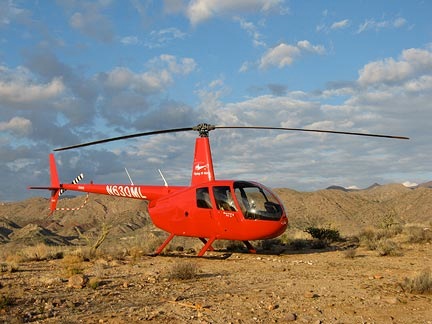
N630ML

My R44, parked out in the desert at a rides event.
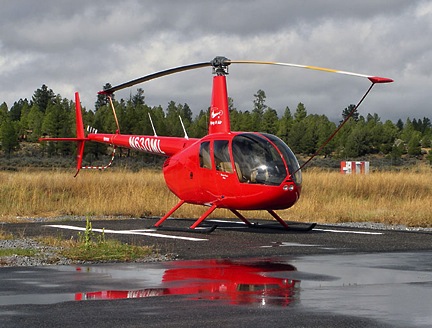
I was making a lot of money as a writer back then. A handful of bestselling computer how-to books — yes, they do exist — and a few good real estate investments left me with an excess of cash. We live rather modestly in a home we can afford and although I own more than my fair share of motor vehicles, none of them are new, flashy, or expensive. In other words, we don’t live beyond our means. Although my income fluctuates wildly — especially these days — I could foresee the ability to own and operate an R44 into the future, especially with added income from a small Part 135 on-demand charter operation.

Fueling my opinion on this matter was a document published by Robinson Helicopter Company on its Web site. Titled “R44 Raven II Estimated Operating Costs,” it painted a rosy picture of an “affordable” helicopter (if there is such a thing). The conclusion at the end of the “Operating Cost-Per-Road Mile” section stated that the calculated 98¢ per road mile “…compares favorably with some expensive automobiles, and will usually be lower when the value of time saved is considered.”

The Underestimated Costs

I knew from the start that the document was overly optimistic for my situation. Some of the numbers just didn’t seem right.

  • Back then, Robinson was calculating labor at $55/hour. At the same time, I had one mechanic charging me $95/hour and another charging me $105/hour. Later, I had a mechanic who charged me $75/hour. The local airplane fix-it guy, who I sent to the Robinson maintenance course, was the least expensive, charging me $45/hour at first but then bumping it up to $55/hour. He didn’t have the experience or specialized tools for the helicopter-specific inspections and maintenance I sometimes needed. So Robinson’s labor estimate was understated by 30-40%. (Nowadays, Robinson estimates $70/hour, which is still very low.)
  • Robinson’s estimated fuel and oil costs were consistently lower than what I was paying. That baffled me. Robinson is based in California, which has some of the highest taxes on fuel around. Just crossing the border from Arizona to California, you can expect to spend 50¢ more per gallon on auto fuel. Yet even today, they’re estimating $4.50/gallon for fuel. Tell that to the folks at Grand Canyon, who hit me up for $6/gallon early this month. And 14 gallons per hour? Realistically, its more like 15-17 gallons per hour. And oil: Robinson estimates 50¢/hour. Where did that come from? The W100+ oil I use costs about $6/quart and I seem to be adding a quart every 5 hours or so. Do the math.
  • Robinson’s insurance costs are based on Pathfinder rates. Pathfinder has a special relationship with Robinson that keeps its rates low. The annual premium in the current estimated operating costs — around $11,000 — aren’t too far off from what I paid when I insured with them for my commercial operation. Unfortunately, however, Robinson prorates this fixed annual amount over 500 hours of flight time per year. How many private owners — the same guys buying the expensive cars Robinson is comparing its helicopters to — fly 500 hours per year? I run a business with my helicopter and still don’t fly more than 200 hours a year on average. (Most private pilots fly less than 100 hours a year.) Take that $11,000 and divide it by 200 and the hourly cost for insurance alone is $55 — not the $22 figure Robinson uses.

Still, when I made my purchase/ownership decision, I plugged in whatever known numbers I had and relied on Robinson’s numbers for the unknown — especially the cost of periodic inspections and unscheduled maintenance. The result was within my budget, so I became an owner.

The Hidden Costs

I started getting slammed with unexpected costs not long after purchase. The first major component to need replacement was the starter and ring gear. My personal opinion on the matter is that the starter was defective and did not fully engage with the ring gear on every start. It began breaking teeth off the ring gear. The situation got so bad that it all needed replacement.

The clutch down limit switch, an $8 part, cracked. Of course, to replace it, you have to pull the tail cone, then put it back on and rebalance the fan scroll. That’s about an 8-hour job.

The auxiliary fuel pump went after about 500 hours. And then again another 500 hours later. And then again about 100 hours after that. The pump costs $1,600 new and $800 overhauled. I know because I’ve bought them both ways. Fortunately, a good mechanic can replace it in less than an hour.

I suppose the magneto overhaul is included in Robinson’s calculations. After all, they are required to be rebuilt every 500 hours. At a cost of $1,600 each time.

The upper bearing began leaking brown fluid at about 850 hours. The overhaul was $3,000 plus installation (which requires removal of the tail cone). The following year, it was still leaking and now overheating. I was lucky that the factory applied the overhaul cost to the price of a new one: $9,000.

I’ve also replaced the battery twice (at $400 a pop) and my oil pressure gauge once. I’ve had repairs done to my primary radio and GPS. The muffler cost another $2,200 this year.

These are just the things I’m remembering off the top of my head. If I pulled out my Engine and Aircraft log books, I’m sure I could list a lot more of the same: items that are supposed to last the life of the aircraft (okay, well maybe not the battery) simply not lasting.

But Wait! There’s More!

And then there are the Airworthiness Directives, Service Bulletins, and Service Letters. Because I operate under Part 135, these are not optional. So yes, we changed the orientation of the fuel control because some idiot who likely left his helicopter out in the rain all the time was getting water in his fuel — even though my helicopter was based in the desert, where it rarely rained, and was kept in a hangar. And we replaced the seat belt attachment points and changed the throttle link and swapped out the frame tube clamp and fiddled with the throttle linkage and changed the fuel hose supports and replaced the hard fuel lines and replaced the gascolator assembly and did something to the clutch actuator fuse holder wiring. Each one of these required maintenance items cost money — sometimes thousands of dollars. And none of them were included in Robinson’s estimate of costs.

A service bulletin that became an airworthiness directive required inspection and then repainting (or replacement) of the main rotor blades. To stay in compliance in my extremely corrosive (think dust) operating environment, I’ve had the blades removed and repainted twice in six years. It costs about $1,500 each time.

But the real kicker — the service bulletin that prompted this blog post — is the bladder tank retrofit for my fuel tanks. The kit for the retrofit will cost about $6,000 and there’s 40 hours of labor on top of that plus the cost to repaint the fuel tanks. By my calculations, this should cost me between $12,000 and $14,000. This is not one of the estimated costs on Robinson’s fairy tale cost estimate marketing document.

Limiting Robinson’s Liability

And why? I’ve discussed this at some length with two other owners and here’s what we think.

An operator — or possibly multiple operators — experience a problem. Water in the fuel tank, seat belt buckle attachment points cracking, stuck throttle link, cracked fuel lines, chaffed wiring. They whined and complained to Robinson and may have even threatened legal action. Or maybe they sued. Robinson is privately owned and self-insured. They examine the problem area and come up with a new design to fix it in the future. Then, to prevent other owners from giving them grief about it, they put out a service bulletin to address it. If you don’t comply with the service bulletin, you can’t come crying to Robinson with your problems.

The fuel line and fuel tank bladder situation is taking things to the extreme. There have been instances of post-crash fires on Robinson helicopters. (News flash: Most serious aircraft accidents involve post-crash fires.) To prevent legal action against the company, Robinson started issuing documents. First, in July 2006, came Safety Notice 40, which states:

There have been a number of cases where helicopter or light plane occupants have survived an accident only to be severely burned by fire following the accident. To reduce the risk of injury in a postcrash fire, it is strongly recommended that a fire-retardant Nomex flight suit, gloves, and hood or helmet be worn by all occupants.

Are they kidding us? Do they honestly expect me to put all my passengers in flight suits with helmets for tours around Phoenix? Or day trips to Sedona? And how do you think my passengers would feel if their pilot showed up wearing a pickle suit and helmet for their tour or charter flight?

But when that wasn’t enough to counter liability, Robinson followed up with three service bulletins: SB-67 (R44 II Fuel Hose Supports), SB-68 (Rigid Fuel Line Replacement), and now SB-78 (Fuel Tank Bladder Retrofit). They’re attempting to minimize the possibility of a post crash fire by making modifications to the fuel system to help prevent line and tank ruptures. So I’m basically required to modify my aircraft to reduce Robinson’s liability in the event that I crash and my helicopter catches fire?

That’s like requiring older car owners to add airbags and ABS brakes just to reduce the liability of the automakers.

Puddle

Good thing I complied with SB-55. I knew that 5 years later, I might park out in the rain.

Now if I were a private owner and not required by the FAA to comply with all these service bulletins, there’s no way I’d waste money complying with the ones that didn’t benefit me. For example why change the fuel control to avoid that water in the fuel problem? I live in the desert and my helicopter is hangared. There’s no rain falling on it. And even in the rare instance that it does get rained on, sumping the fuel tanks — which I should be doing before every flight anyway — would drain the water out. If I started finding water in the fuel tank, I’d reconsider my position and possibly get it done.

Similarly, this fuel system retrofit is beyond reason. It doesn’t make my flight any safer. It just makes crashing safer — as if that makes any sense. To get any benefit from it, I’d have to crash with enough impact and fuel on board to cause a fire. And guess what? There’s no proof that this retrofit would prevent a fire anyway.

But I don’t have the luxury of choice in these matters. When you operate commercially, you answer to a higher authority than common sense. But that doesn’t mean I won’t try to get an exemption. After all, they’ve given us until December 31, 2014 to comply. If it can wait four years, why can’t it wait indefinitely?

The Bottom Line

When you look at the cost of acquisition, the fixed cost of ownership, and operating costs, a helicopter like mine costs a heck of a lot more than the $185.10 per hour Robinson estimates. I can tell you exactly how much I spent on insurance, fuel, oil, maintenance, and repairs over the past 6 years: $208,000. Divide that by the 1100 hours I flew during that period and you get $200 per hour. Now add in the reserve for the overhaul that is required at 2,200 hours — roughly $100 per hour. So, after 6 years of operations, I’m seeing an average hourly cost of $300 per hour — not Robinson’s rosy $185.

Of course, that calculation doesn’t include my other costs to operate a business: advertising, supplies, travel, hangar rent, automobiles, taxes, fees, etc., etc. It doesn’t include depreciation, either. It also doesn’t include the $2,100 per month I pay on my aircraft loan or my initial $160,000 cash downpayment. Ouch.

Yet the Robinson document is never seriously questioned by anyone.

Here’s an example. Last spring, I flew from Salt Lake City to Seattle with another pilot who was building time, waiting for a CFI job to open up at his flight school. He told me about his plans to lease an R44 helicopter to start a business in a small Wyoming city. He had some specific ideas (which I won’t share here) that might or might not generate revenue. He’d run the numbers using Robinson’s estimates of operating costs plus the cost of the dry lease. The numbers he came up with — including his estimated dry lease payment — were about equal to my actual costs per hour. That told me his estimates were low. There’s no way someone leasing an aircraft could operate as cheaply as an owner; if there was, we’d all lease instead of buy.

Like Robinson, he based his proration of fixed costs such as insurance on a 500-hour flight year. That’s an average of about 10 hours a week flight time in a place that has a very definite and rather short flying season. And he didn’t consider the cost of service bulletins and airworthiness directives and unscheduled maintenance beyond what Robinson estimates. And I don’t think he considered getting a hangar and an office and all the things that go with running a business. So his numbers were very low and I knew it. I tried to tell him, but I don’t think he believed me. Maybe he thought I was trying to discourage him, to minimize my competition. That’s not the case. I was trying to help him avoid disappointment and possibly bankruptcy.

But hey, why believe me? Do my ten years of experience as a helicopter owner give me any more insight than a marketing document cooked up by the company manufacturing and selling the helicopters?

My pockets are not as deep as they once were. As print publishing continues its death spiral, it takes my books along with it. My six-figure income years are gone. I can’t afford to fly for fun anymore. I have to fly for hire. I have to earn money on every flight I conduct.

After all, I have to support my mechanics and the Robinson Helicopter Company.

On Truck Problems and Unbelievably Good Luck

They say we make our own luck, but how could I in this case?

I’m up in Central Washington State on a number of cherry drying contracts. My only means of transportation — unless you want to count my bicycle — is my husband’s 2001 Chevy Duramax Diesel pickup. It’s a great truck, well cared for and very reliable.

The other day, I started noticing that it was having trouble starting. It would start, but it needed more cranking than usual. I attributed that to my bad habit of listening to the stereo with the engine off while working on the helicopter. I figured that if I stopped doing that, the problem would go away after my next long, battery-charging drive to Wenatchee or Ephrata to fill the transfer tank with 100LL.

Yesterday was my big errands day. The weather was supposed to be good. I planned to do my laundry at 7:30 AM, then head up to Wenatchee to get some fuel, a new mattress for the RV, and some groceries. And maybe some sushi for lunch.

These grand plans came to a grinding halt when I turned the key in the truck. I waited, like a good girl, until the glow plug indicator (a diesel thing) had gone out, turned the key, and got the sound of an almost dead battery trying in vain to crank a diesel truck engine. Not enough juice.

Of course, I tried it a few more times. It just got worse.

I dialed my husband in Arizona. I figured I’d ask him if he’d ever experienced this kind of problem before and whether he had any tips on how I should start troubleshooting. But he wasn’t answering his phone.

And that’s when my next door neighbor here at the campground appeared, standing at the front of his travel trailer, wiping the sleep from his eyes. “Having trouble?”

He’d heard the dismal cranking sound and had come out to see if he could help. I produced a pair of jumper cables — the Girl Scout motto is “Be Prepared,” after all — and opened the hood. But instead of him pulling his pickup over to mine, he walked over with what looked like a brand new car battery. He put it on the ground beside the truck. Then he went back to his truck and came back with a battery tester. He tested both batteries in my truck. (Yes, it has two.) “They’re both a little low, but they should be okay. Sometimes it’s the connections. A loose wire or a gunked up terminal. Then the battery doesn’t charge right. You have terminals on the sides, but the ones on the top are better because they’re easier to keep clean.” He went on in the same vein, telling me more about car batteries than I ever wanted to know.

It was then that I remembered what this man did for a living: he traveled around the northwest, collecting and recycling car and truck batteries. In other words, he was a car battery expert.

How could I be so lucky?

We jump-started the truck from the battery he’d brought over and let it run for a while. That confirmed that the problem was not the starter. He pointed out where the connections could be a problem. I shut off the truck, then turned the key and restarted it. I asked him where I should go to get it fixed. He told me that if I took it to a car place, they’d probably try to sell me another battery, which I didn’t need. He was pretty sure I just needed my terminals cleaned. He said he could do it.

A Bad BoltTen minutes later, he was pulling off the terminal connectors and cleaning them with his wire brush. (For the record, I also had a wire brush in my toolbox.) One connector had quite a bit of corrosion — it might have been the culprit all along — and needed to be replaced; he pulled a new one out of his truck and did the job. (Do you know anyone who keeps new terminal bolts for side battery connections handy? Can you say Maria is lucky?)

We chatted while he worked. We talked about the geology of the area. He collected petrified wood and knew all about the Missoula Floods that had carved coulees through the volcanic rock of the area. “You should see them from the air,” I said.

“Yeah, that must be great.”

“When you’re done, I’ll take you and your wife.”

Ancient LakeSo when he was finished and I had everything put away, he followed me to the ag strip where the helicopter is parked. I had to do some interior reconfiguration — remove my helmet and the oil bottles under the front seat that I’m using for ballast, add headsets — and then we all climbed in. I took him and his wife for a 20-minute flight around the area that included downtown Quincy, Crescent Bar on the Columbia River, Quincy Lakes, the Gorge Amphitheater, and Frenchman’s Coulee. Along the way, I learned that he and I had the same birthday (different years) and that he’d won a helicopter ride when he was a kid in the late 1950s. He took pictures and said he’ll send me copies.

I really appreciated the way he stepped up and offered to help me with my truck problems. It’s nice to see that there are still people who are willing to come to a stranger’s assistance when they can. Most people couldn’t be bothered. Or they’d worry about liability.

He really appreciated the helicopter ride. He wouldn’t take any money for the parts or his hour or so of time in making the repair. This morning, before he and his wife headed out to their next campground, he stopped by to thank me yet again.

But it was me who needed to thank him again. Not only had he fixed my truck for free, but he’d given me a good excuse to go flying on a nice day — for a change.

Glass Replacement FAIL in Wickenburg

How does anyone get anything done in this town?

The old guy Mike called to give us an estimate for replacing two windows refused to take driving directions to our house. Instead, I had to drop everything and go out to meet him.

He wasn’t at the corner where he was supposed to be. Instead, he’d driven his unmarked truck past me and was waiting two blocks from our home. He used his cell phone to call me. I tracked him down and he followed me to my house.

Upstairs Windows

The window on the right is the one that needs replacing.

The windows are upstairs. He followed me up the stairs. I pointed out the 4 foot by 8 foot double-pane glass panel that needed replacement. The seal between the two panes had failed and moisture had slipped in. Each day, the window would fog up in a way that couldn’t be wiped clean. Since the window is one of two that offer the best view in the house, we wanted it fixed quickly.

He walked up to the window and looked at the garage roof outside. “How do I get out there?” he asked.

“On a ladder,” I replied.

“We can’t do that. The glass is big and heavy.”

“You did it twelve years ago when we first bought the house,” I told him. I pointed at the identical panel of glass beside it. “You replaced that one right after we moved in.”

“How did we get up there?” he asked.

“On a ladder.”

Bathroom Window

The bathroom window is broken.

I took him into the upstairs bathroom to see the other window that needed replacing. This was a small two-part window of white-smoked glass. One panel slid back and forth to open or close the window. The other panel remained stationery. The stationery panel had always had a bad seal that let moisture in, but we never bothered to replace it since you couldn’t see through it anyway. But during a recent storm, that panel’s outside pane had broken. We wanted it replaced.

He pulled off the panel that slid back and forth and set it down beside the toilet. He reached around, pushing the screen out a bit and mumbling about how he hoped nothing fell.

“How do you get up to this window?” he asked.

“On a ladder,” I replied yet again.

“What size ladder?”

“My husband uses an extension ladder. We have one you can use.”

He put the other panel back in place. “I don’t know why anyone would build a house like this,” he muttered as he led the way out of the bathroom.

My patience was stretching thin. “People don’t usually design houses just to make it convenient to replace windows,” I told him.

He went downstairs, outside, and around the side of the house. I followed. He looked up at the bathroom window, which had to be at least 20 feet off the ground. Then he looked at the comparatively short climb to the garage roof.

“Once you get up there,” I told him, you can walk on the garage roof pretty easily.

He looked at the situation for another moment, then suddenly said, “I can’t help you, lady.”

I don’t know if he was expecting me to argue or beg with him, but if he was, he was disappointed.

“Okay, thanks for your time,” I said quickly. “You can find your way out? Be careful backing up.”

And then I went into the house, leaving him find his way back to wherever it is he’d come from.

Of course, since the old guy is the only glass replacement option in Wickenburg — or at least the only one my husband could find — we’ll have to get someone up from Phoenix to do the job. But that’s typical here. No matter how much you try to spend money locally, you just can’t get what you need.

I Love My 1987 Toyota MR-2

Book value: $250. Reliability: Near 100%.

This morning, I had to drive down to Phoenix Deer Valley Airport (DVT) to pick up my helicopter for a charter out in Aguila, AZ. I have a 1987 Toyota MR-2 that I bought new in October 1986. That’s my airport car. It basically lives down in Deer Valley when I’ve got the helicopter out. The idea was to drive it down to Deer Valley, park it, do my flight, and then bring the helicopter back to its Wickenburg hangar so I could wash it before returning it to Deer Valley.

That was the idea, anyway.

This morning, the MR-2 roared to life, just like it aways does. But I had some trouble getting it out of first gear — I leave all my cars in gear when I park on our hilly driveway. I rolled back and got it half turned around. Then I attempted to shift into first or second to depart. The gearshift wouldn’t budge.

Understand this: the car is standard transmission. It was my first standard transmission car. I learned to drive stick on that car. A week after taking it home, I was driving back and forth to my job in downtown Manhattan from New Jersey, battling bridge and highway traffic. I got really good with a stick shift really fast.

And the car still has its original clutch.

It only has 133,000 miles on it. When I bought my Jeep in 1999, it became my secondary car. When I bought my Honda S2000 in 2003, it became my third car. I didn’t even need it for sporty drives anymore. That’s when it became my airport car.

R22 and Toyota at Howard Mesa

Here’s my old helicopter and Toyota MR-2 parked at Howard Mesa during the summer of 2004.

I don’t think I put more than 1,000 miles per year on it after that. It spent the summer of 2004 at Howard Mesa or Grand Canyon Airport when I flew helicopter tours for one of the operators at the Grand Canyon. It spent at least two years in Prescott as an airport car — my mechanic was based there for a while — and then another whole season in Scottsdale — I used to fly there quite often. When the Scottsdale cops called and threatened to tow it away, I drove it home. It spent a year or two in my hangar. Then I brought it down to Deer Valley to be my airport car there.

It didn’t mind neglect. It just about always started up when I turned the key. The only exception was once in Prescott, when the battery had finally died. Fortunately, I’d parked it pointing down a little hill. I released the break, popped the clutch in second gear and got it started. Drove it to Sears, put in a new battery, and went about my business.

Every year or so, I get the oil changed. I bought it new wiper blades and sun screens about a year ago.

Today, when the clutch wouldn’t engage, I wasn’t very surprised. Hell, it was the original clutch! More than 23 years old! What the hell did I expect?

Honda and Toyota

My Honda visits my Toyota at DVT.

I took my Honda down to Deer Valley. I locked it up. I wasn’t happy about leaving my best car overnight at Deer Valley. The Toyota was disposable. The Honda wasn’t.

As I flew west to my gig, I thought about the Toyota. I wondered if this was how it would all end. It didn’t seem right to put hundreds of dollars into a car with a Kelly Blue Book value of under $250.

I did my gig. It involved over 3 hours of flying north of Aguila. It ended with a flight to Wickenburg to photograph some property. I’d drop off my clients at either one of the spec homes they’d built or nearby private helipad that they led me to believe was part of their property. We were doing the photo flight when I heard some chatter on the radio. Wickenburg Airport was closed. Turns out, an F-16 trainer had crash-landed there earlier in the day. So I landed on the helipad. I didn’t have enough fuel to get back to Deer Valley and I couldn’t land at Wickenburg. I wound up leaving it there for the night. As I type this, the airport is still closed.

Back at home, Mike got the idea that maybe the Toyota’s clutch wasn’t broken. Maybe it just needed fluid.

We pulled the owner’s guide out of the glove box and looked it up. We found the reservoir. It was bone dry. (Oops!) We grabbed some of the recommended DOT 3 brake fluid out of the garage and filled the reservoir. I pumped the clutch pedal. A lot. I started the car, pushed down the clutch pedal, and smoothly shifted it into first gear.

It works.

So my Toyota continues to run smoothly with its 23-year-old clutch. Best of all, it seems very forgiving of my neglect.

How can I not love a car like that?

On Stiff Mixture Control Arms

The saga comes to an end…I hope.

If you follow the helicopter-related posts in this blog, you may know that I’ve been having a problem with my helicopter’s mixture control. My usual interface with this device is the red knob with a button on my instrument panel. Push the knob to get fuel flowing. Pull the knob to shut down the engine. Don’t mess with the knob in flight.

Simple enough, until it got stiff and then broke. I wrote about it here and here.

Mixture Control ArmTurns out, the reason the mixture cable became fractured is because the mixture control arm (lavender in this image) on the fuel control was too stiff. When I pushed or pulled the mixture control in the cockpit it was buckling and fraying. Pushing it in may not have resulted in full rich fuel, which could result in the engine running hot and lead to even more problems.

Good thing we caught it!

Fuel ControlEd, Wickenburg’s very best airplane mechanic, followed up by pulling the fuel control and fixing it, following instructions of the device’s manufacturer in Wichita, KS. Here’s what it looked like sitting on his workbench with the offending arm removed for repair. This is a lot more of my helicopter’s innards than I usually like to see. But it was interesting to see the piece I’d found an illustration of for this blog (see above) in a place where it was clearly recognizable.

Ed has since put everything back together. I was busy yesterday with the Endurance Ride, so I didn’t fly. And I don’t want to bother Ed on a Sunday. But come tomorrow morning, I’ll be at the airport with the helicopter out on the ramp. I’ll start it up and Ed will likely look at everything from below as its running to make sure the mixture is indeed full rich. I’ll pull the mixture and he’ll watch it work. And then he’ll sign off on it.

And give me a bill. (Ah, the joys of aircraft ownership!)

Of course, if things don’t go as planned, you’ll likely read more about it here.