On Buying Friends

Another wake-up call from Twitter on the state of some people’s minds.

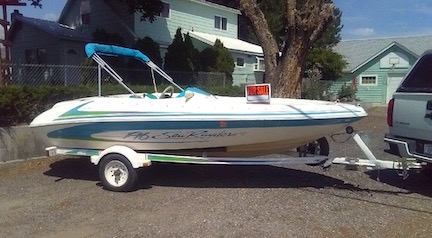
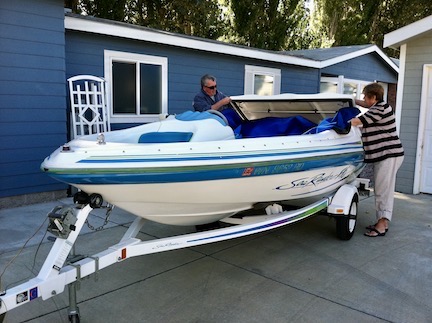
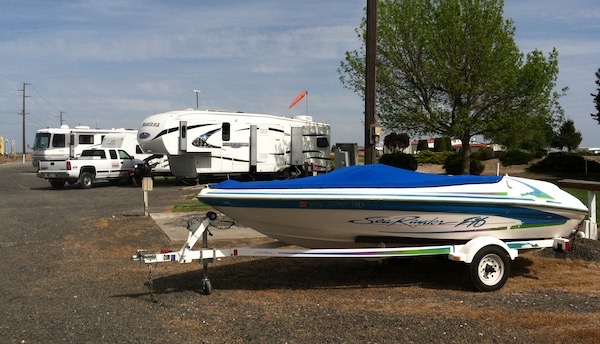
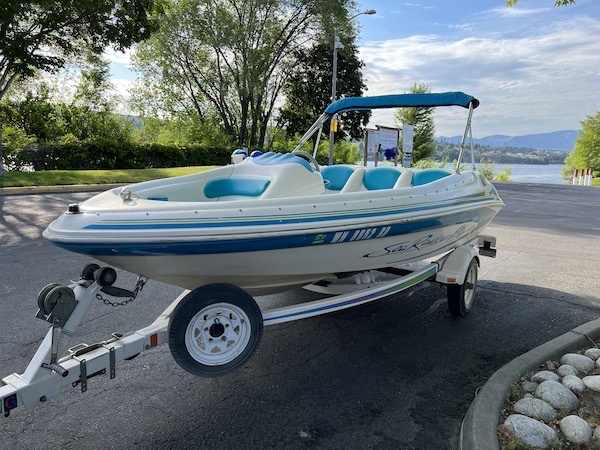
The other day, I went to look at a small jet boat. I friend of mine here in Washington was thinking of selling it and it sounded like what want I wanted to zip around the Columbia River on sunny days during cherry season. When I went down to take a look, I saw a 16-foot 1995 Sea Ray with some cosmetic issues (as you might imagine) but very clean and in generally good condition. The 120 hp engine was immaculate, tuned up twice a year for its entire life. The price, although not agreed upon yet, would be right within my limited budget for a boat I would only use five months out of the year; paying cash would not be a challenge at all.

I used my phone to take photos to send my husband. He thinks I’m nuts for even considering the purchase, but then again, he thinks I’m nuts whenever I consider a purchase. And he’s not spending every summer just a few miles away from one of the greatest boating and fishing rivers in the country.

Sea Ray Under ConsiderationI also sent the photo you see here to Twitter. I get around a bit and sometimes tweet photos of the things I see and do. It’s part of how I participate in social networks. Along with the photo, I tweeted:

Thinking about buying this for next summer.

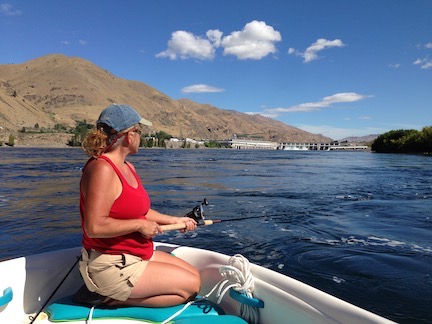
I went on with my life, as I usually do. (Contrary to what many people think, I do not live my life buried in a Twitter feed.) We covered the boat back up and made plans to take it out on the river later in the day. I returned around 5:15 with my friend, Pete (in the photo) and his 12-year-old son. Pete has a hitch on his truck and towed the boat to the ramp about 1/4 mile away. We launched it. Linda (in the photo), the owner, joined me for a ride on the river. Considering it hadn’t been used in at least a year, it started up pretty quickly (the battery was kept on a tender in the garage). We took it slow in the No Wake area, then Linda took it up to full speed. She made a few hair-raising turns before we switched places and I zipped around a little. Then I went back, traded Linda for Pete and his son, and took another ride. The boat performed very well and was small enough that I’d be able to handle it on my own.

The next morning, as I lay in bed waiting for the sun to rise, I went through my normal social networking routine, checking Twitter, Facebook, and Google+ for replies to anything I’d written and interesting new tweets. Among the replies was the following, posted by someone who apparently follows me on Twitter:

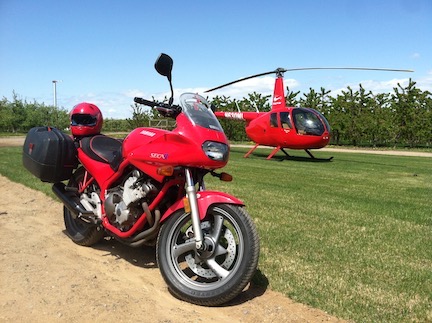
Maria, why do you want that boat? I suspect you have plenty of friends already just by having a helicopter.

If I’d been sitting up when I read this, my jaw probably would have dropped four inches. I had to read it five times to make sure I understood what he was implying. Was he trying to say that my primary purpose for buying this little boat was to make more friends?

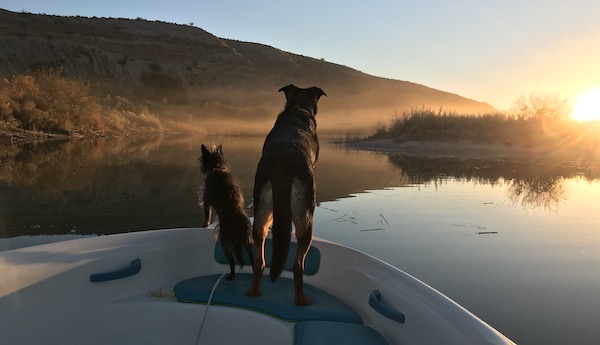
Crescent BarThat couldn’t be any further from the truth. I planned to use the boat mostly by myself, likely on weekdays when most of my friends were working. I imagined exploring the river’s lakes early and late in the day when the winds were calm and the light was good for photography. I imagined skimming over the river when the water was like glass (see photo), cutting a line across its surface at 40 miles an hour. I even imagined taking up fishing again. I had no desire to be out on the river on weekends when the crazies were out. And the boat’s weight limit is only 750 pounds with 5 seats — not the kind of thing you’d use for partying. Heck, I was told it can’t even pull a water skier.

I also need to stress here that I didn’t buy a helicopter to attract friends or even use as bragging rights. There’s a lot of people who don’t even know I own one. (Actually, I don’t own it — the bank and I are still partners on it; I pay them monthly, they let me keep it.) Yes it’s fun to fly around, but I can’t afford to just fly it for fun. It’s part of my business and I work it as hard as I can to make it pay for itself. On the limited times I get to fly it just for fun, I’m usually by myself. I don’t dangle it as a carrot in front of people as a lure into a “friendship.”

I felt a need to set this guy straight, so I replied:

People who are my friend just because I have a helicopter aren’t the kind of friends I want to go boating — or flying — with.

And this is really true. If someone “likes” me because I have a helicopter, they’re probably not the kind of person I want to be friends with. I don’t like shallow people.

His response came quickly; perhaps he’s the kind of person who does live his life buried in a Twitter feed.

I guess that means you have ‘real’ friends. It seems like I have to ‘buy’ mine. Sure wish I could that repositioning trip with you.

He was referring to my twice-a-year helicopter flight between Arizona and Washington, which I take paying passengers or pilots on in an attempt to recoup my costs. Believe me, I wouldn’t take strangers along for the ride if I didn’t feel that I had to. Flying a helicopter is very expensive.

Although the concept of “buying” friends was something almost beyond my comprehension, I certainly didn’t want to open that can of worms with him. I replied:

Yes, I have both real and virtual friends. I don’t tolerate “hangers on.” The trip is amazing; maybe next spring? I come back in May.

He replied:

I first saw your time-lapse video across Arizona (I think) it was amazing. I am envious of people that can go flying every day.

I wasn’t sure which video he was referring to. I hadn’t done a time-lapse across Arizona. I suspected he was talking about my Phoenix to Page video, which was on YouTube. I had done a time-lapse of a flight between Pendleton, OR and Salt Lake City, but I didn’t recall putting it online. I said:

I think that one was just a bunch of clips, Phoenix to Page? Or did you see the time lapse Pendleton to Salt Lake? long flights!

He replied:

the vid was PHX to Page, very enjoyable. I saw the motorcycle racer Mat Mladin has an R-44 for his profile pic. #envy

I had nothing more to say. I felt sorry for this guy. He’d used the word “envy” (or a form of it) in two of his tweets to me. It reminded me that there are people out there who aren’t satisfied with what they’ve been able to achieve in their lives — but instead of working hard to get where they want to be, they sit back and look at what everyone else has with envy. (I can think of two people I’m envious of, and what I envy about them is their jobsnot anything they own.) I don’t know this guy’s story and I probably don’t want to. I suspect we have nothing in common.

I do know people, however, who seem to think that a person’s value is based on what they own. These are the same people who go out and buy a new car every two or three years and load it up with a lot of blingy options. They live in big houses, have lots of toys like watercraft and off-road vehicles, and are in debt up to their eyeballs — or even drowning it it. They think they really want and need these things, but all they really want and need is to show their neighbors and friends and others that they have them.

People call it “keeping up with the Joneses.”

And if they’re lucky enough to have kept their jobs in this recession, they’re working their asses off 40-60 hours a week to earn enough money to keep their heads above water, leaving very little time to enjoy the possessions that have enslaved them.

I’m not like that. I work hard, I live well within my means, and I value my time — and the freedom to make my own schedule and enjoy life — above most things. I don’t have a showy car or house. I also don’t have any real debt (except for that bank partnership for the helicopter). I probably spend about 180 days a year goofing off, doing things I like to do.

It bothered me, at first, that this Twitter person seemed to think I was someone who used money to buy toys to attract friends — and envy, I suppose. But then I realized that he probably didn’t know any better. He might be like that and simply assume that everyone is.

I feel very sorry for the people who just don’t understand what life is all about. It’s not about collecting toys and impressing others with what you own. It’s about learning, growing, doing. It’s about earning friendships by respecting, genuinely caring about, and helping people you like — without asking for anything in return except perhaps a smile or a cup of coffee. It’s about spending quality time with friends and family, doing things together to enrich all of your lives. It’s about making every day count, every minute worth living.

So please don’t hold it against me — or label me as a conspicuous consumer — if I buy this little old boat. I just want to get out on the river a bit and make next summer just a little more fun.

A Dinner with Friends

Salmon, local wine, and home-made cherry pie with friends.

If you’ve been following this blog or my Twitter or Facebook accounts, you know that I’m in Washington State on the last of several cherry drying contracts. I’m not the only helicopter pilot doing this work. At the peak of the season, there were probably about 20 of us working in central Washington state for a handful of service providers. My company, Flying M Air, is probably the smallest of those service providers; this year I was able to add a second pilot for about half my season.

My friend, Jim, has been doing this work for about fifteen years. He starts the season in the Mattawa area and ends it in the Chelan area. He usually starts before me and finishes before me.

This year, I met Lisa, who was new to this work. She worked for the same service provider as Jim, starting down in Kennewick, moving up to Brewster for a while, and then ending the season in Malaga.

Unfortunately, I only met Lisa last week, on Thursday. I say “unfortunately,” because we really hit it off. She came up to my RV for dinner that evening and accompanied me to the Beaumont Cellars Dinner on the Crushpad event the following evening. We went wine tasting and had dinner together again on Sunday. By then, I felt as if I’d known her a long time.

The End is Here

On Friday, my contract in Wenatchee Heights was extended two weeks. It made sense; they’d barely started picking the 86 acres I was responsible for. Since this particular client picks by color, it would take at least two weeks to finish picking. Lisa was told she’d be needed until Wednesday. Jim, the last pilot left in Chelan, was waiting to get cut loose any day.

Moonset over Squilchuck

My view at dawn.

Weather moved in Sunday night. Asleep in my RV at the edge of a cliff over looking Squilchuck Valley, I was awakened by the wind at 3:30 AM. I looked out the window and realized I couldn’t see any stars. I fired up the Intellicast app on my iPad and was shocked to see the green blob indicating rain mostly to the south of my position. I dozed fitfully for an hour, expecting to hear rain on my roof at any moment. It may have been drizzling when I finally fell back to sleep.

At 7 AM, I woke to the sound of voices, trucks, and construction noise. The mostly blue sky was full of puffy clouds. Down in the lower part of the orchard, the pickers were already at work. There was no rain in the forecast at all.

Jim called at about 10 AM. I knew instinctively what he would say and beat him to the punchline: “You’re calling to tell me they cut you loose.”

“You’re a mind-reader,” he said. “Today’s my last day.”

We chatted for a while and then I remembered that Lisa had an opportunity to do a trip with a friend and would probably be open to letting Jim take over her contract for the next two days. He was also open to that, so I hung up and called Lisa. I told her what we were thinking.

“That’s great,” she said, “but today’s my last day, too. They’ll be done picking in about an hour.”

It was then that I realized that both of them would be gone by the next day.

Errands, Favors, and a Cherry Pie

The end of a cherry drying contract comes with logistical challenges.

Lisa’s challenge was easy. All she had to do was pack up, move out of her motel room, and drive the company pickup truck back to Spokane. Her employers would be sending some pilots in time-building mode out to Malaga to pick up the helicopter. She needed to send them the GPS coordinates for where the helicopter was parked so they could find it. She was toying with the idea of leaving that afternoon so she could spend some time with her family before her trip.

Jim’s challenge was a bit more…well, challenging. His helicopter was four hours from its 100-hour inspection, which needed to be done by his mechanic in Seattle. Flying to Seattle was usually a challenge in itself — the weather in the Cascade Mountains was typically miserable with low ceilings, making it a difficult, if not dangerous, flight. A weather window was required, but you never knew when that would be. After dropping his helicopter off in Seattle, he’d have to come back to Wenatchee to fetch his truck and drive it home to Coeur d’Alene. Of course, both his helicopter and truck were in Chelan, about 40 miles farther up the Columbia River. He needed to move his truck to Wenatchee to stage it there for his return from Seattle by airline. Then he needed to get back to Chelan so he could fly out with his helicopter the next day. He suggested a farewell dinner that evening and I promised to drive him back to Chelan.

I had a bunch of errands to run in Wenatchee and I got around to starting them that afternoon. While I was out and about, Lisa called. She’d decided not to leave that day; she’d leave first thing in the morning instead. What she really wanted to do was make a cherry pie. We’d already planned to do that before she left, but that was before she was cut loose early. I had an oven in my RV, so it made sense to do it at my place.

We decided to do it that afternoon. And instead of Jim and me going out to dinner in a restaurant, I’d pick up a piece of salmon and salad fixings and make dinner for all three of us. I was finishing up my errands and heading back to my RV when Jim called and I told him our revised plan. He was on board.

Lisa showed up around 5 PM. Since Jim was still a half hour out, we each took a bowl and headed into the orchard. Five minutes later, we had enough cherries for a pie — and then some.

Back in the RV, I gave the cherries my usual three-soaking bath in cold water to clean them thoroughly. Then Lisa went to work with my junky cherry pitter. It didn’t surprise me much when it broke when she was only half finished. She pitted the rest by hand. By the time Jim showed up, her hands were stained with cherry juice, making her look like a mass murderer.

Jim helped me put a filled propane tank back into its cabinet on my RV and hook it up. The strap that holds it in place bent and he was determined to fix it — which he did. If I wanted to be mean, I would have shown him the strap on the other tank which had similarly broken but had not been fixed. But instead, we went inside and kept Lisa company while she worked on the pie.

We also drank wine. Both Lisa and I had bottles that we’d opened recently but had never finished. We polished them off, one after the other over the course of the evening. I even opened another bottle to keep the wine flowing.

The Salmon Recipe

When the pie was safely in the oven, I got to work on dinner. That’s when Jim gave me a recipe that another one of the pilots had shared over the summer. Oddly, I happened to have all the ingredients. I reproduce it here because it was so excellent:

Ingredients:

  • Salmon filet
  • Mayonnaise
  • Onions, sliced thinly
  • Bacon, cut into pieces

Instructions:

  1. Place the salmon on a piece of aluminum foil.
  2. Spread mayonnaise on the fleshy side of the salmon.
  3. Sprinkle the onions and bacon pieces over the mayonnaise.
  4. Fold up the foil to make a packet.
  5. Place the packet on a preheated grill set to medium heat. If possible, cover the grill to keep the heat in.
  6. Cook until the salmon is done.

The Summer’s Best Dinner

I’d bought a beautiful 1-3/4 pound Coho salmon filet. It was too large to fit on my portable grill in one piece, so I cut it into three portions and made three packets. I absolutely lucked out with the timing. The fish was fully cooked, but still moist. The onions and bacon were cooked to perfection.

I served it with a salad of mixed greens, cucumber slices, vine-ripened tomato, bacon bits, goat cheese, and bottled balsamic vinaigrette dressing.

At one point, Jim said it was the best dinner he’d had all summer. I thought about it and had to agree.

It was the conversation that made it perfect. We talked about flying and about the surreal situation of a cherry drying contract. They seemed to think I had the best setup, living in my mobile mansion on a cliffside with a view, with 86 acres of cherries just steps away. I agreed that it would be tough to go home in September.

Jim was happy that his contracts had gone long enough to cover his annual insurance bill and the cost of his upcoming maintenance. He added up the hours he’d flown during the ten or so weeks he’d been in the area. It wasn’t a lot — cherry drying is not a time-building job — but it was more than usual.

Lisa said it was the best summer she’d ever had and that she’d do it again if she could. Her future holds bigger and better things, though: she’s starting officer school with the Coast Guard in January. She was already looking forward to the trip she’d be starting on Wednesday with a friend.

After dinner, Lisa sliced up the pie, which had been cooling on the stovetop. I produced some Haagen Daaz vanilla ice cream from my freezer. The cherries were big and plump and tender — not the mush you usually find in a cherry pie. It was a perfect finish to a great dinner.

The Party’s Over — and So Is the Summer

The party broke up after 10 PM. Lisa left to drive back to her motel for one last night. Jim and I climbed into my truck and started the long drive to Chelan. We talked politics on the way. We don’t agree on all points, but we’re both too stubborn to give in to the other. We’re also too smart — and too close as friends — to let our disagreement hurt our friendship.

I dropped him off at the house he’s renting. In the morning, his boss would pick him up and drive him to the orchard where his helicopter is parked. Then, weather permitting, he’d make the one-hour flight to Seattle. I’d pick him up at Wenatchee Airport at 5:12 PM and bring him back to his truck. The plan set, I started on my way back.

I got back to my RV just after midnight. The moon was up by then, casting a gray-blue light over the valley spread out before my RV. I listened to the crickets and looked out over that valley for a while. I had 12 days left in my contract and there was a slight chance that it would be extended again.

Yet with my friends gone, I felt as if my summer was over, too.

Interesting Links, February 4, 2011

Here are links I found interesting on February 4, 2011:

Suicide

Some thoughts.

I’ve been thinking a lot lately about suicide.

No, not me. I’m perfectly happy living my life until something else — preferably something quick and painless that occurs years and years from now — ends it.

It’s others.

Writing about Suicide

Here’s the situation.

I’m working on a memoir and one of the things that falls into the scope of the book is a suicide that touched my life in an unusual way. I need to write about it because it’s part of the story of that part of my life, but it’s difficult. The event was very dramatic to the point of being sensationalist. I don’t want to give readers the idea that what happened should be copied by any other sad sack who can’t cope. I want readers to understand the impact of this suicide on me and others. I want them to understand that what happened was wrong.

I refuse to refer to a person who died by suicide as a “suicide victim.” The victim is not the person who ended his own life. The victims are the people left behind, the ones tortured by memories of something they had no choice about witnessing. The victims are the people left to wonder, for the rest of their lives, why it happened or whether they could have prevented it. These are the victims of suicide.

So I’ve been thinking about it, trying to come up with a way to write about it.

I know what I want to say: that suicide is for selfish cowards.

Strong words, but when you’ve seen what witnessing a suicide can do to people, you can’t help but recognize the selfishness of the person committing suicide. A suicide doesn’t think about the people who see him cut his life short, often by violent means. He doesn’t think about the people — perhaps even a spouse or child — who find him dead, often in a grizzly state. He doesn’t think about the effect his suicide has on others — emotionally, financially, socially. Not thinking about others is the definition of selfishness.

Coward is a little tougher. The suicide that touched my life was a troubled man with diagnosed psychological problems. He’d tried once before. He was off his meds. Maybe he wasn’t a coward. Maybe his head was so fucked up that he just didn’t know any better. I try to think of him that way. It makes it a little easier to bear.

But it doesn’t do anything for the resentment I feel about being dragged into his final act.

The Others

I was lucky. The artist who committed suicide in the apartment building I owned wasn’t discovered hanging from the light fixture by me. It was his ex-wife. And the police kindly cleaned up after they took away his body, leaving only the smell of disinfectant and his oil paints.

And that woman I rented an apartment to the following year? She killed herself before moving in. I had a heck of a time figuring out how to get her deposit back to someone.

Today

Today, I learned that a friend of mine from 20+ years ago committed suicide at work on Friday. We hadn’t seen each other in at least 20 years, but we kept in touch, on and off, on Facebook and Twitter. His Facebook picture shows him at a ball game, smiling up at the camera. He used to tweet about sports like it was a driving force in his life.

A mutual friend I spoke to today agreed that he was always cheerful and never seemed to be unhappy. Neither of us can figure out why he might have taken his own life. We’ll likely never know. We’re not close enough to the family to make contact and ask. So we’re left to wonder.

And I think about my choice of words to generalize all suicides: selfish coward.

And I hate to apply those words to my old friend.

But what else can I think? He did the deed at work — for Pete’s sake! — in the middle of a weekday. The company has brought in grief counsellors to deal with coworkers. He left behind a wife and four daughters. One of the girls was starting college this semester. Didn’t he think of all these people as he prepared to end it all? Couldn’t he imagine how they would feel? Didn’t he care?

And what could possibly be so bad that a 46-year-old man with a job and home and wife and family would kill himself over? Whatever it was, couldn’t he face it? Couldn’t he deal with it, with the support of his family and friends, to move past the difficulties and get on with his life?

Selfish coward. I hate to think of him that way.

Help Me Understand

I don’t want to think about suicide. I want to think about flying and eating cherries and doing a photo shoot at Lake Powell. I want to worry a little about my dog, who needs some surgery, and my sister, who moved back in with my Mom last November. I want to finish up this big pile of work on my desk so I can write some invoices and take a few days off. I want to look forward to my husband’s brief visit next week, which will be the first time I’ve seen him since May. I want to go out to eat something I’ve never eaten before.

I don’t want to think about how I can write about a suicide that touched me while thinking about the suicide of an old friend.

Can someone help me understand?

I don’t want pity. I just want to understand why it happens and how I can write about it without offending the real victims: the people left behind.

Taming My Skeptical Side

And how a podcast helps guide me.

As a skeptic, I’m not likely to believe any outrageous claims without solid proof. Unfortunately, I’m surrounded by people with all kinds of weird beliefs.

I have friends and relatives who believe in things such as ghosts, astrology, psychic power, homeopathy, magnetic therapy, crystal power, and other tested yet unproven concepts. Over the years, as I’ve learned more and more about how unproven these ideas are, I’ve wanted to share my insight to “enlighten” these people in my life. All I’ve faced, however, is frustration. They cannot let go of these beliefs — even enough to see how “proofs” can be faked.

Strained Relationships

One example of this is psychic power. I know people who watch John Edward on television and visit psychics and swear that they’re proof of real psychic power. Yet it’s pretty obvious to me that all these “psychics” are doing is using cold or even hot reading techniques and relying on human nature to remember the “hits” and forget the “misses.” I try to convince these people that what they’re seeing is a scam, but they don’t believe me. In the end, frustrated and disappointed, I feel a great loss. My inability to reconcile my knowledge with their conflicting belief causes me to lose my connection with them. I can’t see them the same way anymore. It puts a huge dent in our relationship.

In the end, I simply begin avoiding the person with the wacky beliefs.

I should clarify here. There are a lot of things people believe in that I don’t. For example, God. I’m an atheist, but I understand why people believe in God and how it helps them in their daily life. If we don’t discuss it, their belief does not affect my relationship with them. The same goes for any other relatively harmless belief that they have but generally keep to themselves.

It’s only when a wacky belief becomes a regular conversation point that I start to back off. Some people want to “convert,” me, to make me a believer, too. But they’re unable to provide the proof I need to believe. I’m unable to convince them to look at things from my point of view. We’re deadlocked. If this becomes an issue each time we’re together, I’d rather just avoid them.

And yes, I realize that “wacky” is a strong and possibly derogatory term. But from my point of view, many of these beliefs are just that: wacky.

Realistic Expectations, Curiosity, and Caution

Actually SpeakingEnter the Actually Speaking podcast. This is a different kind of podcast for skeptics. Instead of preaching to the choir by providing us with the facts and scientific evidence we need to understand the reality of unproven beliefs, Actually Speaking helps us deal with non-skeptics in a way that won’t ruin our relationships. Podcaster Mike Meraz offers advice, not facts. And the advice is, on the whole, very good.

Want an example? Well, the frustration I feel when dealing with the wacky beliefs of my friends and family members is a perfect example of how my skepticism can damage my relationships with these people. My reaction — to just back off — isn’t doing anyone any good. Mike suggests, in Episode 2, to develop realistic expectations for discussing conflicting beliefs. My goal should not be to convince people that I’m right and they’re wrong but to try to guide them to the point of Episode 3, curiosity and caution. After all, does it really matter what they believe? Isn’t it more important that they consider looking at their beliefs from other points of view and not get hurt by decisions made based on faulty beliefs? (For example, using homeopathy to cure a real problem rather than visiting a physician and getting real medicine.)

I realized, after listening to these two episodes back-to-back, that I had actually taken this approach and had a very positive outcome. I thought I’d blog about it to share my experience with other skeptics.

The Dowser

The situation dealt with dowsing. According to Wikipedia, dowsing is:

…a type of divination employed in attempts to locate ground water, buried metals or ores, gemstones, oil, gravesites, and many other objects and materials, as well as so-called currents of earth radiation, without the use of scientific apparatus. Dowsing is also known as divining (especially in reference to interpretation of results), doodlebugging (in the US), or (when searching specifically for water) water finding or water witching.

A Y- or L-shaped twig or rod, called a dowsing rod, divining rod (Latin: virgula divina or baculus divinatorius) or witching rod is sometimes used during dowsing, although some dowsers use other equipment or no equipment at all.

In this situation, an acquaintance — we’ll call him Joe — claimed to be able to dowse gravesites to determine the gender of people buried. He uses this “skill” out in the desert to comb through pioneer cemeteries and other unmarked gravesites and report about people buried there.

A friend of mine — we’ll call him Bill — often writes articles about desert exploration for a Web site I manage, wickenburg-az.com. He went on an outing with Joe and documented Joe’s findings. He then submitted an article about their outing for inclusion on the Web site.

While the general content of the article was interesting and I was sure the site’s readers would enjoy it, Bill included a detailed listing of the gravesites Joe had dowsed, including the number of graves (all unmarked) and the genders of the people buried there. I had a problem with this. I don’t believe that dowsing can provide factual information like this.* Including an account of the dowsing and its results could undermine the otherwise fact-based account of their outing. It could make the site look like a supporter of unscientific beliefs or, to use a term that’s falling out of fashion among skeptics these days, woo.

Worse yet, the article could provide a source of information for serious researchers attempting to find gravesites of specific individuals. Was the female grave at the site the grave of so-and-so’s long-lost aunt Mabel? How could I allow the article to state that there was a female grave there at all if there was no real proof? After all, the only way to be sure there was a grave at all would be to dig it up — which was completely out of the question for so many reasons.

I was in a quandary. I wanted the article, but I didn’t want the dowsing information in it. Bill, I felt, was a reasonable person. I was surprised that he believed in the power of dowsing. So I asked him straight out if he thought the dowsing results were reliable. I told him that I hadn’t heard of any scientific proof of dowsing claims. I told him I was skeptical and didn’t want to report unreliable information.

Bill, to his credit, considered my words. He got on the Internet and started doing some research. He found some documents that seemed to support dowsing. But then he found better documents from better sources — scientific sources — that indicated that dowsing was unproven and likely not possible. He sent me links to everything he found. He seemed embarrassed that he had been taken in by Joe’s confidence in his abilities. He rewrote the article to remove the mention of dowsing. I published it on the site.

By encouraging Bill to be curious about dowsing, I’d helped him come to his own conclusions about dowsing. He made the changes I needed in his article to feel comfortable about publishing it. Our relationship didn’t suffer at all. In fact, Bill seemed genuinely glad that I’d questioned him about it and that he’d had an opportunity to learn more.

Exploring the Human Side of Skepticism

Actually Speaking has helped me see how the way I dealt with Bill’s belief was the right way to deal with it. I didn’t tell him he was wrong. I didn’t belittle or insult him. I treated him like the intelligent human being he is. I made him curious enough to do his own research and come to his own conclusion. This tells me that the advice is Actually Speaking is good, solid advice because it can work.

Are you a skeptic or critical thinker surrounded by people with wacky beliefs? If so, give Actually Speaking a try. I think it might help you with your relationships with these people.

——–

* Curious about dowsing? Check out this article in the James Randi Educational Foundation Library: “The Matter of Dowsing.” You can also read about an actual test in James Randi’s book, Flim-Flam! Psychics, ESP, Unicorns, and Other Delusions.