I change the way I eat in an attempt to head off health problems.
Last week I went for my annual check up. There was nothing new to report: I still had high blood pressure (which I’ve had for at least 15 years). I did manage to shrink a bit more — no matter how tall I tried to stand against the measuring do-dad, my height came out to 5′ 7-1/4″ instead of the 5′ 8″ on my driver’s license and elsewhere. The scale reported that I was about 5 pounds heavier with my clothes on than I had been that morning at home with my clothes off. Neither number was very good.
I chatted with the nurse about weight. As I’m aging, I’m feeling the affects of having to carry around more weight than I should. I told her about my experience with Medifast, which I blogged about here, and how I was not interested in eating fake food for the rest of my life. She told me about her experience with the Mediterranean Diet and highly recommended it. A while later, the doctor did, too.
This isn’t the first time healthcare professionals have recommended the Mediterranean diet. I’d been advised to try it before. And I did get a book full of recipes to learn more about it. But, in all honesty, I didn’t think it was that different from the way I usually eat. You see, I don’t eat a lot of processed/prepared foods and I don’t have junk food snacks in my pantry. I already have a somewhat “healthy” diet.

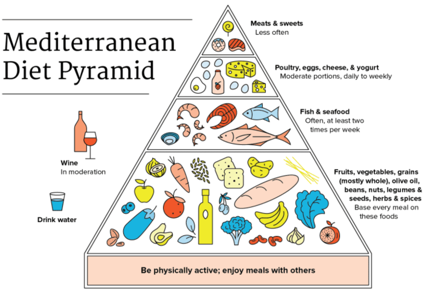
Search Google for “Mediterranean Diet Pyramid” and lots of versions will come up. This one is from an article on the America’s Test Kitchen website; check it out to see a larger version and explanation.
This time, however, I decided to take a closer look. The Mediterranean diet isn’t about weight loss as much as it’s about developing and maintaining healthy eating habits. It tries to condition you to make good food choices so you can stick to it for the rest of your life — which is exactly what I need and want. (I’m done with lose-weight-quick diets that promise you’ll lose weight if you just eat some ridiculous combination of foods that don’t make up a healthy balanced diet.) It presents a food pyramid that’s remarkably different from the one established by the FDA — it pushes lots of fruits, vegetables, and whole grains and severely limits red meats and sugary snacks and deserts. I could eat things like bread and pasta and rice (in moderation, of course) — which are verboten on so many weight loss diets. I could also eat lots of beans, fruits, and vegetables, which I actually like. The main change would be a reduction in meat and an increase in fish — and I have to admit that I’d already eat more fish if there was a decent fish market within driving distance of where I live.

I might call this book “Mediterranean Diet for Morons” since it’s so damn easy to follow.
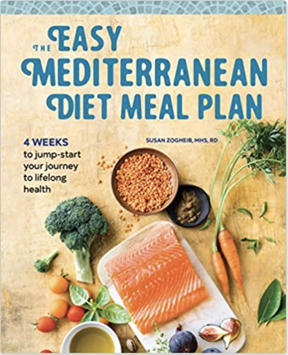
I decided to give it a try. But because my bigger problem is portion control, I thought I’d try it with a guide that included recipes and meal plans that made it easy for me to eat the right things without over eating. I wound up with The Easy Mediterranean Diet Meal Plan, which includes four weeks of meal plans with recipes and weekly shopping lists. I bought the Kindle version, which was only $6.99, so I could easily consult it anywhere on my iPad.
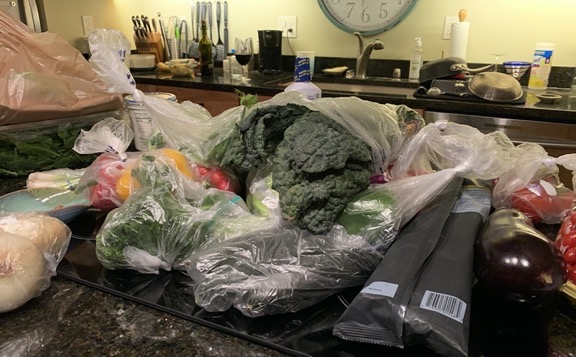
After reading up on the “good food” vs “bad food,” I paged ahead to the first week’s shopping list and dutifully added all the items I didn’t already have on hand to the shopping list in my phone. Although I’d planned on going food shopping this morning (Sunday), it was a good thing I had the list with me on Friday when I happened to be in town after a trip with a friend up to Twisp; I put on my mask and braved the Fred Meyer supermarket in mid afternoon to get what I needed. I don’t think I’ve ever spent so much time in the produce department in my life. I wound up with a ton of veggies, many of which — like kale and fennel (anise) — are not normally part of my diet. I had trouble stuffing them all into my fridge.

Here’s some of my haul from Friday’s trip to Fred Meyer. Kale, peppers, celery, and fennel were four veggies I seldom buy.
I spent Friday evening and all day Saturday trying to eat up the leftovers I’d accumulated during the week. (I hate throwing away food.) Then I went through my pantry and pulled out food items that I shouldn’t eat, just so they wouldn’t tempt me. I made two bags: one to store down in a box in my garage because I’d likely eat them again (in moderation) when my one-month trial was over and another to hand off to a neighbor because I was unlikely to eat them ever again. This process actually surprised me because I found that most of the stuff in my pantry was food that was okay on the Mediterranean Diet. (As I said earlier, my normal diet isn’t that different from this one.)
I also made the “cold cooked” oatmeal and quinoa dish that would be my breakfast for the next two days. (I ate it a little while ago with 2 ounces of fresh raspberries on top and it was very tasty.)
I discovered that all of the recipes in the cookbook made four servings. That meant I needed to cut them in half or fourths, depending on whether I was supposed to eat them for two or one meal. (Of course, this also meant that I bought too much food; I’m hoping some of it will last beyond the first week. If not, my chickens will get some good treats at the end of this week and I’ll shop more carefully next time.)

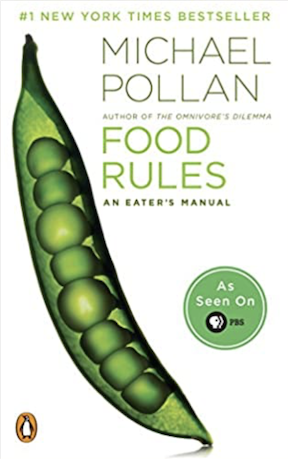
I should point out here that the Mediterranean Diet offers the same advice as Michael Pollan in his book, Food Rules. The main takeaway of that book is “Eat food. Not too much. Mostly plants.” I highly recommend the book if you’re interested in a quick, easy read that’ll help you eat healthier.
Anyway, the main challenge this first week is to keep my snacking under control between meals. I’m using my usual calorie counting app to keep track of what I eat and that’ll help keep me focused. Once I get into the swing of things, I should do fine. After all, I managed to stick to Medifast, which was quite difficult, for nearly 4 months. If I can do that, this should be a piece of cake.
(Or maybe a stick of celery, since cake isn’t on the list of “good food.”)
I’ll let you know how I do.
In the meantime, why not take a look at your own situation? Could you benefit from a better diet with healthier food? Or some of the other philosophies of a diet like the Mediterranean, which I didn’t even cover here: slowing down, taking time to prepare your food, enjoying meals at a table with your family and no screens? Be objective in your evaluation. Maybe it’s time for you to start thinking more about how what you eat and how you eat it affects your health. You never know.