Blogging the FARs: Fuel Requirements

A look at FAR Part 91.151 and real life.

FAR Part 91.151: Fuel requirements for flight in VFR conditions, sets up minimum fuel requirements for flight in VFR conditions. In other words, it’s telling you, the pilot in command, how much fuel must be on board to fly legally.

Here’s the language:

(a) No person may begin a flight in an airplane under VFR conditions unless (considering wind and forecast weather conditions) there is enough fuel to fly to the first point of intended landing and, assuming normal cruising speed:€”

(1) During the day, to fly after that for at least 30 minutes; or

(2) At night, to fly after that for at least 45 minutes.

(b) No person may begin a flight in a rotorcraft under VFR conditions unless (considering wind and forecast weather conditions) there is enough fuel to fly to the first point of intended landing and, assuming normal cruising speed, to fly after that for at least 20 minutes.

What does this mean?

It’s actually pretty straightforward. It’s saying two things:

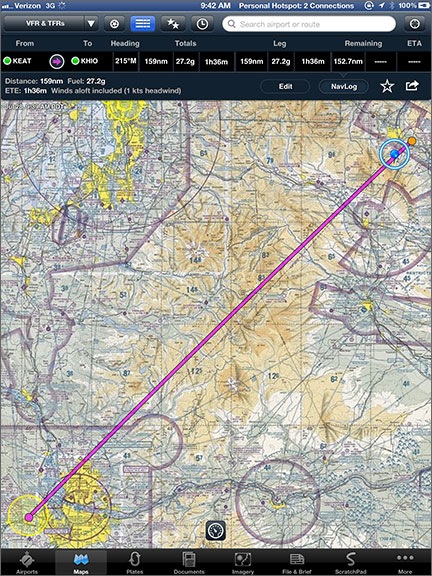
  • First, it assumes that when you do your flight plan for a flight, you should know how much fuel is required for that flight. For example, if you expect the flight to your first intended landing point (your destination) to take 30 minutes and you burn 12 gallons per hour, that means you’ll need 6 gallons to get to that destination (12÷60×30).
  • Second, it’s requiring that you load additional fuel as follows: If you’re flying an airplane during the day time, you’ll need an extra 30 minutes worth of fuel to be legal; in this example, another 6 gallons for a total of 12 gallons. An airplane at night would need 45 minutes worth of extra fuel; 9 gallons (12÷60×45) in this example for a total of 15 gallons. And a helicopter, which often has its own special rules, only needs an extra 20 minutes of fuel day or night; 4 gallons (12÷60×20) in this example for a total of 10 gallons.

The assumptions here are very important. You need to do a flight plan to know how much fuel it will take to get to your destination. A flight plan should take into consideration wind speed and other weather conditions — for example, conditions that may require rerouting around storms or low-visibility areas. This is related to FAR Part 91.103: Preflight Action, which states, in part:

Each pilot in command shall, before beginning a flight, become familiar with all available information concerning that flight. This information must include—

(a) For a flight under IFR or a flight not in the vicinity of an airport, weather reports and forecasts, fuel requirements, alternatives available if the planned flight cannot be completed, and any known traffic delays of which the pilot in command has been advised by ATC;

By flight plan, I mean a real flight plan. Normally, that involves calculations using a whiz-wheel or handheld aviation calculator or the ever-popular Duats online service (my personal favorite). Looking at a chart and guessing doesn’t count.

What Would a Prudent Pilot Do?

Although I don’t like the phrase “a prudent pilot” — primarily because it was used on me by an FAA person who seemed to suggest that I might not be prudent — it is something to consider here. Using the example above, if you had to complete the flight as planned, would you just take the fuel required by the FARs? In other words, 12 gallons for an airplane during the day, 15 gallons for an airplane at night, or 10 gallons for a helicopter during the day?

A prudent pilot wouldn’t if he/she could safely take more. The limitations would depend on max gross weight; performance at high elevations, high temperatures, or high weight; and weight and balance. Performing weight and balance calculations and checking performance charts is part of the responsibilities of every pilot in command before a flight — that’s part of FAR Part 91.103, too. Remember, you need to “become familiar with all available information concerning that flight.” [Emphasis added.]

Why would more fuel be better?

Do I really need to ask?

More fuel means more time in flight. For me, that could mean the difference between taking an in-flight detour to follow a stream or river that’s rarely flowing or flying the boring straight route from point A to point B. Or the difference between successfully navigating around a fast-moving thunderstorm or having to land in the middle of nowhere to wait it out. Or having to pay $4.90/gallon for fuel at my destination rather than $3.47/gallon at my home base.

According to the 2006 Nall Report, 10.5% of aviation accidents in 2005 were due to poor fuel management — pilots running out of fuel or forgetting to switch fuel tanks. This is sheer stupidity by the pilots — something I call “stupid pilot tricks.” By taking on more fuel than you need, you’ll be reducing the chance of becoming one of these stupid pilots. (You can still be another kind of stupid pilot, though.)

You’ll also have one less thing to worry about in flight.

And if that ain’t prudent, I don’t know what is.

Blogging the FARs: ATC Light Signals

For the first time, it might be something I need to know.

One of the nice things about my helicopter is that it has two com radios: a standard Bendix King KY196A and the radio that’s part of my Garmin 420 GPS.

My Radio Setup

Bendix King KY196AThe Bendix King is my primary radio and it’s wired into some controls on the cyclic stick. This is a neat feature that’s standard on Robinson helicopters. I can program 9 frequencies into the radio and cycle through them all without reaching down for the radio knobs or buttons. Once I get the frequency I want on standby, I simply push a second button on the cyclic to make that frequency active. I’ve got it programmed for all the CTAF (common traffic advisory frequencies), towers, and ATIS (automatic terminal information service) recordings of the airports I visit most: Wickenburg, Prescott, Deer Valley, etc.

Garmin 420The Garmin is primarily a GPS and I very seldom use the radio. It has the ability to automatically transfer the radio frequency for the current waypoint or selected airport to the standby slot, but when I’m flying, I don’t usually mess around too much with the GPS controls beyond simple Go To and Nearest functions. I prefer having a list of frequencies I need for a flight handy and manually tuning them in. A few times, I used the GPS to look up or check a frequency, but that was usually a practice exercise to make me more proficient with the GPS’s airport directory feature. I subscribe to the data card updates and usually have current (or at least recent) data in there, so it’s pretty reliable. It’s also a lot easier than fumbling with a chart while I’m flying. (One of the drawbacks of flying a helicopter is that you only have one hand to work with while you’re flying; your right hand is pretty much glued to the cyclic.) Another cool thing about the Garmin is that when paired with a Garmin GTX 330 transponder and flying within range of Class B airspace, it can graphically display traffic, as I wrote about here.

A nice thing about having two radios is that I can monitor two frequencies at once. This is especially handy if I want to fly between, say Deer Valley and Scottsdale — a distance of about 9 miles — and want to listen to the Scottsdale ATIS while monitoring the Deer Valley tower for instructions or traffic information. In fact, I’m starting to get into the habit of using the GPS’s radio to monitor ATIS and the Bendix King for two-way communications.

Two Radios are Better than One

Of course, the best thing about having two radios is that if one of them fails, there’s another one there to use. And just recently, having two radios became a very good thing.

On a recent flight, while talking to an airport tower’s controller, I heard static in my headset about halfway through my transmission. Turns out, when the transmission turned to static, it also became garbled on the controller’s end. He couldn’t understand what I was saying. But I could hear him and everyone else just fine.

I immediately tuned in the proper frequency on the Garmin, flicked the right switches to talk on that radio, and retransmitted. No problem. So it wasn’t my push-to-talk switch. It was something in the radio.

I had the radio looked at the same day. Of course, the mechanic could not duplicate the problem. And neither could I on my way home.

Don’t you hate when that happens?

Well, the problem has reared its ugly head several times since then. I’ve had another mechanic and an avionics shop look at it. The mechanic couldn’t duplicate the problem. The avionics shop pulled the radio out for a bench test and could find nothing wrong with it. But they did find a mysterious nut (as in hardware) in the mounting bracket. Once removed, the radio appeared to seat better in the console. We thought the problem would go away. But it didn’t.

So I’m left with a radio that receives perfectly and transmits perfectly about 75% of the time along with a second radio that works fine. I’ve taken to talking on the Garmin and listening to ATIS on the Bendix King.

Unfortunately, no one seems to have a spare KY196A for me to swap temporarily with mine. Putting another radio in there and flying with it for a bit would help me confirm that the problem is the radio and not some kind of helicopter wiring problem. You see, if I put in a different radio and the problem goes away, the problem is definitely my radio. But if the problem persists with a different radio in there, the problem is in the helicopter’s wiring or something related. I tracked down a refurbished KY196A, which I can get for a whopping $2,100. The folks there have promised to take it back if the problem turns out to be in the helicopter rather than the radio. So I’ll be ordering it on Monday.

What All This Has to Do with Light Signals

As usual, I’ve turned a short topic into a long story. But it does explain why light signals are on my mind.

If my second radio also decides to stop transmitting reliably, I may be unable to communicate with a tower. That would not be a good thing if I wanted to land at a towered airport.

The AIM (Aeronautical Information Manual) has a procedure for this. (You can find it in Chapter 6, Section 4-2.) The first thing a pilot who has lost communication capabilities should do is turn his/her transponder to 7600. That sends out a signal that says, “Hey, I’m over here and my radio isn’t working.” If you’re lucky, the tower you’re trying to land out has radar capabilities and can “see” you and this signal. The tower will attempt communication and will react according the results.

In my case, I can hear the tower perfectly fine. I can even transmit a little. So the controller would probably work with that and communications would continue, although rather one-sidedly, with me getting instructions and either clicking my push to talk button or speaking briefly to acknowledge.

But if I couldn’t hear a thing — or couldn’t get the controller to understand that I could hear — the controller would take out the light signal gun and point it at me. And that’s when I’d need to know what the signals meant.

I saw one of these light signal guns close up once, on a visit to Chandler tower. It’s a handheld device that they had attached to the ceiling inside the tower. It can display/flash three different colors of light: red, green, and white. The controller points it at an aircraft having communications problems and either shines a steady light or flashes a light. The pilot is supposed to understand what the signals mean.

So what do they mean?

FAR 91.125: ATC light signals includes this useful table:

Color and type of signal Meaning with respect to aircraft on the surface Meaning with respect to aircraft in flight
Steady green Cleared for takeoff Cleared to land.
Flashing green Cleared to taxi Return for landing (to be followed by steady green at proper time).
Steady red Stop Give way to other aircraft and continue circling.
Flashing red Taxi clear of runway in use Airport unsafe—do not land.
Flashing white Return to starting point on airport Not applicable.
Alternating red and green Exercise extreme caution Exercise extreme caution.

How This Might Appear on a Check Ride

Testing you on your knowledge of this is pretty straightforward for an FAA Examiner. He’ll simply say something like “You discover that your radio doesn’t work as you approach Class Delta airspace. What do you do?”

You reply that you tune your transponder to 7600 and circle outside the airspace until you see a light signal from the tower.

The examiner then says, “Okay, so you see the tower flashing a green light at you. What do you do?”

You explain that the signal means you should “return for landing” or enter the normal traffic pattern.

“You’re cleared to land?” the sly FAA examiner asks innocently.

“No. You need to wait for a steady green before you can land,” you reply, indicating full understanding of FAR 91.125.

To really prepare for this question on a test — and for it happening in real life — it’s a good idea to review the AIM Chapter 4, Section 3-13: Traffic Control Light Signals. Chapter 4, sections 2 and 3 provide additional information for working with Air Traffic Control at an airport. And, if you’re flying IFR (which I don’t), check out Chapter 6, Section 4: Two Way Radio Communications Failure.

Of course, all this might be led up with you explaining what’s required to enter Class D airspace in the first place. But that’s another FAR to explore.

One More Thing

I just remembered that I had a “voluntary radio failure” a while back when returning to non-Towered Wickenburg Airport (E25) from an off-airport location three years ago. If you’re interested, you can read about it here.

Blogging the FARs: Pilot in Command

A definition from FAR Part 1.1.

According the FAR Part 1.1: General Definitions:

Pilot in command means the person who:

(1) Has final authority and responsibility for the operation and safety of the flight;

(2) Has been designated as pilot in command before or during the flight; and

(3) Holds the appropriate category, class, and type rating, if appropriate, for the conduct of the flight.

How this Might Appear on Your Oral Exam

This seems like pretty simple stuff, but it always appears in an oral exam in one way or another. The examiner won’t ask for the definition. Instead, he’ll ask a question that refers to the definition, something like: “Who has final authority over the aircraft?” or, more slyly, “If the tower tells you, the pilot in command, something to do and you think it’s dangerous, should you do it?” The answers to those questions are the pilot in command (that’s you, if you’re taking the check ride) and no, respectively.

FAA examiners are very sly people. If they sense any doubt in your mind, they’ll push harder to get you to give them the wrong answer. The next question might be, “Are you sure? The tower is telling you to do it. Don’t they have authority?”

Don’t fall for this! Remember that when you’re pilot in command, you are the boss of the aircraft. But you also need to remember that if you don’t follow an ATC instruction, you better have a damn good reason why you didn’t and that reason better be somehow related to safety.

This is also covered in Part 91.3: Responsibility and authority of the pilot in command:

(a) The pilot in command of an aircraft is directly responsible for, and is the final authority as to, the operation of that aircraft.

(b) In an in-flight emergency requiring immediate action, the pilot in command may deviate from any rule of this part to the extent required to meet that emergency.

(c) Each pilot in command who deviates from a rule under paragraph (b) of this section shall, upon the request of the Administrator, send a written report of that deviation to the Administrator.

Stating the Obvious

The Part 1 definition also suggests that you can’t be a pilot-in-command until you qualify for it. For example, an airplane pilot can’t be a pilot in command of a helicopter until he/she gets a helicopter rating. And, oddly enough, a 5000-hour helicopter pilot who has been flying all kinds of helicopters but has never had any training in a Robinson R44 could not be a pilot in command of that helicopter. Why? Because there are additional regulations (specifically, SFAR 73) covering that make and model of helicopter.

The best thing to do before flying a different aircraft is to make sure you you have the rating(s) you need to fly it. When in doubt, ask a flight instructor, the company you may be renting from, or the FAA. My advice is to always fly with a flight instructor for at least 30 minutes in any different kind aircraft you’re flying for the first time. And make sure he/she signs off in your logbook before you go solo, just in case there is a problem. You (or your next of kin) want to be able to prove that you had some training in this lawsuit-happy country we live in.

Other Stuff to Check and Remember

And don’t forget the other Part 61 rules which also apply here, including qualifications, currency, etc. And the Part 67 medical requirements.

(To me, that’s the biggest problem with the FARs; they require you to look in a half dozen places just to get the answer to a question.)

By the way, the responsibilities of the pilot in command are also covered in the AIM Chapter 5, Section 5-5-1b.

Blogging the FARs: An Introduction

The FARs for mere mortals.

As a Single Pilot Part 135 operator — in other words, a commercial pilot allowed to do on demand air taxi and charter flights; more later — I’m required to take an annual check ride with an FAA examiner. The check ride isn’t just a flight to prove I can perform the required maneuvers. It’s also an oral exam that lasts 1 to 2 hours and is designed to confirm that I know my aircraft, my operating rules, and the FARs.

About the FARs

FAR stands for Federal Aviation Regulations. Technically, the regulations are really Titles 14 and 49 of the Code of Federal Regulations, so some very few people might refer to them as 14 CFR or CFR Title 14 or some other combination of that information. Most people don’t. Most people just call them the FARs.

If you’re reading this in another country, you likely have rules and regulations like this. I don’t know what they’re called or what they contain. And if you are reading this as a pilot flying in another country, don’t depend on what you read here to correspond to your country’s rules. It might be interesting, however, to get comments that explain how something differs in your country, so don’t be shy about sharing what you know.

Blogging the FARs

Like most pilots’ I don’t know the FARs by heart. I don’t even know the ones I’m supposed to know by heart. I simply know that regulations exist and where I can look them up in the big, fat book that’s revised annually. And, of course, I do know the gist and meaning of the regulations that affect my operations on a regular basis.

In an effort to

  1. refresh my memory about the regulations I’m supposed to know,
  2. translate those regulations, which are written in FAA-dialect legalese, into a language I’m more familiar with, like plain English,
  3. provide myself with reference material for future study,
  4. provide site visitors interested in aviation with some information they might find useful, and
  5. generate a comments-based discussion about some of the FARs and why they’re important, stupid, good, bad, or whatever,

I’ve decided to write a series of blog entries that explore the various FARs.

If you’re not a pilot, you may not find this too interesting. I understand. Many pilots don’t find this too interesting, either. But they are the rules and we do need to be familiar with them. If you have any interest in aviation and how the system works to remain safe, you might find some of these posts very interesting. If so, enjoy. And ask questions in the Comments if you need clarification.

If you are a pilot, please remember that I’m not an expert. I read FAA-dialect legalese no better than the next guy and there is a chance that I might misinterpret something. If you think I got it wrong, speak up in the Comments area for the article in which the error appears. But please do back it up with some other reference so I can confirm the correction. If you have more to add about a topic — especially stories about how that topic affected you — please share your experience. We can all learn together. Personally, I learn better from stories than from boring 1000-page books written in legalese.

All of these articles will appear in the Flying category of this site. If you just care about flying and not about the other things I write about, I recommend that you subscribe to the category with an RSS reader, the live bookmarks feature of Firefox, or some other subscription method. (You can also subscribe to get new content automatically by e-mail.) That’ll filtering out my geeky computer stuff and my occasional political rants.

The FARs I’ll Cover

I’m not going to cover all of the FARs here. I’m only going to cover the ones that directly affect my operations, the ones I’m likely to be asked on my check ride. These are the same one you might be asked on a private, commercial, or Part 135 check ride. And of course, being a helicopter pilot, I won’t be dealing with any airplane-only regulations. In fact, if you’re a pilot and you read these, you’re likely to get a good picture of how airplane and helicopter operations differ. Don’t worry; I’ll make a special note if anything I write about is helicopter-specific.

Generally speaking, I’ll be covering material from FAR Parts:

  • 1 – Definitions and Abbreviations
  • 61 – Certification: Pilots, Flight Instructors, and Ground Instructors (I’ll concentrate on Pilots)
  • 67 – Medical Standards and Certification
  • 71 – Designation of Class Airspace Areas; Service Routes; and Reporting Points
  • 73 – Special Use Airspace
  • 91 – General Operating and Flight Rules
  • 119 – Certification: Air Carriers and Commercial Operators
  • 135 – Operating Requirements: Commuter and On Demand Operators
  • SFAR 73 – a Special regulation for Robinson helicopter operators

I won’t be covering them in this order. I’ll be covering them in the order I study them in. And the articles I write are likely to appear here weekly over an extended period of time, so don’t expect to read it all next week.

Some Additional References

If you’re interested in FARs, you’ll likely find some of the following reference material quite useful:

  • FARs online. You can read the current version of the FARs on the Web on the FAA’s Web site. This should be the most up-to-date version of the FARs available for free.
  • FAR/AIM 2007: Federal Aviation Regulations/Aeronautical Information Manual (FAR/AIM series)AIM or Aeronautical Information Manual. This is the plain English text that actually explains the rules and provides additional how-to information for pilots. Every U.S. certificated pilot should have and read this book. Normally, when you buy a book containing the FARs, the AIM is appended to it. So what you’re really buying is a FAR/AIM. My understanding of this document is that the text is prepared by the government and is in the public domain. A variety of publishers print books of the information and some add illustrations and supplemental text to the AIM part of the book. So you’ll find several versions of the book. I buy the ASA version shown here for financial reasons; I’m required to buy it every year and usually get an offer to get it sent to me for under $15 as soon as it’s printed (normally late in the previous year). But there are other versions out there and you can even buy the AIM as a separate book, without the FARs.
  • FARs in Plain English by Phil Croucher. This book attempts to do what I’m doing here, but for most of the FARs. I have this book and don’t really care for it, primarily because some of the rules I need are omitted and the book isn’t updated regularly. (The FARs are updated every year.) The book is also quite expensive for us poor pilots, retailing for $44.95.

Comments?

Please do share your comments about this little project. The Comment link is below. I’d also be interested in learning about other online resources, as well as opinions of the ones listed here.

A Professional Pilot?

I’m not impressed.

Yesterday, my friend Ray flew me down to Mesa, AZ, in his airplane so I could pick up my helicopter, which was down there for its big annual inspection. While we were taxiing from Ray’s hangar to Runway 23 in Wickenburg, we heard the following exchange between two pilots on Wickenburg’s frequency:

Premier 1-2-3 (not the exact call sign; Premier is a small “corporate” jet): Wickenburg, this is Premier 1-2-3. Is there anyone there?

PanAm 5 (not the exact call sign; PanAm is a flight school based at Deer Valley Airport (DVT) that does a lot of practice landings at Wickenburg): This is PanAm 5 at Wickenburg.

Premier 1-2-3: Can you tell me the winds down there?

PanAm 5: The winds are shifting around a little, but they’re mostly out of the southwest at about 5 or 6 knots.

Premier 1-2-3: Oh, great. Thanks….So that means you’re using Runway 26 down there? Is that the runway number?

PanAm 5: It’s actually Runway 23.

Premier 1-2-3: Oh, thanks. We don’t have any approach charts or anything for Wickenburg so we’re kind of flying by the seat of our pants.

Yes, he really said that.

The radio went quiet for a few moments, then another pilot called to say he was 5 miles north, inbound for landing.

Premier 1-2-3: Premier 1-2-3 is about 3 miles south. We’ll be making left traffic for Runway 23.

Pan Am 5: Actually, it’s right traffic for Runway 23 at Wickenburg.

Premier 1-2-3: Okay. Thanks. Right traffic for Runway 23.

At this point, the FBO attendant came on the radio to provide wind and unofficial altimeter setting information. (It’s a good thing the altimeter setting is unofficial, since it’s off by nearly 100 feet.) She asked if the jet wanted fuel on landing and he told her he didn’t, that he was just dropping off some passengers.

We were holding short behind a PanAm plane when the jet came in, zipping past us. He was nearing the other end of the runway where the terminal was when the FBO woman came on again to ask if he knew where to park to discharge his passengers. He told her he’d been there before, then advised everyone that he was off the runway.

Ray and I had been discussing this jet pilot’s lack of professionalism while we were waiting. Both of us knew that one of a pilot’s responsibilities for a flight, as stated in Part 91 of the Federal Aviation Regulations (FAR‘s). From Section 91.103, Preflight Action: “Each pilot in command shall, before beginning a flight, become familiar with all available information concerning that flight.” Surely that must include runway numbers (which are determined by magnetic course headings) and traffic pattern information. This information is available on the Sectional Chart and in the Airport/Facilities Directory, both of which are required to be on board for commercial flights. They’re also available on the Web on various airport information Web sites and on the FAA’s Web site. Heck, I’m a helicopter pilot and I’m supposed to avoid fixed wing traffic when I land at airports, yet I usually know the runway numbers and traffic pattern information just so I can get an idea of where planes might be.

This guy simply hadn’t done his homework.

The PanAm plane in front of us took off. Ray rolled onto the runway. As the PanAm plane drifted to the north of the centerline (likely because of the wind), we took off and headed south.

I’ve since given the exchange a bit more thought. What if the Jet was arriving after 4 PM, when the FBO was closed, and the traffic pattern was empty. Where would he have gotten his information. He was only 5 miles out on his first call; would he have had time to look at his chart or A/FD? Or would he have assumed Runway 26 from memory, made a left traffic pattern low over the homes on the southeast and east sides of the airport, and adjusted his approach only when he realized he was on the wrong heading — 30° off? Approaching at a heading of 260 would have put him right over the homes on Broken Arrow Road — the homes of people already complaining about noise now that the runway is 1500 feet closer to their homes. Would his action have had a long-term impact on the airport?

The point here is, all pilots are responsible for gathering information about the flight — including the airport they intend to land at. This guy acted irresponsibly and was fortunate enough to have people on the ground that could provide him with the information he needed.

But as any pilot knows, you’re not always lucky. You need to do your homework before you get on board and start the engines.