Dealing with In-Flight Passenger Requests

Remember the primary job of every pilot-in-command: fly the aircraft.

Phoenix MapYesterday, I had a rather unusual charter for Flying M Air. I needed to take two men on an aerial survey of commercial properties throughout the Phoenix area.

A Full Workload

For two hours, we flew low (about 300 feet AGL) and slow (about 50 knots) over building rooftops. While this may have been too low to need to worry much about traffic, I did have to keep an eye out for obstacles, such as towers. And because some of these properties were within Class D and Class B airspace, I had a lot of radio work to do.

As you might imagine, I had a pretty serious workload.

Yet ten minutes into the flight, it appeared that my under-prepared clients expected me to know the street addresses of individual buildings that we flew over.

For those readers who are not pilots, I may need to point out that finding the street address of a building you’re flying over is not easy. The address is not painted on the roof. The street out front isn’t labeled on the pavement.

Yesterday, we covered an area 26 x 33 miles in size. That’s over 800 square miles. It would not be possible to know the names of every single street — and recognize them from the air! — in an area that size.

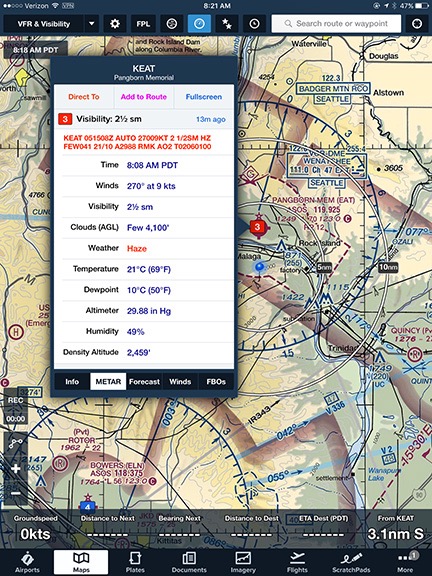
Foreflight Street MapYet, believe it or not, I tried to accommodate them. I had my iPad with me and Foreflight software running. I had the Street Map displayed and was zoomed in far enough to read street names. When they asked, I attempted to read off the street name beneath us. I left it for them to try to get a number of the building. I did this for about 10 minutes.

And then I realized that what they wanted me to do was far beyond my duties as a pilot.

A Pilot’s Duty

Aviate, navigate, communicate. Those are my responsibilities, in the order of importance.

Aviate = Fly the aircraft. That means not only keep it in the air safely, but avoid hazards like other traffic and obstacles.

Phoenix Terminal ChartNavigate = Go where you need to go. That means knowing where you are, where you need to go, and how to get there. It means following the instructions of air traffic control. In my situation, it also meant keeping track of the airspaces I needed to fly in: Deer Valley Class D, Scottsdale Class D, Phoenix Class B, Chandler Class D, Phoenix Class B (again), and Deer Valley Class D (again). Certain rules apply in these airspaces and I needed to abide by these rules so I needed to know when I was nearing or in these spaces.

Communicate = Talk to air traffic control or other aircraft. Communication is required in controlled airspaces. Not only did I have to talk to towers to legally enter their airspace, but I needed to tell them what I wanted to do while I was in there. I had to acknowledge and respond to their instructions and traffic advisories.

If any one or two of these duties had been light — for example, if we were cruising point to point at 100 knots 500 feet AGL instead of flying low and slow in an area with potential obstructions or if we were flying in the middle of nowhere where navigation and communication weren’t a factor — I may have been able to provide them with more of the information they wanted. But with the heavy workload I had to deal with, adding another complex task — one that clearly required me to remove a hand from the controls and eyes from outside the cockpit — was far more than I could handle safely.

Indeed, if I had continued to try to provide this additional information for them, I would have put our flight in danger.

I was smart enough to realize this and I simply stopped providing address information. Instead, I mentioned street names that I knew as we flew over them. I let them deal with figuring out where we were.

Pressure on the Pilot

You might wonder why I even tried to meet this client request. After all, it seems like a no brainer. I was pretty busy doing what had to be done. Why add more to my workload?

The answer is easy: pressure to please the client.

All pilots feel this pressure. The client is paying for a service. We feel a need to please that client by providing every bit of service he requests.

But this is wrong. So often, client requests are unreasonable or unsafe. The pilot-in-command is responsible for the safe operation of the flight. The pilot in command has the authority to say no to any request he or she thinks would jeopardize the safety of the flight — or, for that matter, get him or her in hot water with the FAA.

As the owner/operator of a charter business, I may feel more pressure than a pilot who has no real stake in the profitability of the business or the ability to get repeat customers. In other words, I may feel more pressure to make clients happy. But should I? Of course not! I need to be a pilot when I’m in the air. I can be a business owner when I’m on the ground.

Client Shortcomings

In all honesty, I was a bit peeved with the clients. These guys were almost completely unprepared. The only legible map they had of the survey areas was an image on an iPhone with limited scalability. They didn’t have a GPS. They didn’t even have a camera. Either tool would have helped them get the location information they needed on their own. I’ve taken plenty of survey clients out on flights in the past and they’ve always been very prepared to track their location and take notes along the way.

How could I have made the situation better? I could have told them point-blank that I would not be able to provide exact street addresses during the flight. I could have recommended that they get a street map that they could mark up while we flew. I could even have refused to depart unless they had the tools they needed to get locations on their own. But I didn’t do any of these things. I was on the ground, wearing my business owner hat after prepping the aircraft for a 2-hour charter that had already been paid for in full. I wanted to complete the flight.

To the clients’ credit, after I stopped providing street names, they didn’t press me for them. I think they realized that my hands were already full. They took some notes and spent a lot of time just looking. At the conclusion of the 2-hour flight, they seemed happy enough with the results.

But I know they could have gotten a lot more valuable information — and made the cost of the flight more worthwhile — if they’d been better prepared.

Two Points

There is a moral to this story. Two of them, in fact.

  • A pilot needs to prioritize his workload in flight. The first three items must be aviate, navigate, and communicate. If doing all that doesn’t take up all of the pilot’s attention, additional tasks to meet passenger requests may be added.
  • A client needs to be fully prepared for an aerial survey mission. That means coming with maps, GPSes, cameras, or any other equipment that will help him get his part of the mission done. In addition, he needs to communicate, in advance, with the pilot to learn about the limitations of the flight.

Sometimes, when I read accident reports, I wonder whether the accident was caused by a pilot doing something other than his primary duty of flying the aircraft. While it’s great to be able to meet all the needs of a paying passenger, conducting a safe flight and getting back to base in one piece is far more important.

I’d love to hear other stories about handling client requests beyond the call of duty. Use the comments link or form for this post.

Shop Smart for Services: Avoid Dealing with Middlemen

I cannot stress this enough.

As usual, I’ll use a story to illustrate my point. I’ll try to keep it brief.

The Flight

Today, Flying M Air did a 2-hour charter for two men from Texas. They’d come to Phoenix to do a rather unusual aerial survey. I don’t think it would be appropriate for me to go into details of what it was all about, but I can say that it required me to fly low and slow over a bunch of commercial properties all over the Phoenix area.

The flight was booked last minute in an odd way. I got a call from a local airplane charter company who told me that these two guys had shown up to charter a helicopter — which the airplane charter company did not have. Could I take these guys on a survey flight? I spoke to one of the clients, got a few quick questions answered — including their weights, which I needed to calculate a weight and balance for the flight — and told them my rates. Then I hung up and got ready to meet them at the airport in less than two hours.

I was just leaving when my phone rang. It was XYZ Company (not their real name), which I wrote about at some length here. The short version is that XYZ is a booking company that markets itself as a provider of aviation (and other) services but doesn’t own a single aircraft. Instead, it hires third party companies (like mine) to provide the services,

The XYZ person on the phone told me they were sending two clients to me. She then proceeded to describe the job I’d booked directly with the client.

I told her I’d already booked it with the client and that the client was going to pay me with a credit card at the conclusion of the flight. I was trying hard to keep XYZ out of it. It didn’t matter much to me — I’d get paid the same amount whether they were involved or not — but I simply don’t like the way XYZ does business. But the caller told me that the client already had credit with XYZ and that XYZ was willing to pay me for the 2 hours of flight time up front with a credit card.

I didn’t want the client to pay me and still be on the hook with XYZ, so I took the payment. I then called the client and told him what had transpired. He seemed happy enough.

I went to the airport and did the flight. It was far from an ideal setup. For some reason, the client expected me to know the addresses of the buildings we flew over. As if flying a helicopter 300 feet off the ground while watching for obstructions and other traffic and talking to an airport control tower wasn’t enough of a workload for me. They were completely unprepared to get the location information they needed — hell, a handheld GPS, which I could have provided with enough notice, would have been a real handy tool.

But the client seemed satisfied with the flight. It was a nice day to fly and I was paid up front. So how could I complain?

The Lesson to Be Learned

I do, however, want to use this story as a lesson to folks shopping around for services — perhaps for holiday gift-giving.

There are several points to be made about what transpired. Although these points deal specifically with XYZ, they also apply to similar organizations that act as booking agents for services:

  • XYZ Company makes money off every flight it books. It typically marks up my services by 30%. So yes, if you bought an hour of flight time from me, it would cost you $545. But if you bought the same hour of flight time with XYZ in the middle, it would cost you about $700. In today’s story, these guys spent $300 more than they could have for the same service.
  • XYZ Company does not give refunds. For any reason. If you need to cancel a flight, you get a credit for the amount you paid. You have one year to use it elsewhere. Since I don’t (usually) take payment in advance, when you book with me, you don’t need to worry about refunds or credits. So if XYZ had been unable to book the flight with me, these clients would probably be stuck with a credit.
  • XYZ Company charges a fixed price for the service you say you need. So if you want 2 hours of flight time, you’ll pay for it up front. If you fly only 1-1/2 hours, you’re out of luck since they don’t give refunds. But because I charge charter clients based on actual time flown, if they fly less than expected, they pay less than expected. In fact, I typically overestimate flight time so folks feel good when the final cost is less than they thought it would be.
  • XYZ Company can’t be relied upon to get a reservation handled correctly. This is a classic example: they booked an airplane when the client clearly needed a helicopter! These guys flew in from Texas for this survey — imagine if there weren’t any helicopter charter operators available to do the flight on such short notice. They would have made the trip for nothing. Another time, they booked a 5-hour survey flight for a client that required landing illegally in a wilderness area (which I was not going to do). And I can’t tell you how many phone calls it takes to arrange a flight for a client with XYZ in the middle. Right now, I’m waiting for a yes/no answer on a flight they’ve called me about four times already — and I still don’t know if it’s going to happen.

Yet time after time, people turn to companies like XYZ, relying on a middle man who knows nothing about the provider’s capabilities or operations. The chain of communication is never properly established, services are misrepresented, clients and providers get unpleasant surprises at job time.

And the buyer of the services is paying a 20% to 40% premium.

What are they getting for this extra cost? Well, they don’t have to call more than one company that appears in Google’s search results.

You see, that’s how these companies get the calls. They buy up domain names and Google AdWords. They set up generic websites for local helicopter tours or airplane tours or balloon rides or skydiving. You search and they come to the top. You look at their site and you think they’re some big adventure travel company with airplanes and helicopters and hot air balloons all over the country. You call and they assure you they can help you. So you stop looking and let them do the work.

Is that worth 30% more than you could pay?

If you think so, fine. Like I said: it doesn’t affect me. I get paid the same amount, whether you book through me or them.

But in a day and age when everyone is so hot for deep discount deals like the ones Groupon offers, it seems so very strange to me that people would be willing to give money away to a middleman just because he knows how to dial a phone.

A Day in the Life of a Part 135 Charter Pilot

An illustrated journal for Friday, December 10, 2010.

On December 10, 2010, I took two passengers on a flight from Prescott, AZ to Las Vegas, NV in my 2005 Robinson R44 Raven II helicopter. This is a journal of that day’s events.

4:45 AM
Awake, thinking about the asshole doctor I visited yesterday. I’m angry — too angry to get back to sleep. I decide to blog my anger and frustration.

6:12 AM
Blog entry done, published, proof-read, and corrected. I make a very large cup of half-caf coffee, add 3/4 teaspoon of sugar and about an ounce of 2% milk. I go back to my computer to catch up on Twitter and Facebook.

6:31 AM
Mike (my husband) is awake, doing things in bathroom. Shower starts running. I turn to the computer to check weather for the day’s flights from Phoenix (DVT) to Prescott (PRC) and then on to Las Vegas (LAS) with two paying passengers for the weekend. But instead of checking the weather, i get distracted by e-mail and waste some time with that. I finish packing and hop into the shower when Mike is done.

7:03 AM
Although I only drank half of my first cup of coffee, I brew another cup. Mike is having breakfast at the dining room table with his laptop. He has a big meeting in the afternoon and is likely preparing. I give Alex the Bird (my parrot) his breakfast of scrambled eggs. Our roommate, Matt, takes care of his breakfast things and leaves for the day.

7:15 AM
I fix up my hair and face to the best of my limited abilities and stow a few final things in my weekend bag. I clean up Alex’s cage and give him fresh food and water for the day. Mike is still working on his computer when I fetch a few things from his truck to pack into the plastic trunk in the bedroom. He’ll bring the trunk back to our house in Wickenburg later in the day when he goes home for the weekend.

7:48 AM
iChartReady to go, I wait for Mike, who is only half dressed and still working on his laptop. I pull out my iPad and check the weather for Las Vegas. Later, when I’m waiting for my passengers at Prescott, I’ll check official weather with Duats and file a flight plan, which is required for my Part 135 operation. I waste some more time playing with iChart, a pilot chart app. The previous evening, I’d downloaded sectionals and terminal area charts for Phoenix, Los Angeles, Las Vegas, and more.

8:12 AM
Mike and I head out in Mike’s car. It’s a 25-minute drive in the HOV lane to Phoenix Deer Valley Airport where my helicopter is parked for the night. Mike drops me off and says goodbye.

8:37 AM
After dropping off a tray of holiday cookies at the Atlantic Aviation desk and chatting with Tiffany, who is on duty there, I wheel my weekend bag out to the helicopter in the big south hangar. It’s in good company, surrounded by Pilatus airplanes, a handful of small jets, another R44 helicopter, a Cessna, and the prettiest DeHaviland Beaver on wheels that I ever did see.

In the Hangar

I stow the bag on the seat behind mine and check my map pocket. Sure enough, my Las Vegas sectional chart is expired. I’ll need a new one, along with a Las Vegas TAC, to be legal for my Part 135 flight.

8:46 AM
I settle down for breakfast at the airport restaurant, where I order an iced tea and a gyro omelet with cottage cheese instead of potatoes. Around me, pilots and students come and go. The omelet is a bit greasy but delicious.

9:17 AM
I head into the pilot shop and buy Las Vegas sectional and terminal area charts to make me legal for my Part 135 flight to Las Vegas later in the day. Then I head back to the Atlantic FBO, say goodbye to Tiffany, and head out to the helicopter, which has been pulled out of the hangar for me. As I start my preflight, a fuel truck pulls up and tops off both fuel tanks.

9:52 AM
I finish prepping the helicopter for the flight, stowing my weekend bag under the seat behind mine. My passengers’ luggage will go atop that seat, secured with the seatbelt and bungee cords. I set up my GoPro Hero camera and iPod. I stow a bunch of gear I don’t need in a locker back in the hangar. I make a quick stop in the ladies room there before returning to the helicopter.

10:14 AM
After one last walk-around, I start the helicopter and begin warming up the engine. I turn on my SPOT personal tracker and enable the breadcrumb tracking feature. I listen to the ATIS; winds are calm. I tune the radio to the south tower frequency with the north tower frequency in standby. I complete the startup process, make my radio call to the tower, and on receiving my clearance, begin a steep climbing turn to the west and then south. I’ll climb in a 270 degree turn to 500 feet over the ground before crossing both runways and departing to the north.

Crossing Over DVT

10:25 AM
AnthemI make a radio call on the practice area frequency as I fly over Anthem, a master-planned community north of Phoenix, and then leave the urban sprawl behind me. Ahead of me are rolling hills climbing into the high desert. I fly over the freeway toward Prescott, passing over a handful of scattered homes and dirt roads. Somewhere along the way, I realize that changing the battery in my Garmin 420 GPS has erased my custom settings; I make some display changes on the map page. I tune my main radio to the Prescott tower frequency and tune the radio on my GPS to the Prescott ATIS frequency.

10:48 AM
I round the corner of some low mountains and Prescott Valley comes into view. I listen to the Prescott ATIS. Winds are calm, runways 21 in use. I hear several other helicopters in the area, all calling in to Prescott tower. I key my mike and make my radio call, requesting landing at Legend Aviation. I’m given a squawk code and told to make my approach to runway 30 and call 2 miles out.

10:51 AM
I pass the first of two herds of antelope. The second comes only moments later.

Antelope

I see the runway and line up. I’m 2-1/2 miles out when the tower asks where I am. I’m told to continue, then told to land and hold short on the numbers 30.

10:54 AM
The Numbers of 30I come into a hover over the numbers 30 on runway 30. I’m told to switch to a ground frequency — something that very seldom happens — and I get sloppy with my 3-foot hover while using my left hand to tune in the frequency. I call in and get progressive taxi instructions to the Legend ramp. I land in a t-spot, glad that they use chains instead of ropes to tie down the planes. I shut down and send an OK signal from SPOT to Mike.

11:05 AM
After placing a fuel order, I take the FBO’s crew car (a Toyota Camry) to the mall where I have an eye doctor’s appointment.

12:30 PM
I return to the FBO and settle down in the pilot lounge. I copy the photos off my Hero camera to my laptop and put the camera on its charger. I use the Internet to check weather. I send a few photos from my flight to Twitter via Nambu client software — both Twitter and Facebook sites are blocked by the free wifi. I snack on some cookies from my purse. I use Duats to check the weather and file a flight plan, which is required by the FAA for my Part 135 flight. I have already completed my weight and balance calculations for the flight, which I am required to carry on board. I relax.

2:00 PM
I take the Hero camera off the charger and mount it on the helicopter again. I make a cheat sheet of frequencies for the flight. I relax.

2:45 PM
I pack up my laptop and power cords and stow my luggage under the seat again. I preflight the helicopter. I return to the FBO lounge to wait for my passengers.

2:50 PM
My client calls the FBO for directions.

3:03 PM
My clients arrive: two women with two very large — but not particularly heavy — wheelie bags. I immediately wonder whether the bags will fit in the helicopter. A few minutes later, I’m stuffing them onboard, atop the seat behind mine, while the two clients chatter nonstop about how cool the helicopter is and take pictures from every angle. The two bags barely fit. I strap the bigger one in with the seatbelt and use a bungee cord to secure the smaller one to it.

3:15 PM
Safety briefing completed, passengers loaded onboard and belted in. After a final walk-around, I climb onboard and start the engine. My passengers have already donned their headsets and are talking to each other. I turn on the SPOT unit and enable tracking. I listen to the ATIS. I finish the startup process and keynote mike to talk to ground. I’m told to taxi and hold short of taxiway Delta, then switch to tower. Tower tells me to hold, so I maintain a three foot hover over the entrance to the ramp. For five minutes. We’re facing into the sun and it’s getting hot in the cabin. Departing PrescottTower finally tells me to depart along taxiway Delta (parallel to runway 21L) and maintain taxiway heading. Then switch to the other tower frequency. That controller finally clears me to turn on course. I turn right heading 295 degrees, which will take me directly to the Hoover Dam 160 miles away. Controller asks what altitude I want and I tell him 500 AGL.

3:30 PM
NW of PrescottClear of Prescott airspace, I turn into the FSS frequency and activate my flight plan. Passengers are happily chatting away about the places we’re flying over. I answer questions when asked. Terrain is high desert hills with piñon and juniper pine. Some evidence of lava flows along basalt cliffs. We climb to 6,500 feet to clear small mountain ranges. There are no paved roads, no buildings, no vehicles. Only scattered cattle ponds and the occasional handful of cows.

3:59 PM
I-40We cross I-40 just east of the junction of state route 93, far to the east of we cross a few more mountains, then drop into a Valley inexplicably marked on the charts as Cottonwood Cliffs. (What cliffs?) We’re still heading roughly 295 degrees. There are scattered homes beneath us now.

4:07 PM
We are just passing near Hackberry, AZ (northeast of Kingman) when the Aux Fuel warning light illuminates. The circuit breaker has popped. I attempt to reset the breaker but it pops again. I explain to my passengers what this means — am am very familiar with it, having replaced two fuel pumps in the five years I’ve owned the aircraft — the auxiliary fuel pump is a redundant system. It’s a problem that it has stopped working, but it does not require immediate landing. They’re not worried but I am. I have to figure out how to get the damn thing replaced before our return flight on Sunday afternoon. We are about 45 minutes from our destination.

4:21 PM
NothingWe near the area where the tour pilots fly between Boulder Airport and Grand Canyon West, so I tune into their frequency to monitor communications. Lots of chatter using landmarks and reporting points I don’t know. The only comforting information is their altitudes: higher than mine. The desert flattens out with scattered communities. We overfly two paved roads.

4:35 PM
Route 93We cross over the road to Temple Bar and pick up state route 93 as it snakes into the hills. The pair of two-lane roads looks freshly paved. At the turnoff to Willow Beach, I veer off the main road to the west. We catch a glimpse of the Colorado River as we head toward the dam.

4:43 PM
We overfly the new bridge just downstream from the Hoover Dam and the the dam itself.

Hoover Dam and Bridge

After making a radio call, tour pilots suggest we climb another 400 feet to avoid tour traffic; makes sense in rising terrain. Past the dam, we descend and fly up the west shore of Lake Mead toward Lake Las Vegas.

4:50 PM
Vegas SmogListening to the Las Vegas ATIS, I learn that the helicopter frequency is in operation. I call the tower and request inbound heading to Stratosphere, then turn for landing at Atlantic ramp. I receive a squawk code and clearance to do as requested. Ahead of us, a thick blanket of white smog covers the Las Vegas skyline. The Stratosphere tower, rising 1,149 feet above the Strip, is barely visible in the haze.

4:57 PM
We cross the strip just south of the Stratosphere. Tourists on top of the tower are snapping photos at us as we pass below them; I see their cameras flash. The sun is low on the horizon. I turn south along I-15 toward the airport. I’m cleared to land — at my own risk — at the Atlantic ramp. I turn “base leg” between Luxor’s pyramid and Excalibur’s medieval castle.

Turning Base

I land on the ramp between two jets. A tug with two linemen wave me to follow them so I life off and return back down the ramp to the usual exile parking reserved for helicopters. I shut down and send Mike an OK signal with SPOT.

5:15 PM
We pull all the luggage out if the helicopter, I unmount the Hero camera, and I tie down the helicopter’s blades. I close my flight plan by phone. We let the two line guys drive us back to the FBO in a long golf car. Inside, my passengers use the ladies room while I arrange for overnight parking with the FBO desk. I tell them I’d likely be doing some repairs on the ramp. (This isn’t the first time I had mechanical problems in Las Vegas.) Then I call my Seattle mechanic and explain the fuel pump problem. He reminds me that the fuel pump, which was replaced less than a year ago, is still under warranty. I remind him that I have two passengers that I need to get back to Prescott, AZ on Sunday afternoon. He says he has a pump and agrees to fly it down to Las Vegas on Saturday or Sunday and will call me with details when he has them. I call Mike and leave a voicemail message. I call a friend I’m supposed to meet for dinner and she tells me she’ll meet me at her hotel after 5 PM.

4:20 PM PST
I realize that I’m in a different time zone and reset my watch. There’s a 40-minute wait for the hotel shuttle. I rent a car: a RAV 4 that will cost me $85/day — about the same as my hotel room. I figure that it will get my passengers to their hotel promptly and make it easier for me to transport my mechanic from the commercial aviation side of LAS to the general aviation side and back. I hope he’s done by Saturday afternoon so I can drop it off a day early and save some money.

4:32 PM PST
I drop my passengers and their luggage off at the Luxor Hotel, where they are staying. They tell me they’ll meet me at Atlantic Aviation at 1 PM on Sunday. The repair clock officially starts ticking.

4:47 PM PST
After many wrong turns on back roads, I find my way to the Rio, where I am staying. I leave the car with the valet and take my luggage inside. There’s a short line for registration. I check in, get my room key, and go to my room on the 23rd floor of the main tower. It’s the wrong kind of room. I call the desk and get reassigned to a room on the 26th floor. I wait 30 minutes for a bellman to bring the key, getting crankier every moment.

5:20 PM PST
I get into my hotel room, disappointed. The Rio’s idea of a “suite” does not match mine: it’s nothing more than a good-sized hotel room with a large dressing area. I unpack and set up my laptop. Internet access will cost $13.95 per day, so I use my cell phone to connect to the Internet to check mail. I begin looking at photos snapped by the Hero camera. Some of them are pretty good.

5:49 PM PST
My friend calls from downstairs. I leave to meet her and her husband. We wait on line for the “world famous” buffet for about 20 minutes, chatting about this and that. The buffet has over 300 items, but none of them are outstanding. I eat only a little more than I should.

7:14 PM PST
My friends come up to my room where I hand over a few things I’ve brought for them. They admire the view to the north that offers glimpses of the strip. We spend some more time socializing.

The View from my Room

7:51 PM PST
My friend leave. I call Mike and update him on the helicopter problem. I check e-mail, Twitter, and Facebook. I upload several photos. I start writing up this blog post, using the notes I’ve been taking all day.

10:21 PM PST
Exhausted from a long day, I turn off the lights, leaving the curtains wide open, and go to sleep.

Getting a Part 135 Certificate

Don’t expect help from me.

Last night, I received yet another e-mail from a helicopter operator with questions about getting a Part 135 certificate. I thought that it was about time for me to explain why people who e-mail me for help about this won’t get it.

But first, a bit of an explanation of what a Part 135 Certificate is.

What Is a Part 135 Certificate?

A Part 135 certificate is literally a piece of paper issued by the FAA that permits a commercial aircraft operator to perform air-taxi operations. The phrase air-taxi refers to the mission of picking up a passenger at Point A and transport him to Point B. A Part 135 Certificate also permits an operator to conduct aerial tours beyond the 25 statute mile limitation set by Part 91 or the relatively new Part 136. Part 135 gets its name from the Federal Aviation Regulations (FARs) Part 135, but a Part 135 operator must also comply with all other applicable FARs, including Parts 61, 91, and 119.

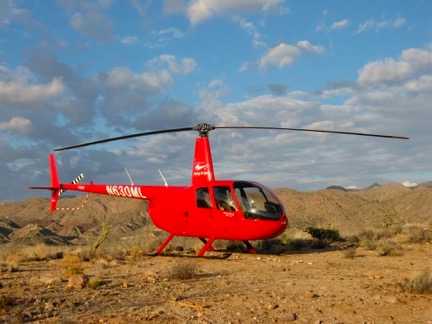
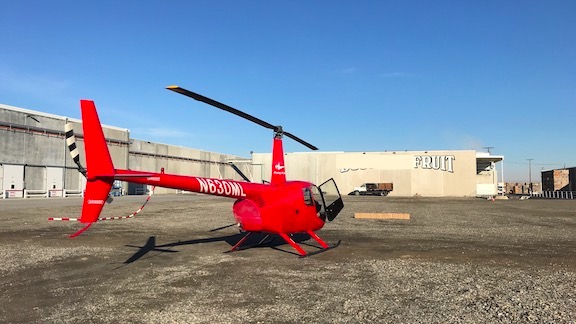
Zero Mike Lima at Monument Valley

Zero-Mike-Lima at Monument Valley during one of my multi-day excursions.

A Part 135 certificate is worth more than its weight in gold for an operator that has one and can use it properly. For example, if I didn’t have one, I’d be limiting my operations to short tours within 25 miles of my starting point and aerial photo/survey flights. With a Part 135, however, I can also take my tours as far as I like, transport passengers between two points, and even offer day trips and multi-day excursions. In the highly competitive area I live in — Arizona is just swarming with helicopter operators — a Part 135 Certificate gives me the competitive edge I need to stay in business. (With less local competition, I might even become profitable. Wouldn’t that be special?)

There are three types of Part 135 certificates: Single Pilot, Single Pilot in Command, and Basic. I have a single Pilot Part 135 certificate. That means that under my company’s certificate, only one pilot is allowed to fly the aircraft under Part 135: me. (Hint to jobseekers: that’s one reason why I don’t ever hire other pilots.) A Single Pilot in Command certificate is similar, but is used mostly in organizations with aircraft that require more than one pilot; just one of those pilots is allowed to fly as pilot in command, but any other pilot can be second in command. The Basic Part 135 certificate — and I may have its name wrong — allows multiple pilots to act as pilot in command on multiple aircraft. The Grand Canyon tour operator I worked for had a Basic Part 135.

At a recent meeting at my local Flight Standards District Office (FSDO; pronounced fizz-doe), I learned that there are only 4,800 Part 135 certificates in the entire country. If you take a moment to consider what percentage of those could possibly be helicopter operators, you’ll realize that I’m part of a very small club.

The penalty for conducting a Part 135 operation without a Part 135 certificate? Well, I know of at least one pilot who had his license permanently suspended. Ouch. When you consider the amount of time and money a commercial pilot — especially a helicopter pilot — might have invested in a career, that’s a very costly penalty.

Airline operations, by the way, are Part 121, which has tighter regulations.

How to Get a Part 135 Certificate

You work with your local FSDO to get a Part 135 Certificate. It requires multiple meetings at the FSDO to work your way through a flow chart of activities. Although I’ve heard of people getting their Single Pilot Part 135 as quickly as three months — it took me four months — it takes other people years. In fact, more than a few operators have gone out of business while working through the process.

There’s a lot of paperwork. The biggest challenge to most people is the creation of a Statement of Compliance. That’s where you list all the applicable FARs and state exactly how you will comply. My Statement of Compliance was 54 pages long. It wasn’t difficult for me to create because, after all, I am a writer. But I’d say that 90% of the people who try to get their Part 135 certificate stumble on this component, which occurs about halfway through that flow chart.

You’ll also need to get on a drug testing program, create a training manual for carrying (or not carrying) HazMat, and obtain a secure location for basing your aircraft. You’ll need to create forms for pilots to log time flown, aircraft flight time, and squawks. You’ll need to have perfect maintenance records. If you’re going for a Basic Part 135, you’ll need all kinds of other manuals and documents, as well as staff in predetermined positions, such as Director of Operations, Director of Maintenance, etc.

The FAA did not make the process easy. If it were easy, everyone would have a Part 135. Instead, they made it a challenge.

I am extremely fortunate to be working with an excellent FSDO full of people who are reasonable and helpful. Yes, I’m required to jump through the same hoops as everyone else, but my contacts at the local FSDO help me make those jumps. In turn, I comply with their requests promptly, without question. After all, their mission is to keep me safe. Why wouldn’t I want to be safe?

Why I Won’t Help You Get Your Part 135 Certificate

I’ve already given you several hints on why I won’t help you get your Part 135 Certificate. Did you read between the lines to get the answer? If not, I’ll spell it out for you.

  • Rise to the challenge. I personally believe that the FAA makes it challenging to get a Part 135 Certificate as a test to see if applicants are worthy. Let’s face it: the FSDO folks spell out what you need to do — using a flowchart, for Pete’s sake! If you come into the application process with the right attitude, they’ll help you achieve your goal. But they won’t just give you a certificate for showing up. You have to earn it. By jumping through all the hoops and smiling the whole time, you’ll prove that you have the right stuff to be a safe and cooperative aircraft operator. If I help you get your certificate, you won’t prove anything other than that you can’t do it alone.
  • Membership has its privileges. That old American Express slogan can easily be applied to the 4,800-member club of Part 135 certificate holders. We can do things that Part 91 operators can’t. This gives us far more flexibility in our operations. I can’t tell you what a joy it was to finally be able to say yes to a client request for an air-taxi flight. Saying yes means more business, more revenue. I’ll be frank: If I help you get your Part 135 certificate, then you can say yes, too. I have enough competition and certainly don’t need more.

I get e-mails and calls at least twice a month from helicopter operators hoping I’ll help them get their Part 135 certificate or make their business grow. Apparently, it isn’t enough for me to write about my own experiences here so they can use them as learning tools. Instead, they want me to take them by the hand and walk them through the process.

Why should I? What’s in it for me?

I did the hard work I needed to do to get my certificate and build my business. Why would I want to make it easier for potential competition? Isn’t it in my best interest to have other operators jump through the same hoops I did and prove they’re worthy of getting a Part 135 certificate? Wouldn’t I rather be sharing the skies with pilots who passed muster with the FAA? Wouldn’t I rather refer overflow business to an operator I know has the ability to do his own homework?

You want a Part 135 certificate? Take my advice: Call your local FSDO and set up a meeting to get started. Then put a smile on your face, roll up your sleeves, and get to work.

One Gig, One Dozen Off-Airport Landing Zones

Testing my skills out in the desert.

For the sake of my clients’ privacy, I won’t go into too many details about where I flew or why I flew there. But I will say this: it was the most challenging day of flying I had in a long time.

LZ1
LZ2
LZ 3
LZ 4
LZ 5
LZ 6
LZ 8

No, I wasn’t chasing desert racers or boats on Lake Havasu. And I wasn’t flying around a bunch of photographers who don’t speak much English. I was flying miners around their claims in the desert mountains.

Their claims spanned a mountainous area at least 80 square miles in size. My job was to show them the sites from the air and, if they wanted to land and there was a suitable landing zone, land so they could check things out on the ground. Of course, all this was going on 100+ nautical miles from my Wickenburg base at about 500 to 1500 feet elevation on an 85°F day. And since I had three passenger seats, each flight had three passengers.

Fortunately, there were no fatties. (Well, maybe one.)

I started collecting photos of the landing zones but gave up after the seventh one. I tried to send each photo to TwitPic as I took them, but I didn’t have cell phone service for most of the day. In fact, my BlackBerry’s battery nearly drained just searching for a signal all day. The doors are open on the helicopter in most of the photos because it was so damn sunny and hot. I left the doors wide open each time we stopped just to keep air flowing through the helicopter. Otherwise, we would have been baked.

I wish I’d brought a better camera with me. These photos are all from my BlackBerry. The one with the cactus flower is supposed to be artistic. I can pull off that kind of shot much better with my Nikon and a wide angle lens.

The landing zones ranged from smooth, almost level clearings to old dirt mining roads. Some spots were wide open; others were relatively tight. Some spots were definitely slopes. I hate slope landings. I mean I really hate slope landings. The fact that I did about 10 of them yesterday says a lot about what I’m willing to do for money. No, none of the slopes were too dangerous. I just prefer more level ground. And, near the end of the day when I was really tired and probably a bit dehydrated, I was having a lot of trouble making those damn slope landings. At one place we stopped, I tried four different spots before I found one I liked.

Some of the landing zones were quite close to the mine features my clients wanted to explore. Others weren’t. At two sites, my clients had quite a climb to get where they wanted. They didn’t seem to mind — which was nice of them. Some folks expect fancy one-skid landings on mountain sides — which they won’t get from me. These folks were my kind of people — “safety first,” the leader told me at the start of the day.

The weather was as close to perfect as you can get — if you don’t mind mid-March desert heat. Perfectly clear blue skies, with just enough of a breeze to keep us cool without making for sloppy low-speed flying.

My helicopter performed like a champ — despite the heat. The density altitude was about 4,000 feet for most of the day. I started the day with about 3/4 tanks of fuel, fully expecting to need at least one refueling stop. But since we shut down at nearly every landing zone, I didn’t burn much fuel.

The first round of flights started at 9 AM and went until about 2 PM. We took an hour for lunch. I was glad they brought enough for me, since we ate it right out in the desert where they’d left their trucks. (No restaurant for miles.) Then I made another round of flights, finishing up at about 5:15 PM.

Of course, I didn’t have enough fuel to get home and, when I reached the nearest airport, it was closed. So I had to call out for the fuel guy and pay an extra $25 to get my main tank topped off.

I got back to Wickenburg about 20 minutes after sunset. It was dark when I left my hangar and made my way home.

I slept very well.