The Rules about Flying over Wilderness Areas

My answer to a reader’s question.

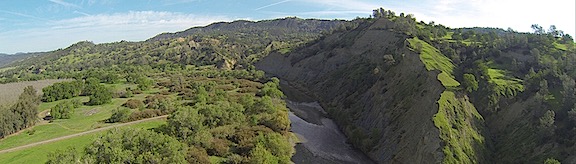
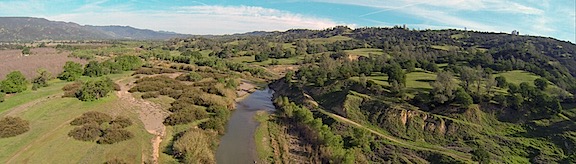
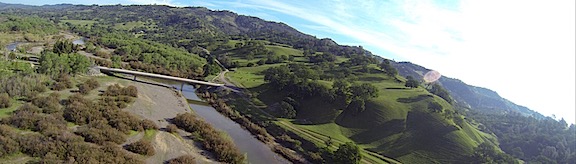
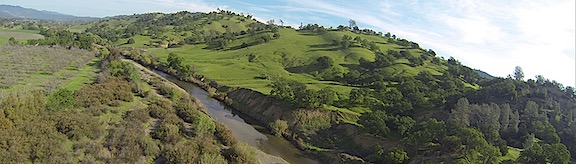
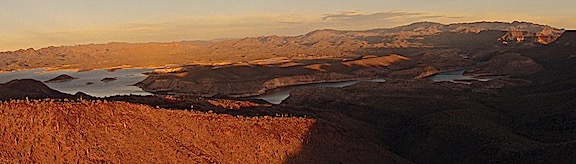
ChartA week or two ago, I got an email message from a reader who had read my November 2011 post, “A Few Aerial Views from Today’s Flight.” That post shows off a bunch of photos captured by my helicopter’s “nose cam,” a GoPro Hero2 camera I sometimes use in flight. The photos include views of the Verde and Salt Rivers north and east of Phoenix, including some of the lakes along the rivers. My reader noticed, after consulting some aeronautical charts, that much of the area I’d flown over was designated as wilderness area.

This reader, who asked to remain anonymous and not be quoted verbatim, was wondering about “bending” rules. Although he mentioned the June 2012 wire strike helicopter crash in the Verde River area, he wasn’t interested in the safety aspects of maintaining a high enough altitude to clear obstacles. He was interested in my interpretation of the rule about flying at least 2,000 feet above wilderness areas.
The “Rule”

Before I interpret the rule, it’s a good idea to know exactly what the rule is and where it can be found.

It’s interesting to note that a search for “wilderness” and “2,000 feet” in the Federal Aviation Regulations (FARs) does not provide any guidance related to operations over charted wilderness areas. The FARs are the rules pilots are required to comply with.

A search of the Aeronautics Information Manual (AIM) for “wilderness” results in “Part 7-4-6: Flights Over Charted U.S. Wildlife Refuges, Parks, and Forest Service Areas.” Paragraph b pertains to this topic:

b. Pilots are requested to maintain a minimum altitude of 2,000 feet above the surface of the following: National Parks, Monuments, Seashores, Lakeshores, Recreation Areas and Scenic Riverways administered by the National Park Service, National Wildlife Refuges, Big Game Refuges, Game Ranges and Wildlife Ranges administered by the U.S. Fish and Wildlife Service, and Wilderness and Primitive areas administered by the U.S. Forest Service.

A note adds this:

FAA Advisory Circular AC 91-36, Visual Flight Rules (VFR) Flight Over Noise-Sensitive Areas, defines the surface of a national park area (including parks, forests, primitive areas, wilderness areas, recreational areas, national seashores, national monuments, national lakeshores, and national wildlife refuge and range areas) as: the highest terrain within 2,000 feet laterally of the route of flight, or the upper-most rim of a canyon or valley.

First Glance Interpretation

At first glance, the “rule” seems pretty straightforward: you’re supposed to fly at least 2,000 feet above the ground in any charted wilderness area, etc.

User's Guide ImageCharts, by the way, make it very easy to identify these areas. They’re normally surrounded by a blue line that has dots on the inside of the area. This entry from the Aeronautical Chart User’s Guide shows what to look for. And this chart excerpt from the Phoenix terminal area chart (TAC) illustrates how two areas look on an actual chart: The Hells Canyon Wilderness area (left) and Lake Pleasant Bald Eagle Breeding Area (right):

Wilderness Examples

The Advisory Circular note goes a bit further to explain that the lowest point in the wilderness area that you should consider when setting your altitude is the highest point 2,000 feet from your aircraft in any direction. So if you’re flying over a 1,000 foot deep canyon and the canyon is only 1,500 feet wide, you should be 2,000 feet above the canyon walls — not 2,000 feet over the bottom of the canyon.

It’s important to note that a requirement like this is extremely difficult for helicopter pilots to deal with, primarily because helicopters normally operate 500 to 1,000 feet above the ground. We seldom fly 2,000 feet above anything — that’s nosebleed territory for us. That’s also where small planes might be operating — and we’re trained to stay away from them. So when you ask a helicopter pilot to fly 2,000 feet above the ground, we’re not going to like it.

But Is It A Rule?

But the real question should be, is this really a rule? Something that must be followed? Something that could get you in trouble with the FAA if you ignore it?

I can offer two arguments for why pilots are not required to fly 2,000 feet above charted wilderness areas:

  • The “rule” is not included in the FARs, which are the regulations governing flight in the U.S. Instead, it’s described in the AIM, which is informational in nature.
  • The language of the “rule” says that “Pilots are requested to maintain a minimum altitude of 2,000 feet above the surface…” Surely you can’t confuse a “request” with a “requirement.”

Before I go any further, I want to point out paragraph c of the same AIM part (7-4-6):

Federal statues prohibit certain types of flight activity and/or provide altitude restrictions over designated U.S. Wildlife Refuges, Parks, and Forest Service Areas. These designated areas, for example: Boundary Waters Canoe Wilderness Areas, Minnesota; Haleakala National Park, Hawaii; Yosemite National Park, California; and Grand Canyon National Park, Arizona, are charted on Sectional Charts.

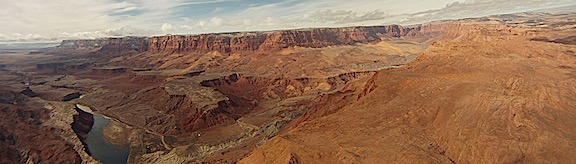
Note the use of the word “prohibit” in this paragraph. With a little bit of effort, you can find the rules for these areas in the FARs or Special Federal Aviation Regulations (SFARs). For example, FAR 93 Subpart U and SFAR 50-2 govern special regulations over Grand Canyon National Park. In the case of Yosemite the rule is printed right on the chart:

Yosemite on Chart

In case you can’t read it:

Public Law 100-91 prohibits flight of VFR helicopters or fixed-wing aircraft below 2000 feet above the surface of Yosemite National Park. “Surface” refers to the highest terrain within the park within 2000 feet laterally of the route of flight or within the uppermost rim of the Yosemite Valley.

Pretty clear, no?

My point is, don’t get the idea that a pilot can ignore charted wilderness areas. That simply isn’t true. You need to know whether an area has its own special flight regulations before even considering “breaking” the 2,000-foot “rule.”

What’s Right?

Now you know my interpretation. But I didn’t get this on my own. It was pointed out to me by my primary flight instructor years ago. Pilots who take the time to look up and read the “rules” can make their own conclusions.

The reader who queried me about this obviously realized from the photos I shared on my blog post that I must have been flying lower than 2,000 feet above the ground in a charted wilderness area. Denying I did so when there’s photographic evidence to the contrary would be dishonest, insulting to my readers, and a waste of time.

But is it right to fly low over these areas? Because it’s not a regulation in most wilderness areas, it becomes an ethical decision on the part of the pilot.

First, consider why charted wilderness areas exist. The government is protecting these areas, for whatever reason. Usually, it’s because they don’t want aircraft noise to interfere with wildlife — especially wildlife breeding and habitat maintenance. Sometimes its because they want “natural” areas to be kept quiet for visitors trying to enjoy the beauty of nature in peace.

How do you feel about preserving quiet in these areas? Is it important to you? If you were on the ground, how would you feel if a helicopter or plane buzzed by at 500 or 1,000 feet? Would it bother you? How do you think it affects the people on the ground? People camping, fishing, hiking, meditating?

As the person who contacted me pointed out, when he flew in the area, he didn’t see a person for miles. So who would he be bothering?

The one thing I can say with certainty is this: If pilots typically “busted a wilderness area” by flying low through it and enough people on the ground noticed and complained about it, it’s far more likely that the government will respond by establishing a real rule to prevent it. Yes, at one time people were allowed to fly low-level through the Grand Canyon and Yosemite valley. But when enough complaints came in, regulations were written to make such activity illegal.

Would you want to see that happen with all the wilderness areas on the charts?

I know I wouldn’t.

Early Morning Helicopter Flight: Wenatchee, WA to Hillsboro, OR

There are some things you really wish you could share.

The panic started on Friday. That’s when I checked my helicopter’s log books and realized that instead of 14 flight hours until a required 100-hour maintenance, I had under 5 hours. Once that 5 hours expired, if I flew for hire — even for cherry drying flights conducted under FAR Part 91 — I risked the possibility of having my Part 135 certificate put on hold (or worse) and losing insurance coverage for my helicopter due to my failure to follow the manufacturer’s maintenance schedule.

I did not want that to happen.

I started working the phones. First, I asked my mechanic to come up from Phoenix. I got a “maybe,” which really wasn’t good enough. I talked to a number of other operators about using their mechanics but kept running into a problem with the required drug testing program. Finally, I called the folks at Hillsboro Aviation — which happens to be the dealer that sold me my helicopter back in 2005 — and talked to John. He said that if I could get it in to him when they opened at 8 AM on Tuesday morning, there was a chance that they could have it ready by day’s end.

The weather, of course, was of vital importance. I was in Wenatchee for cherry drying season; if there was any possibility of rain, I could not leave. I did have two other pilots on duty to cover my contracts, though, so unless it rained everywhere at once, they could handle it. And fortunately, the forecast had 0% chance of rain for the upcoming week.

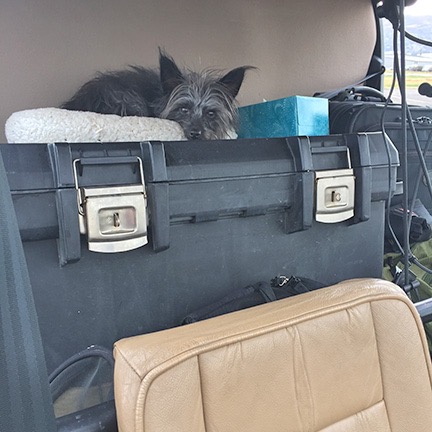
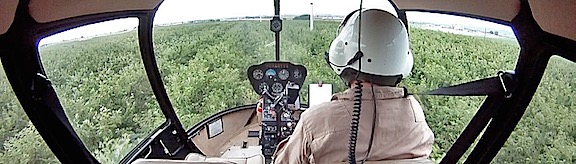
I packed a light bag on Monday night: some spare clothes and toiletries (in case an overnight stay was required), dog food and a dish for Penny the Tiny Dog, and my log books. And on Tuesday morning, at 5:30 AM, I preflighted, packed up the helicopter, set up the GoPro Hero 2 “nosecam,” secured Penny in the front passenger seat so she couldn’t get into the controls, started up, and took off.

Foreflight Route
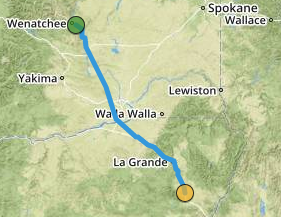
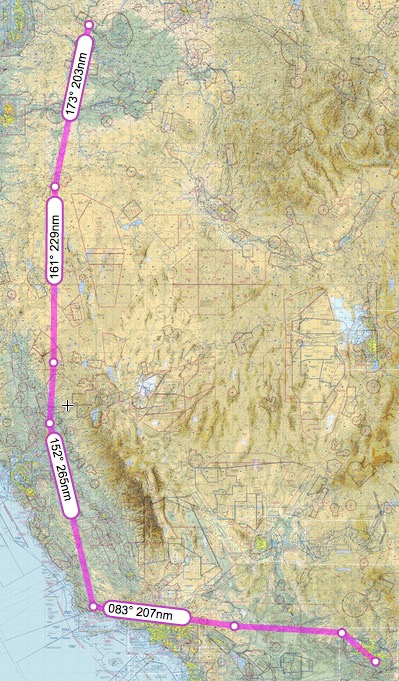
My direct route, on Foreflight.

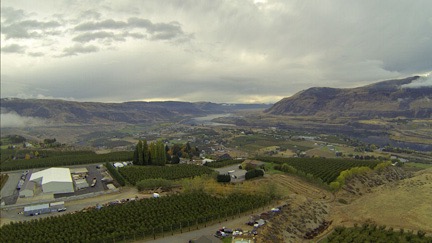
My goal was to complete the flight as quickly as possible — that meant a direct route across the Cascade Mountains. My flight path would take me over Mission Ridge, across I-90 west of Ellensburg, and into the Cascades south of Mt. Rainier and north of Mt. Adams. Along the way I’d have to climb to just over 7,000 feet, fly over miles of remote wilderness area, and pass right by Mt. St. Helens. The whole flight was 159 nautical miles (183 statute miles) and would take just over 90 minutes.

I’d flown over the Cascades — or tried to — about a dozen times in the past five years. Weather had almost always been an issue. On several occasions, low clouds in the mountain passes at I-90, Route 2, or Route 12 made it impossible to get through. Other times, I had to do some serious scud-running, darting from one clear area to the next to find my way across. Still other times, I was forced to fly above a cloud layer until I found a “hole” in the clouds where I could slip back underneath on the other side of the mountains. I can only remember one time when scattered clouds were high enough to make the flight as pleasant as it should be.

The weird thing about the Cascades is that you can’t see what the cloud cover is like there until you’re airborne and have cleared the mountains south of Wenatchee. The clouds don’t show up on radar or weather reports unless it’s raining. So you might have a perfectly beautiful day in Washington’s Columbia River basin but the Cascade Mountains could be completely socked in with thick clouds. It’s actually like that more often than not — at least in my experience.

So despite the fact that it was a beautiful day, I was a bit concerned about the weather.

Until I passed over Mission Ridge, just south of Wenatchee. I immediately saw Mt. Rainier and Mt. Adams in the distance. Seeing these two mountains — the whole mountains, not just the tops poking up through clouds — was a very good sign.

Penny immediately curled up on her blanket on the front passenger seat and went to sleep. This really surprised me. It was the first time she’d been in a helicopter and she seemed completely unconcerned about it. I guess that was a good sign, too.

And so began one of the most beautiful flights I’d ever had the pleasure of doing in my helicopter.

Mission Ridge
The top of Mission Ridge and beyond.

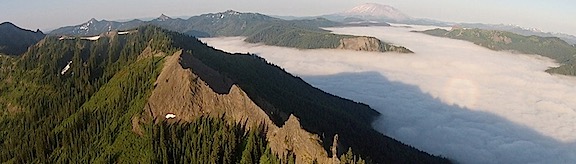
I crossed Mission Ridge, which was glowing almost orange in the first light of day and headed southwest along the straight line my GPS indicated to Hillsboro, OR. I drank in the scenery spread out before me: the windmill-studded valley around Ellensburg, the rolling pine forests cut with stream and river beds, the snowcapped granite ridges. At one point, I had Mt. Rainier off my right shoulder, Mt. Adams and Mt. Hood to my left, and Mt. St. Helens right in front of me. I felt like a tiny speck suspended in the air, the only person in the world able to see just what I was seeing. I felt small but all-seeing at the same time.

When I first caught sight of a fog-filled valley at the base of Mt. Rainier I began to realize that weather might still be an issue. Soon, I was flying from one pine-covered ridge to the next, over what looked like a sea of white foam. No VFR pilot likes to lose sight of the ground and I admit that I flew with some fear. An engine failure would leave me nowhere safe to land — if I tried to land in one of the valleys, I’d likely hit the ground before I saw it through the fog.

But the beauty of what was around me somehow made it okay. I thought to myself, if this is my time to go, what better place and way to end my life? Doing what I love — flying through amazing scenery — what else could anyone ask for? And then all the fear was gone and I was left once again to enjoy my surroundings.

Cascades Ridge
Flying across this ridge was the highlight of my flight.

I also felt more than a bit of sadness. There’s no way I can describe the amazing beauty of the remote wilderness that was around me for more than half of that flight. And yet there I was, enjoying it alone, unable to share it with anyone. Although I think my soon-to-be ex-husband would have enjoyed the flight, he was not with me and never would be again. I felt a surge of loneliness that I’ve never felt before. It ached to experience such an incredible flight alone, unable to share it firsthand with someone else who might appreciate it as much as I did.

I can’t begin to say how glad I am that the GoPro was rigged up and running for the whole flight. At least I have some video to share.

Mountain Lake
Yale Lake near Cougar, WA, just southeast of Mt. St. Helens.

As I descended down the southeast slope of Mt. St. Helens, leaving the Cascades behind me, I crossed over a small lake with a scattering of clouds at my level. As I glided through them and back into civilization, I felt as if the magical part of the flight was over. Indeed, the rest of the flight was rather routine, passing over rolling hills, farmland, highways, and rivers. A marine layer hung low over the Portland area and I squeezed under it, called the tower at Hillsboro Airport, and landed on the ramp at my destination. It was about 7:30 AM.

Penny at the Beach
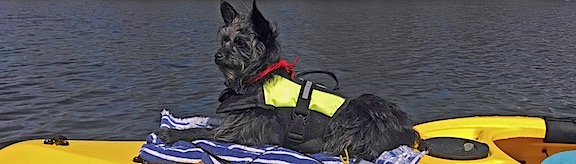
Penny at the beach. She seems to like sand almost as much as grass.

The folks at Hillsboro Aviation were great. Although they didn’t finish up that day, the helicopter was ready to go at 9:30 AM the next morning. Penny and I had spent the night in Rockaway Beach, where Penny got to run through the sand and tease the other beach walkers with her antics.

We left Hillsboro at around 11 AM on Wednesday. It was a cloudless day — even the valley fog was gone. But the harsh midday light washed away much of the beauty of the scenery; the GoPro video from the return flight isn’t much to look at. We were back on the ground at our base in Wenatchee Heights before 1 PM, ready for another 100 hours of flight.

Transponders for Dummies

Get the facts straight.

One of the podcasts I listen to on my morning walk is called Stuff You Should Know. Produced by the folks responsible for the How Stuff Works website, Stuff You Should Know is a pretty thorough discussion of a specific topic by two hosts, Josh and Chuck, who base their discussion on a website article and some of their own research. It’s a great way to learn new things when you’re stuck doing something mindless — like walking, driving, flying, etc. So far, I’ve learned about revenge, diamonds, Atlantis, social security numbers, air traffic control (ATC), and bullfighting. You can find its RSS feed here.

The April 24, 2012 episode of the podcast was titled “How Air Traffic Control Works.” It was based on a How Stuff Works article of the same name by Dr. Craig Freudenrich. The article was very detailed; the podcast was based on that article and several other articles on How Stuff Works.

As a pilot, I know quite a bit about air traffic control — but not everything. The article (and podcast) was mostly concerned with ATC as it relates to airliners. After all, that’s how most people interact with aviation. But I’m involved with general aviation (as opposed to airline aviation or military aviation). And, as a helicopter pilot, I don’t interact with ATC nearly as much as, say, an instrument rated pilot flying a King Air from Phoenix to Seattle.

So I was hoping that I could learn something new. And I did.

But I also heard the podcasters misinforming listeners about transponders (among a few other things). And if there’s one thing I hate, it’s when an informational article or podcast or video — or anything else — includes errors. So I thought I’d set things straight.

What Is a Transponder?

Garmin Transponder
This is the Garmin 330 Transponder I have in my helicopter.

A transponder is a part of an aircraft’s avionics. It assists air traffic control by making it easier for ATC radar to “see” an aircraft. It basically sends out a signal that says “Here I am!” ATC radar can pick up this signal, along with any additional information encoded within it, to plot the aircraft as a “blip” on the radar display and differentiate it from other aircraft.

Transponders include a feature that enables the pilot to send a specific “squawk” code. Normally, in VFR (visual flight rules) flight, an aircraft’s transponder is set to send the code 1200 — in fact, this code is used so often that many transponder models — including mine — have a VFR button the pilot can press to quickly enter that code.

IFR (instrument flight rules) flights are assigned a discreet discrete squawk code. This code is used by ATC to identify that particular aircraft. Sometimes, when operating within tower-controlled airspace, ATC will assign a discreet discrete code to a VFR flight. Or perhaps a specific code is used by signatories to a letter of agreement between ATC and pilots — for example, 0400 is used by Sharp Alpha signatories in the Phoenix class bravo airspace.

Most transponders are equipped with automatic altitude reporting features, which is known as Mode C. Indeed, Mode C transponders are required within 30 miles of a class Bravo airport — think major airports like the kinds most airlines serve — and in a bunch of other places detailed in Part 4-1-20 of the Aeronautical Information Manual (AIM), “Transponder Operation.” (This, by the way, is an excellent resource for learning more about transponders in general.) Mode C transponders interface with an aircraft’s altimeter to get the altitude of the aircraft and send that information to ATC.

Garmin 420 GPS
My Mode S transponder interfaces with my Garmin 420 GPS to show traffic when information is available. I blogged about this here.

A Mode S transponder, which is what I have on my helicopter, is also capable of two-way communication with ATC radar. In certain radar coverage areas — primarily near Class Bravo and Class Charlie airspaces — a Mode S transponder receives traffic information from ATC. This information can then be plotted on compatible GPS equipment to create a simple traffic information system (TIS).

There are some other things about transponders that are interesting, including the fact that there are special squawk codes a pilot can use in certain emergency situations. And although the transponders were turned off on the 9/11 airliners, that didn’t make them invisible; it just made it impossible for ATC to definitively identify what they were.

What the Stuff You Should Know Guys Said

There’s no transcript available for the podcast, so I had to create one for the part that irked me. It was related to when the transponder is turned on and what the transponder is/does.

At 22:55, Josh has just described how the tower controller hands off the airplane to a departure controller.

Chuck: All right, so now we’re in the air, we are enroute. And you have to, if you’re a pilot, activate your transponder, which will basically make you the little blip on the radar. Very important thing to do.

Josh: Yeah.

Chuck: That’s how they can follow you as you move across the country. Or around the world.

Josh: [laughter]

Chuck: Right?

Josh: You are covering all bases on this episode.

Chuck: Well, the little blip is going to obviously represent your plane and it’s going to have your flight number, your altitude, your airspeed, and your destination.

Josh: Uh-huh.

Chuck: And, uh, so where are we now?

Josh: It’s also how they find you if you go plummeting into the ocean or the earth.

Chuck: Sure. Is that the black box?

Josh: Uh, I think that’s probably a part of the transponder.

Chuck: Okay. Yeah.

Then they continue talking about what TRACON does.

What’s Wrong

There are a few things wrong with this.

First, a pilot usually turns on the aircraft’s transponder when he (or she, of course) powers up the rest of the avionics, including the radio. On my helicopter, in fact, the transponder turns itself on automatically when I turn on the “Master Battery” switch, which provides electrical power to the helicopter before I even start it.

Part 4-1-20 of the Aeronautical Information Manual (AIM), “Transponder Operation,” states:

3. Civil and military transponders should be turned to the “on” or normal altitude reporting position prior to moving on the airport surface to ensure the aircraft is visible to ATC surveillance systems. IN ALL CASES, WHILE IN CONTROLLED AIRSPACE EACH PILOT OPERATING AN AIRCRAFT EQUIPPED WITH AN OPERABLE ATC TRANSPONDER MAINTAINED IN ACCORDANCE WITH 14 CFR SECTION 91.413 MUST OPERATE THE TRANSPONDER, INCLUDING MODE C IF INSTALLED, ON THE APPROPRIATE CODE OR AS ASSIGNED BY ATC. IN CLASS G AIRSPACE, THE TRANSPONDER SHOULD BE OPERATING WHILE AIRBORNE UNLESS OTHERWISE REQUESTED BY ATC.

(The FAA used those caps; I didn’t. I guess they wanted to shout about it.)

So the FAA says to turn on the transponder before you move the aircraft and keep it turned on during flight. The pilot does not wait until the flight is turned over to departure control to turn it on. It’s already on. In fact, it’s one of the ways ground control can track the airliner as it taxis between the runway and the gate.

Note: I was fortunate enough to be able to visit the Phoenix TRACON and tower back March 2012. I got to see the radar screens and their blips firsthand. It’s interesting to note that there are no windows in the TRACON facility. It’s a dark room filled with computer screens. If you’ve seen the movie Pushing Tin, which was mentioned in the podcast, you’ll get the idea.

So although the podcast guys made a big deal over the fact that ground controllers are only one of two kinds of controllers that can use binoculars, the reality is that only ground controllers and tower controllers have windows to look out of. They’re the only ones close enough to the airplanes they guide to actually see them.

To say that activating the transponder “makes you the little blip on the radar” is misleading. Radar does not need a transponder to see aircraft traffic. After all, do you think fighter planes use transponders when they’re out on patrol or attack? If a transponder was required to put an aircraft on radar, there would be no need for stealth technology. Instead, radar works by bouncing radio waves off objects. It doesn’t need a transponder signal. The transponder simply makes it easier for ATC radar equipment to find targets and provides additional information to ATC.

While it’s true that a radar blip might include an airliner’s flight number, this information is not sent by the transponder. The transponder sends the discrete squawk code assigned to the airplane from its flight plan. The ATC computer equipment looks up the code in the flight plan database and provides the information from the flight plan on the blip.

Josh is partially right when he says that the blip is how they find you if you crash. The transponder helps keep the aircraft on radar. Radar tracks where you are. But there comes a point — especially in remote or mountainous terrain — when radar coverage is limited. If you are flying too low, you can literally fly “below the radar” and not be tracked. Helicopter pilots commonly fly this low — that’s why its so difficult to get flight following in certain areas. An airliner should never be that low, but if it’s having trouble, it may disappear off radar before an actual crash. So although a transponder and the resulting radar blip can help locate a downed aircraft, it doesn’t guarantee that it’ll be found. Think about Steve Fossett. His plane likely had a transponder, yet he wasn’t found for well over a year after his crash.

Chuck and Josh are completely wrong when they suggest that the black box is part of the transponder. It’s not. They’re two completely separate devices. The transponder sends live information to ATC as an aircraft moves around on the ground and in the sky. Most aircraft have them. The black box is a virtually indestructible device that records data during an aircraft’s operation and stores it in the event of a mishap. Only aircraft providing certain air transportation services have them. For example, although I have a transponder on my helicopter, I don’t have a black box.

It’s interesting to me that the guys got this so wrong when the How Stuff Works website actually has an article called “How Black Boxes Work.” Maybe they should have read it?

Other Things

In listening again to parts of the podcast — mostly to find the passage quoted above — I heard other things that weren’t quite right. That bugs me. It calls into question the rest of the podcast — the stuff I don’t already know for sure. It also calls into question other podcasts that these guys do. How factual are they?

When I’m listening to a podcast titled “Stuff You Should Know,” I expect it to be factual, not conjectural. If these guys are guessing about something, they should make it clearer that it’s a guess. To state that a pilot activates a transponder after the aircraft is enroute and handed off to departure control is an incorrect statement of fact. To say “I think” a transponder is part of the black box helps identify it as conjecture or a guess, but is there really any place for guesses in a podcast like this?

Or am I expecting too much?

Why I Spent $11,524 to Replace Perfectly Good Fuel Tanks on my R44 Helicopter

The short answer: Lawyers.

I’m not sure when the brouhaha began.

It might have been right after this crash, when a helicopter operating at or near gross weight at an off-airport landing zone in high density altitude situation by a sea level pilot crashed, killing all four on board and starting a forest fire that raged for two days.

Or it could have been earlier, after this crash, which I blogged about here, when a helicopter operating 131 pounds over the maximum gross weight for an out of ground effect hover by a brand new helicopter pilot low-level at an off road race crashed, severely injuring all three people on board.

I’m sure it was before this crash, when a 250-hour pilot landed to “relieve himself” at an off-airport landing zone with a density altitude of at least 11,000 feet, then panicked when he got a low rotor horn and aux fuel pump light at takeoff and botched up a run-on landing on unsuitable terrain, severely injuring himself and his wife.

These three cases have two things in common (other than pilots who did not exercise the best judgement): the helicopters were R44s and the crashes caused fires that injured or killed people.

Crash an Aircraft, Have a Fire

Of course, if you crash any kind of aircraft that has fuel on board hard enough into terrain, a fire is likely to result. Fuel is flammable. (Duh.) When a fuel tank ruptures, fuel spills. (Duh.) If there’s an ignition source, such as a spark or a hot engine component, that fuel is going to ignite. (Duh.)

I could spend the rest of the day citing NTSB reports where an airplane or helicopter crash resulted in a fire. But frankly, that would be a complete waste of my time because it happens pretty often.

Don’t believe me? Go to http://www.ntsb.gov/aviationquery/index.aspx, scroll down to the Event Details area, and enter fire in the field labeled Enter your word string below. Then click Submit Query and check out the list. When I ran this search, I got more than 14,000 results, the most recent being a Cirrus SR22 that crashed on April 27, 2012 — less than 2 weeks ago.

The Knee Jerks

But Robinson reacted in typical knee-jerk fashion. After issuing a ridiculous Safety Notice SN-40, “Postcrash Fires,” that recommended that each helicopter occupant wear a “fire-retardant Nomex flight suit, gloves, and hood or helmet,” they began redesigning components of the helicopter’s fuel system. First they redesigned the fuel hose clamps and issued Service Bulletin SB-67, titled “R44 II Fuel Hose Supports.” Then they redesigned the rigid fuel lines to replace them with flexible lines and issued Service Bulletin SB-68, titled “Rigid Fuel Line Replacement.” And then they redesigned the fuel tanks to include a rubber bladder and released Service Bulletin SB-78 (superseded by SB-78A), the dreaded “Bladder Fuel Tank Retrofit.”

Why “dreaded”? Primarily because of the cost of compliance, which was estimated between $10,000 and $14,000.

Originally released on December 20, 2010 (Merry Christmas from the folks at Robinson Helicopter!), Robinson did give us some breathing room. The time of compliance was set to “As soon as practical, but no later than 31 December 2014.” I did the math and realized that my helicopter would likely be timed out — in other words, back at the factory for overhaul — before then. But the February 21, 2012 revision moved the compliance date up to December 31, 2013. At the rate I was flying — about 200-250 hours per year — it looked as if I’d still be flying it when December 2013 rolled along.

Is it Required?

I talked to my FAA POI. He’s the guy that oversees my Part 135 operations. He’s a good guy: reasonable and easy to talk to. He doesn’t bother me and I try hard not to bother him. After all, he’s got bigger operators with bigger headaches to worry about.

We talked about the Service Bulletin. Neither of us were clear on whether the FAA would require compliance for my operation. After all, it was a Service Bulletin, not an Airworthiness Directive (AD), which is definitely required.

We left off the conversation with acknowledgement that I didn’t have to do anything at all for quite some time. We’d revisit it a little later.

Pond Scum

Around this time, I was contacted by a lawyer representing the family of the 250-hour pilot who crashed in the mountains because he had to “relieve himself.” This guy had seen my blog posts about my problems with my helicopter’s auxiliary fuel pump — perhaps this one or this one or possibly this one. Or maybe all three.

He was looking for an “expert witness” to provide information about the problems with the fuel pump. It was clear that he was trying to pin the blame for his clients’ injuries on the fuel pump manufacturer and Robinson Helicopter. Not on his client, of course, who had caused the accident by making a series of very stupid decisions. Apparently, Robinson is supposed to make idiot-proof helicopters.

I got angry about the whole thing — lawyers shifting the blame to people who don’t deserve it — and responded as you might expect. I also blogged about it here.

I didn’t make the connection between lawyers and bladder fuel tanks. I believed — and still believe — that it’s not unreasonable for post-crash fires to occur in the event of an aircraft accident. It’s part of the risk of being a pilot. Part of the risk of flying.

The Buzz and Insurance Concerns

Meanwhile, the Robinson owner community was buzzing with opinions about the damn bladder fuel tanks. Some folks suggested that they’d been developed as a means for Robinson to make money off owners in a time when helicopter sales were slow.

Maybe I’m naive, but I don’t think that’s the case. I think Robinson was just trying to protect itself from liability. By offering this option, it would be up to the helicopter owner to decide what to do. If the owner didn’t get the upgrade and had a post-crash fire, Robinson could step back and say, “The new fuel tanks might have prevented that. Why didn’t you get them? Don’t blame us.” And they’d be right.

And that got me thinking about my insurance. So I called my insurance agent, who was also a friend and helicopter pilot. The year before, he’d managed to come up with an excellent and affordable policy for R44 owners and I’d switched to that policy as soon as my existing policy ended. Would I be covered if I didn’t get the tanks installed right away? He told me that of course I’d be covered. The compliance date wasn’t until December 31, 2013.

Buy Now, Save Money?

I also talked to my mechanic. He told me that the tanks were on back order and it could take up to eight months to get them. I was also under the impression that the cost of the tanks was going to rise at the end of 2011. And that if I ordered the tanks, I wouldn’t have to pay for them until they arrived. I figured that once they arrived, I’d store them until I was ready to have them installed. Or maybe even hold onto them until overhaul.

So I ordered them in late December, right before the Robinson factory closed for the holiday break.

I’d been misinformed. I had to pay for them up front: $6,800. Merry Christmas.

And, oh yeah: the price didn’t go up, either.

A Horrifying Scenario

Time went by. I thought about the damn tanks on and off throughout the winter months. In February, during my occasional checking of accident reports, I saw this report about an R44 with a post-crash fire. It got me thinking about liability again.

And then I started thinking about lawyers, like that sleezebag who had contacted me. And my imagination put together this scenario:

My helicopter crashes and there’s a fire. One of my passengers is burned. Although my insurance covers it, the blood sucking legal council my passenger has hired decides to suck me dry. He claims that I knew the fuel tanks were available and that they could prevent a fire and that I neglected to install them. He puts the blame squarely on me. My insurance, which is limited to $2 million liability, runs out and the bastard proceeds to take away everything I own, ruining me financially forever.

Not a pretty picture.

Is this what Robinson intended? I’d like to think not. But I’m sure that as I type this, some lawyer in Louisiana is working on a case using the logic cited above. The pilot might be dead, but his next of kin won’t have much left when the lawyers are done with him.

I started thinking that I may as well install the damn tanks — just in case.

Dealing with Logistics

In late March the fuel tanks were delivered. It cost another $310 for shipping. The two boxes weren’t very heavy, but they were huge. I had them delivered directly to my mechanic.

And then I started thinking about logistics. I had originally expected the tanks to arrive during the summer while I was gone for my summer work in Washington state. I figured I’d have them installed at my next annual or 100-hour inspection near year-end. But here they were, waiting for installation any time I was ready.

But when would I be ready? My mechanic said it would take about 10 days (minimum) to install them. Because the tanks had to be fitted to the helicopter, it was a multistep process:

  1. Remove the old tanks.
  2. Put on the new tanks and fit them to the helicopter. (Metal work required.)
  3. Remove the new tanks.
  4. Paint the new tanks.
  5. Reinstall the new tanks.

Most of that time was taken up with getting the tanks painted and waiting for them to dry.

Logistics is a major part of my life. I’m constantly working out solutions for moving my helicopter and other equipment to handle the work I have. I’m also constantly trying to schedule any maintenance at a time when I’m least likely to need to fly. This spring was especially challenging: I had to get my truck, RV, and helicopter up to Washington before the end of May. I also had to go to Colorado to record a Lynda.com course before the end of May.

So on April 13, I flew the helicopter down to my mechanic in Chandler and asked my friend Don to pick me up (in his helicopter) and take me home to Wickenburg. Then, the same day, I started the 3-day drive in my truck with my RV to Washington. I arrived on April 15. A week later, on April 22, I took Alaska Air flights to Colorado, where I stayed for another 6 days. Then, on April 28, I flew directly back to Phoenix. Don picked me up at the Sky Harbor helipad and dropped me off at Chandler. All the work on the helicopter was done and it looked great. I flew the helicopter back to Wickenburg that morning. Two days later, on May 30, I picked up passengers in Scottsdale and began the 2-day flight to Washington. We arrived on May 1.

Item Cost
Fuel Tanks $6,800
Shipping $310
Tank Installation $3,960
Tank Painting $454
Total Cost $11,524

The installation and painting had cost another $3,960 and $454 respectively, bringing my total for installing the damn bladder fuel tanks to $11,524.

I Blame the Lawyers

So, yes, I spent $11,524 for tanks that might only benefit me in the event of a crash. No guarantees, of course.

I didn’t need the tanks. They didn’t make flight any safer or better. They only might make crashing safer.

And the only reason I did this is so that a lawyer couldn’t point his finger at me and blame me for ignoring a Service Bulletin that wasn’t wasn’t required by law until (maybe) December 31, 2013.

The only reason I did this was to possibly prevent a lawyer from taking away everything I own, everything I’ve worked hard for all my life, in the unlikely event that my helicopter crashed and a fire started.

Do you want to know why aviation is so expensive? Why it costs so much to fly with me? Ask the lawyers.

A Tethered Balloon Flight

Never a routine day.

I spent today out in the desert with my helicopter, on standby for a client. They’d booked me about a month ago and, since I’ve worked with them before, I had a good idea of the kind of flying we’d be doing.

I was wrong. I actually didn’t do much flying for them at all. In fact, the hot air balloon they hired spent more time aloft than I did.

But I did get to take a tethered balloon ride. It was my second time in a hot air balloon and I can assure you that a tethered flight — although kind of nice — isn’t anything nearly as spectacular as the “real thing.”

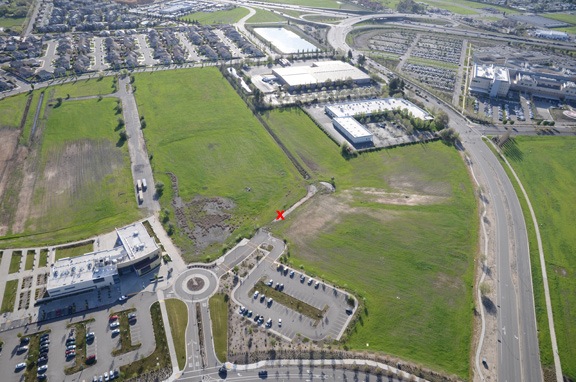
I shot this photo while we were aloft. You can get an idea of the area I was working in. You can also see my helicopter parked just beyond the balloon’s shadow.

Tethered Balloon View

The highlight of the day: landing just where you see the helicopter parked in the dark at 7 AM. Good thing I’d marked out that LZ with white rocks on a previous trip. And good thing my landing lights were working right so I could find the damn rocks. Sheesh. What was I thinking?