Experience helps pilots make good decisions.
I’m often amazed by pilots who seem outraged that they can’t find a decent flying job until they’ve logged 500, 1,000, or even more pilot-in-command (PIC) flight time. Too many of these people seem to think that they’re qualified to fly for hire as soon as they get their commercial rating and a few hundred hours of flight time.
How Pilots Gain Experience
Some new pilots don’t seem to understand that the best way to build time quickly is as a flight instructor (CFI) and they stubbornly try to enter the job market without sufficient experience.
I can name more than a few of these people who have been floundering around, taking odd jobs that give them a few hours of stick time here and there with little or no pay. Some even pay to work for the privilege of working for a helicopter owner. One good pilot I met managed to lock in a flying gig with decent flight time — I can’t use the word “job” because he never got paid at all — and added a few hundred hours to his logbook. Then the company’s owner disappeared, leaving the leased helicopter sitting on an airport ramp for its owner to repossess and the pilot locked out of the hangar he’d been living in because he couldn’t afford an apartment.
More than a few of these low-time pilots make their way to Washington in the summertime, with unrealistic dreams of logging hundreds of hours of flight time drying cherries. I’ve had guys offer to fly for me for free just to get the flight time. Really. (News flash: this ain’t Seattle. It’s usually dry here and the likelihood of flying even a dozen hours is slim. Don’t believe me? Ask the four pilots over the past two years who came up to fly for me who didn’t turn a blade in over four weeks.)
I didn’t come up through the ranks of a flight school to build my time, either, and it took nearly five years to get my first 1,000 hours. But it was different for me — I never intended to make flying a career. My second career put me in an excellent financial situation, one that included the ability to buy a helicopter and fly it around for fun. I put nearly 1,000 hours on my first helicopter, an R22, before selling it and buying the R44 I took delivery of in 2005. By that time, my goal was to simply earn enough with the helicopter to pay for the helicopter — a goal I achieved in 2007 when I started doing aerial survey work. That changed, and, by around 2012 (or thereabouts; I’d have to check my tax returns for an exact date), I was earning more as a pilot than as a writer and my flying career was in full swing. By then, I had more than 3,000 hours in helicopters, none of which was flying under the supervision of a flight school.
But is building time as a flight instructor the best way to get experience? I’ll always argue that it isn’t — as I did in a 2009 blog post titled “Real Pilot Experience.” In that post, I discussed the value of my experience at 2,100 hours vs. the experience of several newly minted 300-hour CFIs that I’d flown with. My experience was built flying real-life missions that required planning, decision making, and aviating while theirs was in a flight school environment, mostly with a slightly more experienced CFI sitting beside them. I thought it odd at the time — and I still do — that they were more qualified to teach people how to fly than I was.
Still, how else can a new pilot get the experience they so sorely need to be good, safe pilots on for-hire missions?
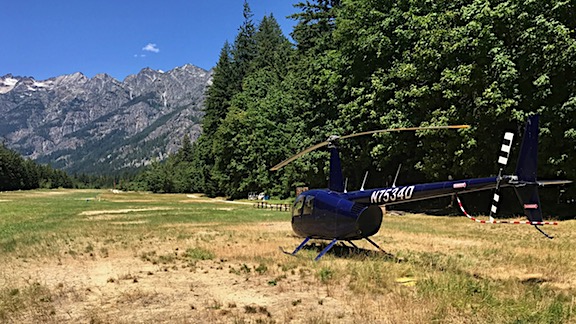
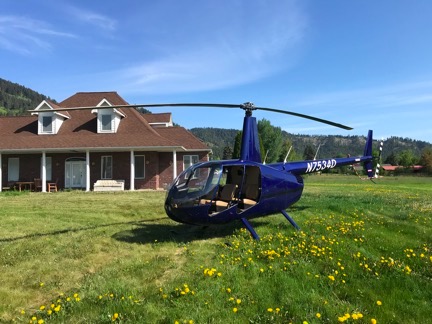
I took Mr Bleu, Penny, and a friend up to Stehekin on Sunday for a nice day trip. In this shot, I’m parked next to the grass runway.
Landings and Wind
The other day, I blogged about the stress I felt at facing my 15th Part 135 check ride. In that post, I wrote a little about the decision making process on one particular maneuver. Here’s what I said:
On my check ride, I was asked to land in a confined space on a hillside. It was a relatively big area — I’ve certainly landed in a lot tighter spaces — and there were no real obstacles, although there were some open range cattle, fencing, and a water tank nearby.
I misjudged the wind. I thought it was light and inconsequential and set up my approach to give me a the best angle of approach. As I came near the landing spot, however, I saw trees blowing and felt the wind buffeting me. Left pedal kept things under control without getting too sloppy.
Still, I decided to go around and approach from a different angle. As I told the examiner as I started going around, “If the helicopter is light, performance is not an issue, and the wind isn’t too strong, I could make this work. But making a bad approach work is probably not a good idea on a check ride.” He agreed.
And that’s the difference between flying as a pilot and flying as a CFI. A pilot flies depending on her skills, the conditions, and her intimate knowledge of the aircraft. A CFI flies depending on the best scenario learned in training. We all know it’s best to land with a headwind and that’s what the CFI will always try to do. But an experienced pilot also knows that you don’t have to fly into the wind if other conditionals make a safe operation possible. In this instance, there wasn’t that much wind and we were light. I knew I could land safely with that right quartering tailwind; I’d done similar landings before. But I also knew that the FAA was more interested in a textbook approach. My going around showed good decision-making skills and the second attempt was a lot smoother with a lot less dancing on the pedals.
About 10 years ago, I had to fly from Arizona to Washington State for cherry season — a 10+ hour flight. In those days, there were plenty of low-time CFIs who wanted to build time in R44 helicopters so they could meet the requirements of SFAR-73 for flight training. I think they needed a total of 25 hours. I’d let these guys, who already had their R44 endorsement, lease my helicopter with me as a passenger to bring me and the helicopter up to Washington State. They’d get cheap flight time and I’d get the helicopter moved at no cost. Win-win.
This particular flight has a lot of stories to tell, but I’ll focus on one: landing at Redding, CA. The airport is towered. We arrived late in the afternoon, light on fuel, from the south. The ATIS said the wind was about 4 knots from the south. The tower told us to land on Runway 34 — in other words, straight in with a slight tailwind. The pilot at the controls — a 300-hour CFI — acknowledged the instruction.
As we got closer to the airport, it came into view. The pilot was flying to the west of it. I assumed he didn’t see it — after all, when you fly at 500 feet AGL it’s not easy to see airports. I pointed it out to him.
“I was going to go around to the west in a downwind and turn midfield and land to the south,” he told me. For you non-pilots, that meant he was going to go around to the left and then land on the same runway but in the opposite direction.
I was floored and took a moment to figure out how to gently explain the problem with that. “Well, the tower told you to land straight in on Runway 34. So you have two options. You can either call the tower and request a landing on Runway 16 or you can land on Runway 34 as instructed.”
(Is it me, or am I correct in thinking that I shouldn’t be instructing a CFI?)
He took a moment to think about it, then changed course and landed straight in on Runway 34. Of course, he came in hot and did a quick stop so he wouldn’t overshoot the parking area. The quick stop was unexpected but well executed and he was so proud of it that he sought my approval when he touched down in our parking spot moments later.
I’m afraid I didn’t deliver. Instead, I said the first thing that came into my mind based on my experience-based knowledge of flight conditions and possibilities: “If you do that at the Grand Canyon on a 90° day with a full load of passengers, you’ll have one hell of a hard landing.” (I can be such a bitch.) Most sea level pilots are completely clueless about flying at high density altitude and I can tell stories about that, too.
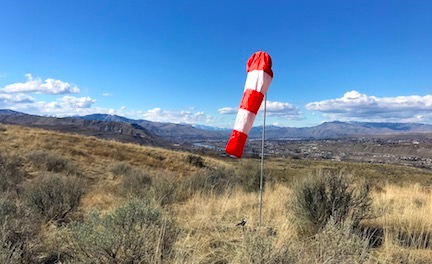
In my defense for misjudging the wind, during my high reconnaissance of the landing zone, there were no wind indicators — flags, bodies of water, large trees, blowing dust, smoke, etc. — for me to get an idea of the wind. The trees down near the landing zone weren’t big — maybe 10 feet tall? — and I didn’t see any movement from above. The location we’d departed from less than five miles away had a light wind out of the west. I came in from the north, assuming the wind would be about the same. It was, but it was also a bit stiffer. A better low reconnaissance would have helped me see this, but in the grand scheme of things, it really didn’t matter.
And that’s my point. Whether the wind over my right shoulder was 4 knots or 10 knots didn’t matter. (And yes, 20 or 30 knots would have mattered and I definitely would have noted on such winds.) The helicopter, with half tanks of fuel and just two average sized people on board, was light. It was still cool out and we were operating at about 1500 feet MSL, so density altitude wasn’t an issue. The helicopter’s performance was good. I was making a relatively slow, shallow approach, so airspeed and descent rate would not have put me into a settling with power situation and the minor tailwind would not have caused me to overshoot my intended touch down spot. As I came in on my approach and felt the wind, I could easily keep the helicopter under control with the pedals. I knew from experience — over 2,000 hours flying R44s in all kinds of conditions — that I could make a safe landing.
The only reason I went around was because I was on a check ride. The FAA isn’t interested in seeing pilots who can make a bad approach work. They’re interested in pilots who can made good decisions, even if those decisions mean breaking off an approach to go around and do it differently. So going around is exactly what the examiner wanted to see. He wanted to know that I could recognize a bad approach and act accordingly.
And I need to make one thing very clear: I’ve done go arounds on bad approaches before, without an FAA examiner sitting in the seat beside me. I recall one in particular at Sedona Airport, elevation 4830, years ago. There were three of us on board with luggage and half tanks of fuel, so we were pretty heavy. It wasn’t hot, but it was windy. I made my approach to the helipad following the path I always followed — I flew in there a few times a month. But in this case, it was a little too squirrelly for me and I was dancing on the pedals a lot more than I like to dance. I broke off about 50 feet from the ground and went around. My second approach was more into the wind and a lot smoother. Could I have made the initial approach work? Maybe. But why risk it?
That’s what experience teaches you. It teaches you what works and what might not work and what definitely won’t work. It teaches you how to fix little mistakes before they become big mistakes. Or fatal mistakes.
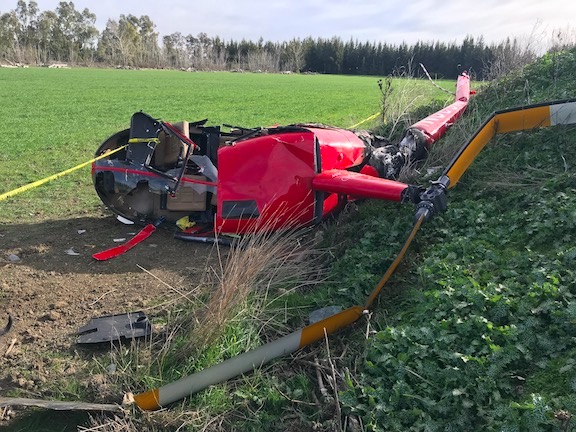
Does it teach you everything? Apparently not, as my February incident proves. But at least that won’t happen again. I learned my lesson.
Don’t Fly Like a CFI
Before you go ape and blast me for the above heading, let me explain.
A CFI is taught to fly “by the book.” If you’re a CFI you know exactly what I mean. Or you should.
Let’s take an example: taking off. Common instructions tell you to follow these steps:
- Bring the helicopter into a 3 to 5 foot hover.
- Pitch forward with the cyclic to start moving forward.
- Add pedal as necessary to stay in trim.
- Push through ETL and pitch for 45 knots, staying within 10 feet of the ground.
- At 45 knots pitch for 60 knots to climb out.
- When at desired altitude, pitch for cruise speed.
Did I leave anything out? This is from memory and I never taught anyone to fly.
This is basically how low-time CFIs always take off (unless they’re in a confined space or have an obstacle) because (1) it’s how they were taught and (2) it’s how they teach their students. Do takeoffs like this for 1,000 hours and it’s pretty much engrained in you.
But is that how all helicopter pilots take off all of the time? Of course not. The situation you’re in determines how you take off.
Need to get away from the ground quickly because of the potential for dust or damaging downwash along your flight path? (I was once with a low-time CFI when he did a textbook takeoff right past an ultralight sitting idle next to his flight path. He’s lucky the owner grabbed it as we went by.) While a maximum performance takeoff (with its inherent risks) might not be needed, there is some middle ground — and yes, it might require some flight in the scary part of the height velocity diagram.
And landing. I cannot tell you how many times a low-time CFI flying with me entered a traffic pattern at an airport in the middle of nowhere, did a one-mile final approach to land on the runway numbers, and then hover-taxied on the taxiway a half mile to the midfield self-serve fuel pump. What’s that all about? If you’re flying a freaking helicopter, you don’t need a freaking runway. Landing to get fuel? Land at the pumps.
(Want a story about that? I was passenger on a flight my friend Jim did to Prescott Airport (PRC) in his Hughes 500c. We were headed for the restaurant, which was adjacent to a parking area. The tower there put him on a wide downwind for one of the runways on the other side of the airport. Jim barked into the microphone: “Negative! Helicopter One-Two-Three-Alpha-Bravo is a helicopter! We want direct to the restaurant! When the controller recovered from the shock of getting this demand after working with flight school pilots all day every day, he gave Jim exactly what he wanted. Did I mention that Jim was a retired Eastern Airlines pilot?)
Landing or departing at high density altitude is no laughing matter, especially if your ship is heavy and your experience is limited. That’s one of the lessons learned from this doomed flight in Easton, WA about 11 years ago. That’s what I was thinking of when I departed with three passengers at near max gross weight from an off-airport landing zone on a hot day this July.
I’m not exaggerating when I say that I struggled to gain altitude without puling pitch past the redline on my manifold pressure gauge. There was hardly any wind, which didn’t help matters at all, and the air temperature was about 90°F. When you consider our landing zone elevation of about 800 feet, that put our DA at about 3200 feet. Fortunately, the area around us was clear of obstacles and we inched up into the sky.
Once on our way, everything was fine. But I knew I had two problems ahead of me: making a safe landing in a confined space landing zone at 1400 feet and then departing from that confined space when it was likely to be up to 10°F hotter. That put us at about 4500 feet DA. We would not burn enough fuel on the 20-minute flight to make a significant difference in weight.
The landing didn’t worry me that much. I have a lot of high DA experience and it really paid off. I came in smoothly and landed to a hover, then quickly but surprisingly gently put it on the ground. My passengers climbed out and went about their business. While I idled there, I looked around me at the shop buildings, wires, and mature apple trees, and decided that there was no way I’d depart from there with all of them on board. I didn’t need performance data to tell me that it wouldn’t be safe. That 2007 Easton crash was up front in my mind.
So I called my client and told her that I’d pick up the group at an airport about 5 miles away. It was only a minor inconvenience for them; they were attending a meeting at the orchard and the orchardist had a truck he could take them to the airport in. I departed the orchard landing zone and waited for them at the airport.
My OAT gauge read 103°F when they met me for departure. I loaded them up, pointed the helicopter into the wind, and did one of those textbook takeoffs over the ground and across the runway of the deserted farm country airport, pitching for a 60 knot climb before I reached the fence line. We climbed out smoothly and safely, which is what any pilot should aim for.
And here’s my argument for why experience matters: According to the accident report, the Easton accident pilot had “a total time in helicopters of 2,122 hours, 1,492 hours of instruction given in helicopters, 160 hours in the last 90 days, 24 hours in make and model…” While 2,122 hours of helicopter experience is considerable, she had just 24 hours of experience in the make and model of the crashed helicopter (an R44). She was based in Seattle and had done the vast majority of her flying at sea level. The calculated density altitude at the crash site was 6,841 and the helicopter was only 33 pounds below max gross weight. The probable cause was listed as “The pilot’s improper planning/decision in attempting a downwind takeoff under high density altitude conditions that resulted in a loss of control and impact with terrain. Contributing to the accident were the helicopter’s gross weight in excess of the maximum hover out of ground effect limit, a high density altitude, and the gusty tailwind.” I have to think that her limited experience with the helicopter and high DA conditions, combined with an understandable desire to please the client, contributed to bad decision making and execution of departure maneuvers.
Only experience can help protect you from a similar fate in a similar situation.
But what I’m trying to say here when I tell pilots not to fly like flight instructors goes beyond modifying standard procedures to fit a situation. It’s this: You will never become a better, more experienced pilot if you don’t push the edges of what’s comfortable to you.
Now I’m not saying you should go out and fly like a lunatic, pushing your skills and aircraft to their limits. That’s a good way to get yourself and possibly others on the ground hurt or killed. I’m saying that you should push gently to expand your comfort level and learn valuable lessons along the way.
Has your flight school forbidden flights when the winds exceed 15 knots? Fly when the wind is 20 knots. Then, when that’s comfortable, bump it up to flying at 25 knots. (Obviously, you should consult your pilot operating handbook to see if there are any limitations.) Don’t be like I was when I went to work at the Grand Canyon. After being taught to avoid flying in high wind situations, I was suddenly required to fly when the wind speeds were up to 50 knots. I learned to deal with high wind a little faster there than I probably should have.
Does your flight school limit flights to a handful of airports? Fly somewhere else. (Yes, get permission if necessary. Duh.) One of the best ways to get real-life flying experience is to fly to different places. It works your flight planning, navigation, and communication skills. It challenges you to think about your approach and landing rather than to do the same thing you’ve been doing for weeks or months.
If you’re a sea level pilot — I’m talking about someone who has learned to fly and usually flies mostly at or near sea level — do yourself a huge favor and fly to a destination above sea level. Someplace high enough where you can really feel the difference in the aircraft’s performance. Then take it to another destination even higher. Do you really want to get your first high density altitude experience when you get a job flying tours at the Grand Canyon, elevation 6600 feet? (And yes, I’ve done running takeoffs from Grand Canyon Airport twice: once in my R22 and once in my R44. They teach us that stuff for a reason.)
Do long cross-country flights. Solo. That’ll really test your flight planning and navigation skills — especially when unforecasted weather or other conditions force you to choose an alternate destination airport or land off-airport to wait out a storm.
I guess what I’m trying to advise is to do the things CFIs don’t generally do when they’re working as CFIs. But don’t go nuts. Build your skills and confidence levels slowly.
And shame on flight schools that don’t give their CFIs or commercial students the opportunity to do these things.
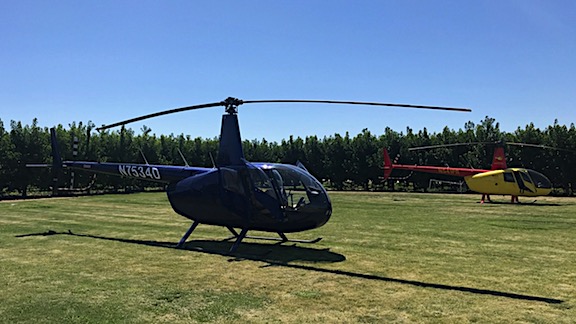
Here’s Mr Bleu with a friend from Lake Chelan. We occasionally work together to take more than 3 passengers on charter flights. Here, we’ve landed in a soccer field beside a cherry orchard.
Passionate for a Reason
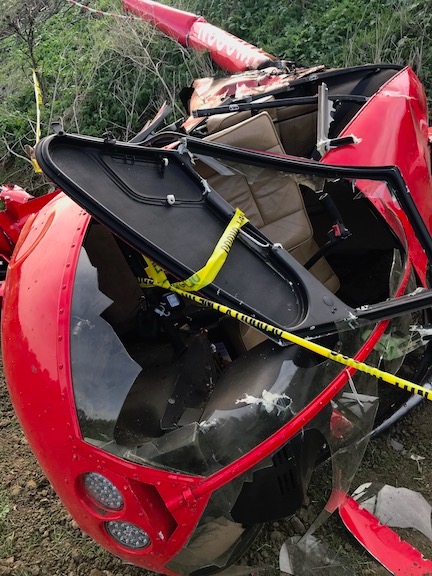
I feel very passionate about real life vs. CFI flying and even more so after my own accident.
I’m not a complete idiot. I realize that my accident was caused by two things:
- Distraction in the cockpit. I was flying VFR and I should have had my eyes outside the cockpit. Instead, I allowed myself to get distracted and failed to maintain awareness of my flight path.
- Lack of experience with night flight. Seriously! What was I thinking? I’ve got 3,700 hours of flight time, but less than 100 hours of that is at night. How could I possibly have allowed myself to get as complacent as I obviously was about the additional challenges of flying in the dark?
I’m lucky to be alive and I know it. And although I’m seriously embarrassed about the mistakes I made that led to my crash, I’m not too embarrassed to use my learning experience to teach others.
Throughout this blog, you’ll find lots of lectures about safety, many of which touch upon NTSB-analyzed accident reports. When reading between the lines, so many of them can be traced back to insufficient pilot experience with the situation or aircraft.
Don’t be one of those pilots. Push yourself gently to expand your skills and knowledge with real-life scenarios you can only get from non-CFI style flying. And never stop learning to be a better pilot.