Shop locally or online, reuse, recycle.
 Christmas can be one of the most wasteful times of the year. For most people, it involves a lot of driving around from store to store; getting stuck in traffic; cruising parking lots for the best spot at the mall; buying gifts recipients probably won’t like (and hence, have to return with even more mall visits); covering gifts in rolls of colored paper with ribbons and bows that will soon be discarded; driving to parties here, there, and everywhere; cooking more food than what can be eaten before it goes bad; etc., etc. And let’s not even get started on the light shows that too many people erect. Seriously: Is it that important for your house to be seen from space?
I know: it’s all part of the tradition of Christmas. I wouldn’t dream of making substantial changes in it — I really don’t need to add the receipt of hate mail to my working day.
But I do want to suggest looking at with the thought of reducing wastefulness related to shopping. And that’s what this post, prompted in part by “I’m Dreaming of a Green Christmas” by Siân Berry in The Atheist’s Guide to Christmas, is all about.
If You Can, Shop Locally
In a perfect world, you’d be able to walk “downtown” in your city with a bunch of canvas shopping bags, visit a handful of shops where the owners or clerks knew you by name, and leave with all your shopping done.
I remember that perfect world from when I was a kid. My sister and I would do most of our Christmas shopping in Cresskill’s local pharmacy — Scofield’s — which also sold perfumes and other small gift items. (I distinctly remember buying my father a tie there once.) They knew us, we knew them. It was a bike ride away and we could bring home the goods in our bike baskets. Later, when we got older, we’d ride our bikes to Bergenfield, where they had a lot more shops and options.
Those days are just about gone. Downtowns have been mostly killed off by malls and superstores like Walmart. Gift recipients in this high tech age expect the kind of merchandise not available at the local Hallmark shop. But if you live somewhere with a vibrant downtown area, try hard to shop there. Not only will you be supporting local merchants and the economic viability of your town, but you’ll keep your carbon footprint a lot lower than if you started driving around to the malls.
If You Can’t Shop Locally, Shop Online
Sadly shopping locally is not an option for me. But you couldn’t pay me to step foot in a mall in December.
This year (and most other years), I did 90% of my holiday shopping online and had gifts shipped directly to recipients. I also received 90% of my gifts by USPS and UPS, shipped directly from stores like Amazon.com. In most cases, the gifts I purchased (and assume received; I haven’t opened them yet) are items that I wanted — items that appeared on a personal wish list at the online store in which they were bought.
There are two benefits for shopping online with wish lists:
- You are absolutely certain to get the recipient exactly what he or she wanted. No disappointments, no pretending to like gifts. Best of all: no returns.
- Convenience. What could be easier than going online, clicking a few links and buttons, and entering payment information?
What most people might not think about is that shopping online is actually “greener” than making several trips to the mall. Sure, all these items need to be shipped to their recipients, but the shipping services are making the rounds anyway. Face it: UPS is going to visit Wickenburg twice a day on weekdays whether its trucks are filled or not. I’m actually reducing greenhouse gases by helping to fill their trucks instead of by hopping in my car and making the 80-mile round trip trek to the nearest mall by myself. And by having gifts shipped directly to the recipients, I don’t waste time, money, packaging materials, and greenhouse gases to ship them twice.
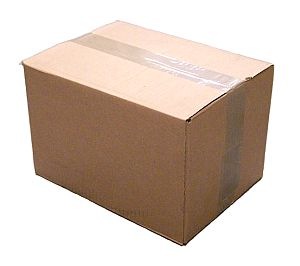
 Here’s a tip: if you’re flying out to visit family or friends, ship the gifts there with instructions not to open them. Then, when you arrive, sort through the gifts and wrap them for that big moment. Or skip the wrapping; who says “wrapping” can’t be cardboard shipping boxes?
Ordering Online? Recycle those Packing Materials!
I’m sure my family is not the only one to recognize the convenience of shopping online to get gift recipients exactly what they want. As a result, there’s a lot of cardboard boxes, packing peanuts, bubble wrap, and plastic airbags shuffling around.
Depending on where you live, you might not need to throw all that stuff away. I have three choices for dealing with packing materials:
- Reuse it. I keep a very large plastic bag in my garage which I fill with bubble wrap, foam, and those plastic airbags. I have another smaller bag I use for packing peanuts. I also keep a few select size boxes. Then, when I need to pack something to ship it out, I have all the free packing materials I need. Not only does this save money, but by reusing materials, I’m keeping them out of landfills and recycling centers.
- Hand it off to someone else who will reuse it. In Wickenburg, one of our shipping centers, Kaley’s, welcomes clean used boxes and packing material. So when my huge bag of bubble wrap or smaller bag of packing peanuts gets full enough to start a new bag, I take the filled bag to Kaley’s and they use it to pack items for their customers. It’s easy to find someone to take these things if they’re clean and neatly packaged up. Heck, I was in Page, AZ for a few weeks this past autumn and wound up with two big bags of packing peanuts — I brought them to the nearest gift shop with a “We Ship” sign on the window and they were thrilled to get them.
- Recycle. If you don’t have the room to store these materials, know you won’t need them, or have no one to hand them off to, take them to the recycling center. In most cases, they only thing they’ll want are the boxes, which must be broken down. That means you’ll need to discard the other packing materials, filling landfills with material that may take forever to break down. (But have you really tried hard enough to find a home for them?)
And, of course, you should always recycle the wrapping paper and other recyclable materials that are part of Christmas. In my home, we actually recycle more than we throw away.
How Else Can You Make Christmas Greener?
If you’re interested in this, I highly recommend “I’m Dreaming of a Green Christmas” by Siân Berry for some really great tips. But I’m sure you can come up with some ideas on your own. Just think about what’s wasteful and reduce that waste. If everyone did just a little, it would make a big difference.
And possibly the best part about all this is that when you reduce waste, you’re likely saving money, too.
Have a great Christmas holiday!
 NPR (National Public Radio) had its semiannual pledge drive last week. I caught the tail end of it while driving to do errands, but never got around to picking up the phone. That’s a shame because they often have matching funds during fund drives, so my $50 donation can get my local NPR affiliate $100. Still, I’ll send my contribution by visiting the Support Public Radio page on its Web site. NPR, if you’re not aware, airs a wide variety of radio programming, from talk shows about current events and science to comedy and music. Even if you don’t listen in on the radio, you can subscribe to podcasts for most shows. And if you listen in more than one listening area — for example, I listen in Washington State during the summer months and Phoenix in the winter months — consider splitting your contribution between both of the radio stations you listen to.
 PBS (Public Broadcasting Service) is similar to NPR in that it airs a lot of educational and thought-provoking content. From Sesame Street to NOVA, from FRONTLINE to Masterpiece, these are the folks who teach and entertain us with something more substantial than the latest incarnation of CSI and Dancing with the Stars. Although you can donate during a pledge drive and receive a “gift,” you don’t need to wait for a pledge drive to donate. (Seriously: do you really need another tote bag?)
 Wikipedia is the online encyclopedia. Say what you will about its accuracy, but you can’t deny that it’s one of the best free sources around for general information about any subject at all. These days, you can’t visit a Wikipedia page without seeing “an urgent appeal” from Jimmy Wales. That’s because it costs a ton of money to run those Web servers. If you use Wikipedia — and who doesn’t? — why not send a little cash their way? Yes, it is tax-deductible in the U.S.


 Christmas can be one of the most wasteful times of the year. For most people, it involves a lot of driving around from store to store; getting stuck in traffic; cruising parking lots for the best spot at the mall; buying gifts recipients probably won’t like (and hence, have to return with even more mall visits); covering gifts in rolls of colored paper with ribbons and bows that will soon be discarded; driving to parties here, there, and everywhere; cooking more food than what can be eaten before it goes bad; etc., etc. And let’s not even get started on the light shows that too many people erect. Seriously: Is it that important for your house to be seen from space?
 Here’s a tip: if you’re flying out to visit family or friends, ship the gifts there with instructions not to open them. Then, when you arrive, sort through the gifts and wrap them for that big moment. Or skip the wrapping; who says “wrapping” can’t be cardboard shipping boxes?