Interesting Links, August 2010

Here are the links I found interesting in August, 2010:

  • Help needed to relocate COA peahen – My mom was in the local newspaper.
  • Lines on Plagiarism Blur for Students in the Digital Age – Interesting to me how plagiarism in college is not seen as wrong by students. Apparently, it’s a lot easier to copy online sources without crediting them than to do research and turn it into a written document. With young people taking the easy way out, are they developing the writing skills they’ll need later in life? Probably not. And that’s good for real writers — job security. Read the whole article on NYTimes.com. Thanks to @TedLandau for sharing the link.
  • Delimiter – Aussie sci-fi author David Freer on eBooks, DRM and Bass Strait internet – Science fiction author David Freer offers his views on DRM and ebooks. I find that they’re pretty close to my thoughts on the matter. On Delimiter. Thanks to @Miraz for sharing the link.
  • Topic of Cancer – Christopher Hitchen writes about his battle with cancer. Best wishes, Hitch!
  • Anger and The Aftermath – “Not everyone who poops on you is bad; not everyone who saves you from poop is good; if you are up to your neck in poop, for heaven’s sake, keep your mouth shut.” Great blog post about anger and social media. Read more on QuinnCreative. Thanks to @EstherSchindler for sharing the link.
  • Kasell, Hemmert join Radio Hall of Fame’s Class of 2010 – “National Public Radio veteran Carl Kasell and Chicago rock radio icon Terri Hemmert will be among this year’s inductees in the National Radio Hall of Fame. But once again, voters have snubbed two of America’s pioneering shock jocks — Howard Stern and Steve Dahl — denying them entry in the Chicago-based shrine.” Congratulations! Read more on blogs.vocalo.org.
  • The Book Bench: Too Hard Not to Cheat in the Internet Age? – “Excusing plagiarism as some sort of modern-day academic mash-up won’t teach students anything more than to how lie and get away with it. We should be teaching students how to produce original work…” Read more by Elizabeth Minkle in The New Yorker.
  • NOT Sarah Palin’s Friends – “The Facebook posts Palin doesn’t want you to see.” Sarah Palin’s Facebook page is screened and wall posts are removed regularly. John Dickerson at Slate tells you about the deleted wall posts, captured through a special software program before they are deleted. Sarah Palin, made to look like a gift from God. It makes me sick. On Slate.com.
  • Would You Like Some Help? – Remember Clippy?
  • 5 reasons why people hate Apple – “Every company has its opponents, but Apple really gets people worked up. Some people hate Apple a lot, more than they hate Nazis or Smurfs. They leave angry comments on Apple blogs. Based on my extensive observations of the species, Apple-haters fall into five categories. If you’re an Apple-hater, which one of these categories do you fit in?” By Mitch Wagoner. Read more on Computerworld.
  • A Pilot’s Perspective On Woman Removed From Plane For Asking If Captain Had Been Drinking – “Do you really think a pilot who has invested years of his life, thousands of dollars, and tens of thousands of hours in the air will risk it all by having a drink before his flight?” I don’t think so, either. Smart-ass passengers can ruin a pilot’s career. Read more on The Consumerist. Thanks to @DonPerreault for sharing the link.
  • Filibusters and arcane obstructions in the Senate – “Mindless obstructionism” and more. Read about it and weep in the New Yorker.
  • Google and Verizon Near Deal on Pay Tiers for Web – “Google and Verizon, two leading players in Internet service and content, are nearing an agreement that could allow Verizon to speed some online content to Internet users more quickly if the content’s creators are willing to pay for the privilege.” Could this be the beginning of the end of net neutrality? In The New York Times.
  • Massive ice island breaks off Greenland – Climate change deniers: deny this.
  • Twitter’s Meteoric Rise Compared to Facebook – Here’s another infographic — this one is for Twitter stats. On The Blog Herald.
  • Facebook Statistics: The Numbers Game Continues – Interesting infographic depicting the raw numbers of Facebook. On the Blog Herald. Thanks to @plagiarismtoday for sharing the link.
  • The Quitting Tale That Suckered the Whole Internet – Okay, so it was fake. It was still entertaining and fun. And I suspect a lot of folks will be quitting their jobs like this in the future — for good or bad. Read more on Gawker.
  • Consumers Find Ways to Spend Less and Find Happiness – The benefits of living simply. Having spent the past three months living in an admittedly comfortable RV with just one vehicle to get around and minimal possessions along for the ride, I can confirm that a simple life is a better life. If I didn’t have to go home to my big house and spare cars, I wouldn’t. Read more about this topic on the NYTimes.
  • Medical Journal Retracts Report About Jesus Curing Fever – A case of the dumbs is followed up with a case of the smarts. What were these people thinking? On NPR.org.
  • Free of oppression – Amen!
  • Palinisms: Did she really say that? – By Jacob Weisberg – Slate Magazine – Jacob Weisberg continues his popular “Bushisms” column in Slate Magazine with idiotic comments made by Sarah Palin. “Gotta celebrate it!”
  • Conservapedia: E=mc2 Is A Liberal Conspiracy – “To many conservatives, almost everything is a secret liberal plot: from fluoride in the water to medicare reimbursements for end-of-life planning with your doctor to efforts to teach evolution in schools. But Conservapedia founder and Eagle Forum University instructor Andy Schlafly — Phyllis Schlafly’s son — has found one more liberal plot: the theory of relativity.” Read more on TPMMuckraker. If these people put as much effort into learning science as they do in shooting it down, they might actually get a grip on reality.
  • Sarah Palin’s Homer Moment-D’Oh! -Yes, Sarah Palin did violate the First, Second, and Fourth Amendment Rights of the citizens of Homer, Alaska while filming her poorly-conceived TLC series.
  • Bradley Manning’s guilt — and ours – From this piece, some food for thought: “If putting people in harm’s way is a damning criticism of Manning, then what are we to make of those who have cheered on, voted for, and managed America’s wars?” On The Week. Thanks to @donperreault for sharing this thought-provoking link.
  • Questions Grow About Ansel Adams Discovery – Those negatives supposedly worth $200 million? Well, it looks like they may have been snapped by Uncle Earl. Read more on the New York Times. Thanks to @TedLandau for sharing this link.
  • Ground Zero Mosque – What Sam Harris thinks about the proposed mosque two blocks away from NYC’s Ground Zero. On the Daily Beast.
  • Robinson Helicopter founder retires – “Frank Robinson, who founded Robinson Helicopter Co. in Torrance nearly four decades ago, has retired as the private firm’s chairman and president.” Read more on The Daily Breeze.
  • ICAO Spelling Alphabet – Graphic artist illustrates the pilot’s alphabet, which I blogged about here: http://www.aneclecticmind.com/2010/06/13/the-pilots-alphabet/
  • Traveler to the undiscovere’d country – Insight from this piece: “Those rare people who practice in their lives the underlying principles of their religions are most often good for themselves and others. Those who use religion as a means toward thought control and rigid conformity are twisted and deranged. Anyone who would use religion as their reason to cause unhappiness to another is guilty of a great sin.” Roger Ebert writes about Christopher Hitchens.
  • Did ‘Star Wars’ become a toy story? Producer Gary Kurtz looks back – I can’t agree more with this summary of the ending of the third Star Wars film: “…forest celebration of the Ewoks that essentially ended the trilogy with a teddy bear luau.” I REALLY hated that scene. Interesting insight into the creation of the first three movies.
  • Giving Users Some Credit – “Websites are designed to be used by people of varying backgrounds, educations and technical levels. One of the challenges we face when designing for the Web is finding a way to create sites and applications that can be accessed by a widely disparate audience while avoiding the pitfall of sacrificing the quality of our work to cater to the dreaded ‘lowest common denominator.’” Read more on Design Informer. Thanks to @AprilMains for sharing the link.
  • Keith Olbermann – Special Comment, Muslim Community Center – Say what you will about Olbermann, but he knows how to get to the root of the matter. If you love America, watch this through to the end and then try to deny the reason in it. Me? I cried.
  • How the “ground zero mosque” fear mongering began – “A viciously anti-Muslim blogger, the New York Post and the right-wing media machine: How it all went down.” Read more in Salon. Thanks to @derekcbart for sharing the link. This made up controversy really bugs me. All it does is demonstrate the growing close-mindedness, fear, and hate among Americans today.
  • Don’t Be a Dick, Part 1: the video – Phil Plait’s presentation at TAM 8. Well done; can’t wait to get a faster Internet connection so I can see it uninterrupted.
  • TSA Screeners Check Luggage, Investigate Your Marriage & Personal Finances – Planning a trip out of Philadelphia? Allow lots of extra time for TSA abuse. On The Consumerist. Thank to @gglockner on Twitter for sharing the link.
  • http://newsfeed.time.com/new-words-in-the-ode/ – A list of new words in the Oxford Dictionary of English. I’m sure you’ll know plenty of these gems.
  • Nation Shudders At Large Block Of Uninterrupted Text – The Onion always manages to come up with on-target topics and write about them in a way that makes me laugh. Thanks to @Jen4Web for sharing the link.
  • Technology Leads More Park Visitors Into Trouble – This kind of thing REALLY pisses me off. Too many people are doing dumb things in remote areas and relying on cell phones and satellite tracking systems to bring aid for minor problems. I believe these people should be billed for “rescue” calls. I’m tired of my tax money or park fees paying to get stupid people out of trouble. On the New York Times Web site. Thanks to @PattyHankins on Twitter for sharing the link.
  • Technology’s Biggest Myths – “Expensive cables are better! Defragging speeds up your PC! Refilling ink cartridges ruins your printer! We put these and nine other claims to the test to find the truth behind tech’s tallest tales.” On PCWorld.
  • 20 Things I’ve Learned From Traveling Around the World for Three Years – Gary Arndt writes about the things he’s learned while traveling. Thanks to Keith Gill on FaceBook for sharing the link.
  • Baby Alligator Turns Up Beneath a Car in Queens – When urban legends just might be true. Thanks to New Yorker @MikeTRose for sharing this link. On NYTimes.com.

The Trouble with Tech Editors

Not usually the problem.

From about August 10 until just the other day, I was working on a book revision. It’s my third pass at this software manual that’s now distributed in ebook form. I’m not sure if I’m allowed to mention what it’s for, so I won’t. It doesn’t really matter, does it?

This book was unusual in that for the first time, it was the technical editors that gave me headaches. (Usually, it’s heavy-handed copyeditors.) My publisher waited until the last minute to contract me and everyone else who worked on the book and, because of that, they had trouble getting a good technical editor. They wound up with two people who apparently have nothing better to do than hang out in the support forums for the software and quite possibly hang on every word posted there. The first one worked on Chapters 2-14 before going on vacation. The other one worked on the rest of the 23-chapter book.

The problem I had centered around their apparent misunderstanding of what their job was. The first one kept commenting to tell me to add every known technique for performing each task. I’d decided early on to stick to menu commands and shortcut keys whenever possible, but she kept telling me to add this toolbar button or that hidden dialog option. It got on my nerves until we told her to stop. The other thing she did was introduce obscure problems that people in the forums have, apparently expecting the book to cover them all.

The other tech editor also drew upon his forum experience, this time expecting me to include marketing material that would clarify information about the features so forum participants would have less to complain about. The book’s a straight how-to — technically, it’s the software manual — so addressing the issues of a handful of forum whiners (the worse kind) isn’t part of the program. But what really got me mad was that this second editor was apparently unable to follow the instructions as written and kept telling me that things didn’t work. I’d have to go back and follow the instructions to see where I’d screwed up. But every single time, the instructions worked exactly as I’d written them. This was a huge time suck.

To be fair, they each did have a few comments that were actually worth acting on. I made a handful of changes that improved the book. That’s what their job was — to help me improve the book. But they didn’t seem to understand what would make the book better. All they seemed to know was what would make the book longer.

What neither understood is that I had about 15 days to revise a 600-page book. That’s not enough time to rewrite the book. All I had to do was add or change material for new or changed features. There weren’t many changes. The book, which was originally written by the software developer’s staff, had very few tech edit comments in the two previous editions I worked on. So I couldn’t figure out why these two editors kept coming up with comments that no one else had.

It’s the damn forums, I guess.

Sunrise from Wenatchee Heights

A time-lapse to remember.

For the past five weeks, I’ve been living in my RV on the side of a hill overlooking the Squilchuck Valley south of Wenatchee, WA. Every morning, I’ve watched the sun’s golden light spread out over the valley, illuminating the hillsides, mountaintops, orchards, and grassy knolls around me.

The view out the door of my RV for the past 5 weeks.

I’m leaving next week and although I think I’ll be back next year, I might not. I wanted to capture the experience to remember it.

So at 4 AM, I was outside, setting up my time-lapse camera. One shot per minute, compiled at 6 frames per second yields this 28-second video. Enjoy.

Planning the Big Move

I make plans to move my “rolling mansion” and helicopter from Wenatchee to Page, AZ.

My last cherry drying contract for the season ends on Wednesday, August 25. I need to be in Page, AZ with my trailer and helicopter by the middle of September. I’m just starting to plan for the move.

This is an exercise in logistics that I go through twice a year. Every time it’s slightly different.

The fun starts on Thursday, when my husband arrives on a late flight into Wenatchee. We’ll spend a few days in the area on a mini vacation. It’ll be the first time I’ve seen him since May 15. He goes home on Monday morning.

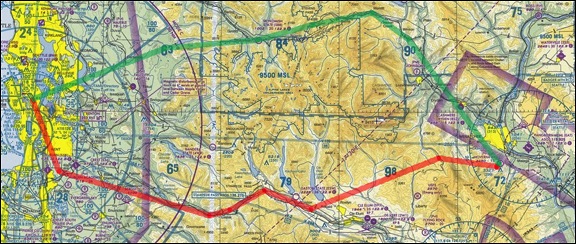
The move starts on Sunday, August 29 (weather permitting) with a flight over the Cascades with the helicopter to Boeing Field (BFI). With perfect weather, the flight should take less than an hour. But I’ve only had perfect weather once in the ten or so times I’ve made the flight. The last time I did it, it took about 4 hours because I had to fly all the way down to the Columbia River at Hood River to get under the clouds.

Planned Routes

Two different routes to get from Wenatchee to Seattle by helicopter. The red route includes a stop at my friend Don’s house.

Moitek Mount

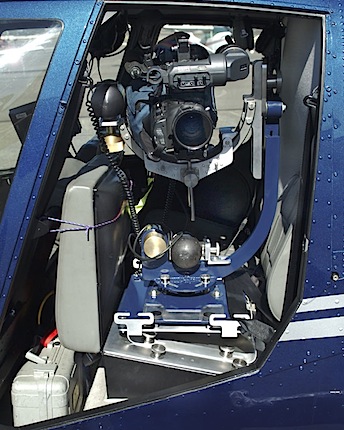
My new Moitek Video Mount, pictured in my friend Erik’s helicopter.

At BFI, I’ll take possession of my new Moitek Video Mount, which I bought from the estate of a helicopter friend who passed away last year. A videographer who used the mount with my friend will be meeting with us to show us how to set it up. He’ll bring along a camera and get some footage on a flight down to Longview, where we’ll meet with the mount’s designer and maker to ask questions and get other tips. I’m hoping my friends Don and Jim, each R44 owners, will accompany us for this little trip. I’d love to get some air-to-air video for a project I’ve been working on for some time.

Back at BFI, I’ll drop off the helicopter for some maintenance. It needs its blades painted (again) and since I’m coming up on my 100-hour inspection, I figured I’d have it taken care of then. It’ll stay at the maintenance shop until I return in September to pick it up.

I’ll get back over the mountains by plane or helicopter (piloted by a friend) on Monday morning. I’ll spend the rest of the day and most of the next prepping the RV for the long drive. I’ll need to put away all loose items and clean up as well as I can.

RV Route

The RV Route

On Wednesday, September 1, I’ll hook up and roll out of here. The plan (so far) is to go to Walla Walla, where I’ll spend a few days at an RV park I know. Walla Walla has some great restaurants and wineries. It’ll be like my own little vacation on the way home.

On Saturday or Sunday, I’ll get an early start and hit the freeway for the 10-hour drive to Salt Lake City. If some friends are available to meet me, I’ll go in on Saturday; otherwise, I’ll do it on Sunday. I’m planning on parking overnight at the Draper Camping World, which should be affordable and convenient. I probably won’t even bother unhooking my truck.

On Monday morning, I head out early for Page. I hope to get there early in the afternoon and find a place to park my rig for about a week. Weather permitting, Mike will fly up to Page in his plane and pick up me and Alex the Bird to take us home. The truck and RV will remain at Page until I return with the helicopter.

On Tuesday or Friday, I’ll head up to Seattle by commercial airliner. Then, on Wednesday or Saturday, I’ll start the long flight to Page. It’ll take 8 to 10 hours, so I’m likely to do it over two days. I might have a passenger; I’ll know more this week. If I do, we’ll be doing the flight on Saturday/Sunday to Las Vegas, possibly with part of the flight along the California Coast, and I’ll be going on to Page alone. If not, I’ll do the flight on Wednesday, making the best time possible to Page by flying through Oregon, Idaho, and Utah on pretty much the same route I followed to get here before the start of the season.

In Page, I’ll set up camp — probably in the campground I lived in for two months two years ago — and offer aerial photo flights over Lake Powell. I have clients meeting with me starting on September 20, so there’s definite business for at least 5 days. On September 25, I fly the helicopter home, hopefully with a passenger (if she hasn’t forgotten). I’m not sure when I’ll retrieve the truck and RV; it depends on whether I have a training video shoot the following week in California.

So if you were wondering what I’ll be doing for the next month or so of my life, you now know.

I’ll be interesting to see how closely I can follow these plans in the weeks to come.

Why I Go On and On about the Cherries

I’m awed.

Cherries on a Tree

Cherries in their natural state.

If you follow me on Twitter, you’re probably sick of me tweeting about two things: cherries and the weather. I’ve explained, in detail, why the weather is so important to me this time of year. Let me take a moment to explain why I keep tweeting about cherries.

It’s In My Face

For the past month, cherries have been an integral part of my life. I’m living across the street from a very large cherry orchard. My helicopter is actually parked in the orchard. I drive or walk into the orchard nearly every day. I’ve also spent literally hours flying over the orchard’s trees, low-level. I feel that I have a first-hand knowledge of the orchard surpassed only by its owners, managers, and workers.

Even before I moved to my temporary home across the street, I visited the orchard. The first time was in June. Back then, the cherries were bunches of small pink dots, clustered on the branches. A few weeks later and there hadn’t been any serious change. It seemed like they’d never get ripe.

Hydrocooler in Action

The hydrocooler with its water chiller and accompanying generator in action during the peak of picking time.

Then I moved here and started to observe the activity at the orchard. Watering every morning and night. Spraying for pests many afternoons. Bringing in hundreds (if not thousands) or red wooden cherry bins. Bringing in the portable toilets and ladders for the pickers. Cleaning out the shed. Moving in heavy equipment, like the hydrocooler and its water chiller with massive diesel generator. Preparing the tractors and bin trailers and forklifts. Distributing the bins among the rows of trees.

The cherries took their own time to ripen and the growers couldn’t rush them. When the packing plant had a high demand for fruit, some picking began tentatively, pulling the scant ripe cherries from the trees. Then quiet again as they waited.

I did my part, blowing rainwater off the trees four times, protecting the vulnerable fruit from water damage.

Picking for One

Washed Cherries

Not the best photo, I know; I snapped it with my cell phone to show off how beautiful the cherries were. I hope I don’t seem too demented.

I asked for and got permission to pick cherries for my own consumption. Two or three times a week, I’d head out into the orchard and find some trees with dark red, ripe fruit. I’d fill a small colander, then head back to my trailer with my prizes. I used my RV’s small sink to wash off whatever they’d been spraying on the fruit with cold water baths and rinses. Once clean, the fruit looked beautiful. So beautiful that I couldn’t help by take photos to share on Twitter and in my blog.

I think what I like most about the cherries I pick is the way they’re so unlike store bought cherries. They haven’t been processed. Don’t misunderstand me — processing doesn’t hurt the cherries. It cleans them, probably better than I do. But it also cuts the stems to separate the bunches of cherries and sorts them by size. In my plastic cherry bin, the cherries are still bunched together in twos, threes, and fours — just the way I picked them. Some of them even have small leaves attached. And although most of the cherries I pick are quite large, I’ve also picked the small ones that never make it into stores. That somehow makes my cherries seem more natural. More real.

Even if they’re so perfect looking that they seem fake in photos.

There’s So Much To It

There’s something about being part of the farming process that really makes you appreciate your food. People see cherries in a bag at the supermarket, but do they ever think about what went into getting them there?

This orchard is on the side of a hill that is, in some places, very steep. Someone had to clear the land of scattered pine trees, sage bushes, tall grass, and big rocks. They had to plant rows of young trees and protect them from deer and other grazing animals with tall fences. They had to put in irrigation systems that would deliver fresh water, on demand, to the bases of the trees from a system of reservoirs stair-stepping down the hillside. They had to prune the trees, spray them for pests, fertilize them. They had to protect them during harsh winters and late spring frosts.

They did this for years, nurturing the trees as they began to bear fruit and grow, always adding more trees and irrigation to expand the orchard. Now, this orchard is 86 acres, but I can see the newest, youngest trees, just planted this year, on a hillside not far away. With a few years of care, they’ll be bearing fruit, too.

It isn’t always easy. The orchard’s reservoir is filled by turning a valve that brings water down from another reservoir at the top of the hill. The other day, someone left the valve open too long. The reservoir overflowed and flooded out the overflow area. Two small dams were on the verge of breaking; one of them would have released enough water to take out a road the pickers needed to get to a far orchard block. It was fortunate that a large backhoe was available nearby. The grower was able to dig out a channel to direct the water to a nearby stream. While it must have hurt to release valuable water he’d paid for, it was better than having a road rebuilt or possibly losing access to 15 acres of trees.

Picking

Picking began in earnest about two weeks ago, then stopped suddenly for five days. It started again yesterday. This grower picks for color — they’ll go through the same trees more than once to pick only the best, ripest fruit. They’re probably about halfway done; trees I picked fruit from only a week ago are now picked clean.

I’ve already documented the picking process in my “Cherries: From Tree to Truck” video. What I’ve learned is that every orchard does things a little differently. The process here is similar, but not quite the same.

Pondside Parking

Yesterday, the pickers were parked uncomfortably close to my helicopter.

It’s going on as I type this. From my office window, I can see the pickers moving ladders. I can see their cars parked out in the orchard. I can hear the refrigerated tractor trailer truck pulling up for another load of 30,000+ pounds to take away to the packing plant. The tractors pull in with full cherry bins, the water truck sprays down the roads to keep the dust down, the forklifts shuffle the cherry bins around.

It’s a good day for picking: very cool, partly cloudy. They might work until 2 PM today — a full day, considering they started at first light.

It’s an amazing thing to be part of. Can’t help it if it makes me want to talk about cherries.